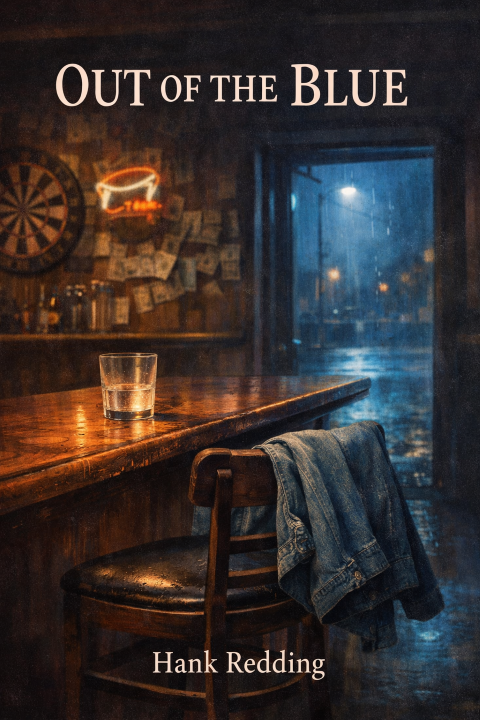
Chapter One — Staying In
I wasn’t going out that night.
That wasn’t a dramatic decision. It didn’t come with a feeling of restraint or sacrifice. It felt practical, earned. I’d stayed in more nights than I’d gone out lately, and I’d come to like the shape of it—the quiet order, the absence of negotiation. The sense that nothing could surprise me if I didn’t give it the chance.
I’d been listening to records, the kind that didn’t demand attention so much as reward it if you offered some. The needle dropped with a familiar static and then settled, that soft click like something deciding to commit. I liked that part—the commitment. The way sound arrived because it had been asked to.
The apartment was small, but I’d arranged it to feel deliberate. A chair angled toward the stereo. Lamps instead of overhead light. A stack of mail I’d already opened and sorted, which felt like a victory in itself. There was beer in the fridge, but I hadn’t opened one yet. I wasn’t avoiding it. I just hadn’t needed it.
That felt important.
I’d been alone long enough that solitude had started to feel like a skill rather than a condition. I knew how to move through the evening without reaching for something to fill it. I knew how to sit with my thoughts without needing to drown them out. That wasn’t something I bragged about, but it was something I noticed. Growth, maybe. Or just exhaustion that had learned better manners.
Outside, the city did what it always did—sirens at a distance, a bus exhaling at the corner, someone laughing too loudly on their way past the building. None of it reached me. The windows were closed. The night stayed where it belonged.
I remember thinking, not for the first time, that this was who I was now. Someone who stayed in. Someone who didn’t need the noise to feel like something was happening.
The phone rang.
It startled me more than it should have. Not because I was afraid of it—just because I’d forgotten how rarely it did that anymore. The sound cut through the music cleanly, sharp and insistent. I let it ring twice before picking it up, as if that pause mattered.
It was a friend. One I hadn’t seen in a while but could still place immediately by his voice, even through the slight distortion of the line.
“What are you doing?” he asked.
“Nothing,” I said, which was true.
“Come out,” he said. “We’re at the place on Third. It’s already stupid.”
“I’m staying in,” I said. I didn’t hesitate. I didn’t soften it.
There was a pause on his end, the kind where you could hear the room around him—music bleeding into the call, voices crossing each other without landing anywhere. The sound of a dart hitting wood.
“Suit yourself,” he said. “We’ll be here.”
I hung up and stood there for a moment with the receiver in my hand, listening to the dial tone. The record kept playing. Nothing had changed.
I told myself that was that.
Ten minutes later, I was standing in front of the mirror.
I didn’t rush. That was the thing that bothered me later, when I tried to remember how it happened. There was no urgency, no sense of being pulled. I moved slowly, deliberately, like someone completing a task they hadn’t planned but didn’t resent either.
I changed my shirt. Not because the one I had on was wrong—just because it wasn’t right. I ran water over my face and dried it carefully, the way you do when you’re not trying to impress anyone but still want to feel presentable. I checked my reflection once, then again, as if something might have shifted between glances.
It hadn’t.
I told myself I was just going for one drink. I told myself I wouldn’t stay long. I told myself a lot of things that night, none of them untrue exactly—just incomplete.
The bar was already loud when I arrived.
It had that compressed energy that comes from people talking over each other instead of to each other, every conversation layered on top of the next until it became a single, undifferentiated sound. The air smelled like beer and something fried, the kind of smell that settled into your clothes and stayed there until morning.
I arrived late enough that no one noticed me come in, which I appreciated. I slid into the room without announcing myself, took a moment to let my eyes adjust. The place was already in motion—dart boards in use, music too loud to argue with, laughter breaking off and reforming in different corners.
I found my friends near the back, already halfway gone. Someone clapped me on the shoulder. Someone handed me a drink I hadn’t ordered. It appeared in my hand like it belonged there.
I took a sip.
That’s when I saw her.
Not in the way people usually mean that—not a moment of recognition, not a rush. She didn’t glow. She didn’t stop the room. She was just there, leaning against the bar, listening to someone talk without appearing particularly interested in what they were saying.
What caught my attention wasn’t her face so much as her stillness. The way she seemed anchored while everything around her moved. She laughed once, briefly, and then returned to listening, like laughter was something she used sparingly.
I remember thinking, absurdly, that she didn’t look like she was waiting for anything.
I didn’t think I’d talk to her. I didn’t even think about not talking to her. I stood where I was, drank what was in my glass, let the room do its thing. The record I’d been listening to earlier replayed itself faintly in my head, a habit more than a memory.
Someone bumped into me. Someone apologized. The night shifted a little to the left.
She turned then, just enough to catch my eye. It wasn’t intentional. It wasn’t coy. It was the simple acknowledgment that happens when two people occupy the same space long enough to register each other.
We held eye contact for half a second longer than necessary.
She didn’t smile.
Neither did I.
Something in her expression changed anyway—not interest, exactly. Recognition, maybe. Or the absence of resistance.
I finished my drink.
I remember thinking, very clearly, that I could leave right then and nothing would be lost. That I could step back out into the night, return to the apartment, drop the needle on the record again and let the evening resume its original shape.
I didn’t do that.
I set my empty glass down and walked toward the bar, not directly toward her, not dramatically—just closer. The crowd shifted to accommodate it, the way crowds do when someone commits to motion.
By the time I reached her, I wasn’t sure who had moved first.
“Hi,” I said.
She turned fully then, facing me like this was something she’d agreed to already.
“Hi,” she said back.
That was it. No clever line. No expectation.
I remember thinking, with a kind of quiet disbelief, that I had stayed in long enough to forget how easily things could begin.
And that maybe—just maybe—I hadn’t stayed in long enough after all.
Chapter Two — The Phone Call
We didn’t exchange numbers that night.
That wasn’t a rule or a test. It just didn’t come up. We talked the way people do when they don’t yet know what they’re supposed to want from each other—about nothing that mattered and a few things that did. She told me where she worked. I told her where I didn’t. Someone said last call and meant it. Someone else ignored it. The night thinned a little, then thickened again.
At some point we were standing outside, the noise behind us dulled by brick and glass. The air had cooled. The streetlight above us flickered once and decided to stay on. She zipped her jacket and looked up at it, as if weighing the light.
“You heading home?” she asked.
“Yeah,” I said.
She nodded. “Me too.”
We stood there long enough for it to be awkward, then a second longer than that. I thought about asking for her number. I thought about not asking. Both felt possible, which was new.
“I’ll see you around,” I said.
“Maybe,” she said, not dismissive, not promising. Just accurate.
She turned and walked down the block without looking back. I watched her go until she became a shape instead of a person, then until she disappeared entirely. The night closed behind her like it had always intended to.
I went home.
The apartment was exactly as I’d left it. The lamp still on. The record finished, the needle riding the final groove in a soft, endless loop. I lifted it and shut everything down, then stood there in the quiet with my keys still in my hand.
I didn’t feel anything I could name.
That bothered me more than if I had.
The next day passed cleanly. Work. Lunch. The afternoon stretched and folded the way it always did. I told myself I’d forgotten her. That was a lie, but not an urgent one. She existed in my head the way a good line from a book exists after you’ve closed it—present, but not demanding.
I stayed in again that night. Cooked something simple. Read a few pages. Went to bed earlier than usual.
The phone rang at nine-thirty.
I let it ring once, then twice. I wasn’t expecting anyone. That made it easier to answer.
“Hi,” she said.
I sat up, surprised enough to smile.
“Hi,” I said.
“I hope this isn’t weird,” she said. “I got your number from Mark. I told him it was important.”
“It is,” I said, though I didn’t know why yet.
She laughed at that, a quick sound that loosened something in my chest.
“I just wanted to see if you were doing anything,” she said.
I looked around the apartment—the chair, the lamp, the book face-down where I’d left it.
“No,” I said. “I’m not.”
There was a pause. I could hear her breathing on the line, steady, unhurried.
“Me neither,” she said.
We talked for an hour.
Not about anything that required bravery. We circled safer ground first—work stories, places we’d lived, the usual scaffolding. Every now and then the conversation stalled, not uncomfortably, just enough to remind us we were still strangers. When it did, neither of us rushed to fill it.
That felt important.
When we hung up, it was mutual. No one needed to be the one to end it. We said goodnight like it was a promise we hadn’t agreed to yet.
I didn’t sleep right away.
I lay there thinking about the sound of her voice when she wasn’t trying to be interesting. The way she let sentences finish themselves. The fact that she’d called without an excuse.
I told myself not to read into it.
I waited two days before calling her back.
That wasn’t strategy. It wasn’t restraint. It was habit—old instincts surfacing, the ones that said waiting proved something. I didn’t examine it closely enough to challenge it.
When I did call, she answered on the second ring.
“Hey,” she said, like she’d been expecting it.
“Hey,” I said.
We fell into a rhythm after that.
Calls that started late and went later. Messages left without apology. Plans made loosely, then kept. We met for coffee. We met for drinks. We met for no reason at all. Time did that thing where it compressed without warning.
She came over one night and noticed the records.
“You actually listen to these?” she asked, flipping through them carefully.
“Sometimes,” I said.
She pulled one out, read the back, then slid it back into place.
“You’re serious about it,” she said.
I shrugged. “I guess.”
She nodded, like that meant something.
We didn’t sleep together right away.
That surprised me. Not because I didn’t want to—because I did—but because neither of us seemed in a hurry. We talked instead. Sat on opposite ends of the couch with our feet touching. Shared stories that had edges but no centers.
When we did finally cross that line, it felt less like a decision than a continuation. Like something that had been unfolding quietly and had reached its next natural shape.
I woke up the next morning with her still there.
That felt new.
Weeks passed. Then months, though neither of us marked them. She left a toothbrush without comment. I made space in the closet without asking. These things happened the way weather changes—noticeable only after the fact.
I learned the shape of her habits. The way she drank her coffee. The way she read instructions all the way through before starting. The way she went quiet when she was thinking, not because she wanted space, but because she wanted accuracy.
She learned mine too, though I wasn’t always sure what she made of them.
We fought once, early, over something small enough to disguise what it was really about. We resolved it quickly, relieved at our own competence. I remember thinking we were good at this.
That was the lie.
Not a dangerous one. Not yet. Just the kind that settles in when things are going well and you start to believe that means they’ll keep going that way.
One night, six months in—though again, we hadn’t said it out loud—we sat on the floor eating takeout from cartons that had gone soft at the corners.
“I never thought I’d do this again,” I said.
“Do what?” she asked.
“This,” I said, gesturing vaguely. “Let something take up this much space.”
She considered that.
“I never thought I wouldn’t,” she said.
The difference sat between us, small but precise.
I didn’t push it. I didn’t want to turn it into a question that needed an answer.
That night, after she fell asleep, I lay awake listening to her breathe and thought, for the first time in a long while, that I might be done searching.
I didn’t say it out loud.
I didn’t need to.
I believed it.
And belief, as it turns out, is a quiet thing. It doesn’t announce itself. It just settles in, rearranges the furniture, and waits to see if you’ll notice.
Chapter Three — The Shape of Us
It’s strange how quickly you stop noticing what you’ve added to your life.
At first, everything feels deliberate. Each shared moment is examined, cataloged, weighed. You notice the way another person fits into your routines because the routines still feel like yours. You are aware of the shift.
Then one day you wake up and realize the shift has already happened.
Her shoes lived by the door now. Not lined up exactly—just close enough to suggest familiarity. A mug she preferred sat at the front of the cabinet, not because we’d discussed it, but because that was where it had landed and stayed. The bathroom mirror held two reflections in the morning, one always more awake than the other.
None of this felt intrusive.
That was the problem.
We began to talk about things that assumed continuity. Not future plans exactly, but future conditions. Things like next month, or when it warms up, or after your brother visits. Language that leaned forward without committing to a destination.
I noticed how easily I said we.
Not proudly. Not self-consciously. Just accurately.
She brought me into her world the way she did everything else—without ceremony. I met her brother over whiskey at a place that smelled like old wood and fried onions. He asked questions without prying, watched more than he spoke. At the end of the night, he shook my hand and said, “Take care of her.”
It wasn’t a warning. It wasn’t permission.
It was an assumption.
We moved her things into my apartment on a Sunday afternoon when the sky looked undecided. Not everything—just enough to make it clear she wasn’t leaving. Clothes first. Books later. A small lamp she insisted on bringing because she didn’t like overhead light.
“You don’t need this much stuff,” I said, half-joking.
“I do,” she said, smiling. “You just don’t yet.”
I believed her.
Life tightened around us in reasonable ways. Grocery lists. Shared errands. Complaints about work that didn’t require explanation because the context was already understood. We learned when to speak and when to let the silence do its work.
That felt like success.
The fights, when they came, were careful.
We didn’t yell. We didn’t throw things. We argued in low voices, the way people do when they don’t want to damage what they’re standing inside. The disagreements were always about something else—dishes, schedules, tone—but underneath them was a quiet negotiation neither of us named.
How much room do we get to remain ourselves?
She liked plans. Not rigid ones—but outlines. A sense of what was coming. I liked openness. The ability to adjust, to change direction without explanation. These weren’t incompatible traits, but they required attention.
Attention is easy at first.
Then it becomes work.
I noticed how she grew quiet after certain conversations. Not withdrawn—just distant, as if she were measuring something internally. When I asked what she was thinking, she often said nothing or brushed it off with a smile that didn’t ask to be believed.
I let that pass.
That was my mistake.
There were good days. Many of them. Days that felt solid and earned. We laughed easily. We cooked together without getting in each other’s way. We made plans we kept and plans we changed without resentment.
I remember one night in particular—late, warm, windows open. We lay on the floor listening to a record spin out its final track.
“This is nice,” she said.
“It is,” I said.
She nodded, but didn’t look at me.
“I don’t want to lose this,” she said.
I turned then, surprised by the phrasing.
“Why would you?” I asked.
She considered the ceiling for a moment.
“No reason,” she said. “Just… saying.”
That was the first crack.
Not because of what she said—but because of what she didn’t.
I told myself I was reading too much into it. That not every thought needed to be interrogated. That some things were better left alone.
I told myself that because it was easier.
The night she left, there was no warning.
No argument. No raised voice. No suitcase by the door waiting to make a point.
She came home earlier than usual. Sat at the table without taking her jacket off. Looked at me like she was trying to remember something she’d misplaced.
“I can’t do this,” she said.
It took a moment for the sentence to register.
“Do what?” I asked.
“This,” she said, gesturing gently between us. “Us.”
There it was.
I waited for the rest of it. The explanation. The narrative that would let me understand how we’d arrived here.
It didn’t come.
“I’m sorry,” she said. “I didn’t mean for it to happen like this.”
“Like what?” I asked.
“Like I woke up and realized I was already gone.”
I stood there, suddenly aware of my own breathing.
“Where are you going?” I asked.
She shook her head.
“I don’t know,” she said. “But I know I can’t stay.”
She didn’t accuse me of anything. She didn’t frame it as my failure or hers. That almost made it worse.
She packed a bag quickly, efficiently. The lamp stayed. The books stayed. Only the essentials left with her, like she was trying not to disturb the space more than necessary.
At the door, she paused.
“I didn’t lie,” she said. “I just… changed.”
I nodded, because there was nothing else to do.
When the door closed behind her, the apartment felt larger than it ever had. Not emptier—larger. The space she’d occupied expanded, refused to collapse.
I didn’t chase her.
That felt important too.
I stayed where I was, surrounded by the life we’d built carefully enough that it didn’t collapse when one part was removed.
That night, I stayed in.
I didn’t put on a record.
I sat in the quiet and tried to understand how something could feel so complete one day and impossible the next.
There were no answers waiting.
Only the familiar ache of realizing that loneliness isn’t the absence of people.
It’s the absence of explanation.
Chapter Four — Afterward
There’s a particular kind of quiet that settles in after someone leaves without breaking anything.
No slammed doors. No raised voices echoing back at you later. No objects out of place to argue with. Just the slow realization that the air itself has changed—that something essential has gone missing, and the room doesn’t know how to tell you.
I cleaned the apartment that night.
Not because it needed it. Because movement felt safer than stillness. I washed the dishes she hadn’t used. Folded laundry that was already folded. Straightened things she would’ve undone without thinking. The lamp stayed where she’d put it. I didn’t move that.
I told myself I was respecting her absence.
The truth was simpler: I didn’t know what belonged to me anymore.
The next few days passed the way days always do when you’re trying not to notice them. Work continued. Conversations happened. I answered questions with practiced accuracy and avoided the ones that required more than a sentence.
People asked how I was.
“Fine,” I said.
They nodded, relieved.
I stopped expecting the phone to ring around nine-thirty. That took longer than I would have admitted. Habit doesn’t dissolve all at once—it thins. Leaves behind traces. Phantom vibrations. Half-formed thoughts.
I didn’t call her.
That wasn’t pride. It wasn’t discipline. It was the understanding—clearer now—that there was nothing left to ask that would produce an answer I could use.
Weeks passed. Then months, though I didn’t keep track the way I used to. Time felt less linear after that. More like a series of rooms you moved through without noticing the doors.
I went out again.
Not right away. Not dramatically. Just enough to prove to myself that I could. Same bars. Same friends. Different nights. I laughed at jokes that didn’t deserve it. Drank just enough to blur the edges without losing the shape of things.
I told myself I was fine.
Then one night—later than I’d planned, louder than I’d wanted—it happened again.
I wasn’t looking. That part was true. I’d stopped believing in the usefulness of looking. That’s when it tends to happen—when your guard is down not because you’re hopeful, but because you’re tired.
She stood across the room, half-turned, listening to someone who was talking too much. Her expression wasn’t bored, exactly—just patient in the way people get when they’re waiting for something else to begin.
I didn’t think I’d approach her.
I didn’t think about it at all.
And then I did.
The conversation was easy. Easier than it should’ve been. That should’ve been a warning. Shared jokes. Familiar rhythms. The illusion of inevitability.
I told myself it was different this time.
I always did.
We didn’t move as quickly. Or at least that’s what I said later, when I wanted to believe I’d learned something. The truth is, the pattern only looks different when you’re standing too close to see it.
There were nights that felt right. Mornings that felt possible. Conversations that leaned forward without asking where they were headed.
I noticed myself holding back details—not lies, just omissions. Not because I was hiding, but because I wasn’t ready to explain what had happened before. Or what I suspected might happen again.
That was the real change.
I wasn’t afraid of being hurt.
I was afraid of being surprised.
The ending, when it came, was quieter than the first.
No announcement. No confrontation. Just a gradual withdrawal that felt polite until it didn’t. She stopped staying over. Stopped calling when she said she would. Smiled in a way that didn’t ask to be believed.
One night, standing outside her place, she said, “I don’t think I can give you what you want.”
I almost laughed.
“I don’t know what I want,” I said.
She nodded, like that confirmed something.
“That’s the problem,” she said.
She hugged me—briefly, carefully. Like someone closing a book they hadn’t finished but knew they wouldn’t return to.
I watched her walk inside.
I didn’t wait for the door to close.
That was new too.
Later, alone again, I thought about the line I’d crossed without noticing—the one between hoping for something to last and assuming it would. I thought about how easy it was to mistake momentum for meaning.
The thing about loneliness is that it doesn’t announce itself.
It waits.
It lets you believe you’ve outgrown it. That you’ve learned its patterns well enough to avoid them. Then it shows up quietly, familiar as a habit you thought you’d broken.
I stayed in more after that.
Not as a rule. Just as a preference. Records spun again. Mornings came without explanation. I learned how to sit with myself without asking the room to fill.
Sometimes, late at night, I thought about her—the first one. The way she’d said she woke up already gone. I wondered when that had happened. If I’d missed the moment because I’d been too busy believing in the shape of us.
I wondered if there was anything I could’ve done differently.
There was no answer that didn’t require rewriting the past.
And that’s the thing about questions like that—they don’t want answers. They want company.
I didn’t give them any.
Instead, I learned to recognize the pattern for what it was. Not a curse. Not a failure. Just a way I moved through the world when I forgot to slow down.
I stopped telling myself this time would be different.
Not because it wouldn’t be.
But because believing that had never been the point.
Sometimes, you don’t fall because you’re reckless.
You fall because you’re human.
And sometimes—out of the blue—you realize that knowing this doesn’t stop it from happening again.
It just teaches you how to stand afterward.
Chapter Five — Out of the Blue
It didn’t happen all at once.
That’s what surprised me most, looking back—the absence of drama. No single moment I could point to and say there, that’s when I understood everything. It came instead as a series of small recognitions, each one light enough to ignore on its own.
A bar I no longer liked the sound of.
A conversation that felt rehearsed before it began.
A hesitation where there used to be anticipation.
I stopped thinking of love as something that arrived.
It behaved more like weather.
You could sense it changing before you knew how to name it. Pressure shifting. Air thinning. A sudden coolness where warmth had been. And then—only afterward—you realized you’d been standing in it the whole time.
I didn’t swear off anything.
That felt dishonest. Too theatrical. People who announce they’re done usually aren’t.
Instead, I adjusted. Quietly. I learned the difference between wanting company and wanting relief. Between attraction and recognition. Between being chosen and being understood.
Those differences mattered more than I’d ever admitted.
I went on dates that went nowhere. I met women who were kind, interesting, wrong in ways that were nobody’s fault. I noticed how quickly people wanted to skip to certainty. How eager they were to name things before they’d lived in them long enough to feel their weight.
I stopped rushing to meet them there.
Sometimes that meant things ended early. Sometimes it meant they never started at all.
And sometimes—rarely—it meant sitting across from someone and realizing, with a quiet certainty that scared me a little, that I was standing at the edge of something again.
That was the dangerous part.
Not the heartbreak.
Not the leaving.
The moment where you tell yourself this feels familiar, and mistake that for safety.
I learned to pause there.
Not because I’d mastered anything—but because I finally recognized the cost of pretending I had.
There were nights I stayed in and listened to records until the needle reached the center and clicked softly against itself. Mornings I woke up alone and didn’t feel the need to explain it to anyone. Evenings when loneliness came back—not loud, not accusing—just present, like a chair you hadn’t noticed until you needed to sit down.
I didn’t resent it.
Loneliness had stopped feeling like a verdict.
It was information.
Every now and then, out of nowhere, someone would enter my life and tilt the ground just enough to remind me how easily I could fall again. A look held half a second too long. A laugh that landed somewhere deeper than it should have. A shared silence that felt earned.
Those moments still mattered.
I didn’t stop believing in them.
I just stopped believing they owed me an ending.
That was the difference.
The last time it happened—because there’s always a last time until there isn’t—I noticed it sooner. The way the room shifted. The way my chest tightened with something that felt like hope and warning at the same time.
I didn’t act on it.
I didn’t run either.
I let it be what it was: a reminder that I was still capable of wanting something I couldn’t guarantee.
That felt like progress.
Or maybe it was just honesty, arriving late.
I don’t know if I’ll fall again.
I don’t know if I’d recognize it in time if I did.
What I know is this: the moments that change you rarely announce themselves. They arrive quietly, unexpectedly, with no explanation attached.
Out of the blue.
And you don’t always understand them when they happen.
Sometimes, all you can do is notice the shift, stand where you are, and decide—without certainty—whether to step forward or stay put.
Either way, the sky doesn’t explain itself.
It just changes.
And you live under it, learning how to look up without asking it to stay the same.