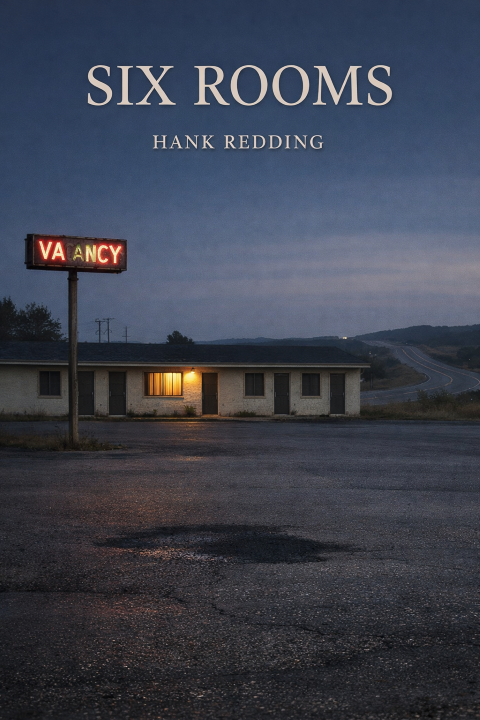
Chapter One
The letter came folded too neatly, as if whoever sent it believed order alone could soften what it said.
She found it wedged between the electric bill and a seed catalog that had been arriving for three years now, addressed to a man who’d been gone longer than the paint on the office trim had been peeling. She slid her thumb under the flap, tore it open clean, and read the first line standing up.
Notice of review regarding continued operation.
She set it down without finishing.
Outside, the sign buzzed—one of those sounds you only noticed when it stopped. VACANCY glowed with the second C burned out, the red tubing around it uneven, tired. She’d meant to replace it last fall, but the ladder was heavy and the nights were already cold by then. Now it felt late for ladders.
The motel sat where the highway bent, just enough to make drivers slow without committing. Six rooms in a line, office on the end, soda machine that took exact change or none at all. The parking lot was more patch than pavement. When it rained, water pooled in the low places and reflected the rooms upside down.
She liked that, the reflections. It made the place look like it had a second life underneath itself.
Room 3’s light was out again.
She grabbed a bulb from the drawer behind the counter—there were fewer left than she remembered—and walked the length of the building, her keys heavy on the ring. The door stuck the way it always did, swelling in the frame from years of heat and cold. She leaned into it with her shoulder, not impatient, just practiced.
The room smelled faintly of cleaner and old fabric. She crossed to the lamp, unscrewed the dead bulb, and held it up to the window. The filament rattled when she shook it.
Not broken. Just finished.
She left it on the nightstand and screwed in a new one. The light came on soft and yellow, forgiving everything it touched. She didn’t switch it off before leaving. Someone might come in late. It was better not to make them reach in the dark.
By noon, three cars had come through the lot and gone without stopping. One slowed, tires crunching gravel, then kept on. That almost counted.
She returned to the office and read the rest of the letter. There was nothing surprising in it—words like viability and corridor improvement arranged carefully so no one had to say closure outright. They weren’t demanding anything. They were inviting discussion. She had sixty days.
She folded the letter back along its original creases and slid it under the register.
The ice machine jammed just after one.
She knelt beside it with a screwdriver, her knees complaining against the concrete. A small pile of cubes had melted into a dark wet patch, spreading toward the drain. She worked the panel loose, careful not to strip the screws. Inside, the machine groaned like it had feelings about being disturbed.
“Alright,” she said quietly. “I hear you.”
She cleared the blockage, wiped her hands on her jeans, and stood slowly. For a moment she stayed there, one hand resting on the machine’s warm metal skin. The hum steadied.
A pickup rolled in just before dusk, pulling into the space closest to the office. The man didn’t get out right away. He sat with the engine running, staring through the windshield like he was deciding something that wasn’t on the surface.
She waited.
Eventually he came in, cap low, eyes tired but alert. He asked for a shower. Not a room. She nodded and slid the clipboard toward him, already reaching for the key to Room 6.
“That heater clicks,” she said. “But it works.”
He smiled, relieved by the warning. Paid in exact change. He always did.
While he was gone, she stepped outside. The sky was flattening into evening, colors drained thin. Headlights passed on the highway, fewer than there used to be. The new bypass had shaved minutes off a drive no one wanted to linger on anyway.
She thought about the letter then. About the way it assumed movement was improvement. About how easy it was to draw lines on a map and call them progress.
The man returned the key without a word. She nodded. That was enough.
Later, after dark had settled for good, she walked the rooms one last time. Checked locks. Straightened a chair. In Room 3, she turned off the lamp she’d left on earlier. The light snapped out clean, like it hadn’t been meant to stay.
Back in the office, she poured herself a cup of coffee she wouldn’t finish and sat behind the counter. The letter was still there, waiting under the register, patient as paperwork always was.
She didn’t open it again.
Some places didn’t close all at once.
They thinned.
They waited.
And sometimes, that was enough to keep them standing.
Chapter Two
She woke before the alarm, the way she usually did, with the sense that something had already started without her.
The coffee tasted thin. She drank it anyway.
Outside, frost edged the parking lot in places the sun wouldn’t reach until late morning. The sign hummed, steadier than it had been the night before, as if it were trying to prove something. She flipped the switch for VACANCY and watched the red tubes warm themselves awake. The missing C still looked like a decision she hadn’t made.
A county sedan pulled in just after nine.
It parked carefully, centered in the space, as though alignment might matter later. The man who got out wore a jacket that wasn’t quite warm enough and shoes that had never met gravel until today. He adjusted his collar before coming in, eyes already scanning the office for whatever he’d been told to look for.
“Morning,” he said, too cheerfully.
She nodded. “Coffee’s fresh.”
He declined with a smile that stayed polite by habit. He introduced himself and handed her a card. The same name was printed at the bottom of the letter under the register.
“I won’t take much of your time,” he said. “Just wanted to see the place in person.”
She waited for the request that would follow. It didn’t come right away.
He walked the office slowly, pausing at the rack of brochures no one ever restocked. Fishing. Scenic overlooks. A museum that had closed before the bypass opened. He ran a finger along the counter, lifted it to inspect the dust, then wiped it on his slacks without comment.
“You’ve been here a while,” he said.
“Yes.”
“And the business—”
“Is what it is.”
He nodded, scribbled something on a pad. Outside, a semi roared past without slowing. The building shuddered just enough to remind them both that it used to mean something when trucks pulled off here.
“There are programs,” he said carefully. “Transition assistance. Redevelopment grants. We try to make it as painless as possible.”
She looked at him then. Not unkindly. Just directly.
“Nothing like this is painless,” she said.
He smiled again, smaller this time. “Of course.”
They walked the rooms together. She let him go first. He took notes. Asked about occupancy rates, utilities, maintenance costs. She answered without embellishment. In Room 6, the heater clicked on cue.
He winced. “That doesn’t bother people?”
“They sleep through it,” she said. “Or they don’t.”
Outside, he gestured toward the highway. “Traffic’s changed.”
“Yes.”
“The bypass was necessary.”
She didn’t argue. She watched a car pass without looking at the sign.
When they finished, he thanked her for her time and said someone would follow up. He didn’t say when. He didn’t say how. He left the card on the counter even though she already had one.
After he was gone, the motel felt quieter than before. Not emptier. Just aware of itself.
A woman checked in around noon with a child who refused to speak. The girl sat in the plastic chair by the ice machine alcove, knees pulled to her chest, watching the cubes tumble into the bucket. The sound seemed to calm her. The woman asked for the same room she always did.
“It clicks,” she warned.
“I know,” the woman said. “That’s why.”
By late afternoon, clouds rolled in low and flat. The air thickened, holding onto everything it touched. She changed sheets, folded towels, replaced a cracked soap dish she’d been meaning to throw away for years. In Room 3, the bulb she’d set aside still sat on the nightstand. She screwed it back into the lamp and flicked the switch.
The light came on. Weak, but steady.
She left it.
At dusk, she stood at the edge of the lot and watched the headlights go by. Fewer slowed now. Most didn’t even drift toward the shoulder. The road had learned what it wanted.
She thought about the letter again. About sixty days being both generous and brief. About how easy it would be to let the place close itself, one small failure at a time.
Behind her, the sign buzzed. One letter missing. Still legible.
She went back inside, locked the door, and wrote the day’s numbers in the ledger. Not profit. Just presence.
Six rooms.
Two occupied.
One shower.
One light left on.
She closed the book without adding a total.
Some accounts weren’t meant to be settled yet.
Chapter Three
The fog came in low and stayed.
It pressed against the windows like it was trying to remember something, dulling the edges of the lot and turning the highway into a suggestion. She liked mornings like that. They made the motel feel briefly undiscovered, as if it had slipped its coordinates overnight.
She started the laundry before the sun showed itself. The machines thumped unevenly, out of rhythm with each other, the way they always had. She folded towels at the long table, smoothing each one twice, aligning corners no one else would notice.
A pickup appeared in the fog just after seven. It rolled into the lot without headlights, tires finding the old cracks by instinct. She recognized the shape before the engine cut.
He came in carrying a paper sack that smelled like grease and coffee. Set it on the counter without being asked.
“Thought you might want breakfast,” he said.
She nodded. “You didn’t stay.”
“Didn’t need to.”
He used the shower once a week, paid cash, never left a room key behind. He stood at the counter while she counted out his change, neither of them in a hurry to finish the transaction.
“They send anyone out yet?” he asked.
“Yes.”
He didn’t ask who. “They always do.”
She slid the coins toward him. He didn’t take them right away.
“My brother stayed here once,” he said, staring past her at the hallway. “Long time ago. Don’t remember the room. Just remember it was quiet.”
She waited.
“He left before morning,” he said. “But I think it helped.”
He took the change then, folded the sack under his arm, and left without saying goodbye. The fog swallowed him before the door finished closing.
By midmorning, the clouds lifted enough to let light through, thin and colorless. She checked the mail. Nothing new. She almost felt disappointed.
Room 3 was still unoccupied. The weak bulb glowed on, uncomplaining. She turned it off this time. Not because it needed to be. Because she needed to.
Around noon, a rental car pulled in. The woman driving it got out slowly, stretching her back like she’d been in the seat too long. She asked for a room for the afternoon only. Said she didn’t sleep well in unfamiliar places.
“That’s most places,” she said.
The woman smiled. “This one feels different.”
She handed over the key to Room 1. The heater didn’t click in that room. It stayed silent, almost suspiciously so.
While the woman slept, she sat in the office and reread the letter. Not for what it asked, but for what it assumed. That staying was temporary. That leaving was forward motion.
She thought about how many people had stopped here without intending to. How many decisions had been made in these rooms that didn’t belong to the motel but had passed through it anyway. None of that showed up on occupancy charts.
Late afternoon brought wind. The sign flickered once and steadied. She made a note to check the wiring, knowing she probably wouldn’t.
As evening came on, she stood at the edge of the lot again. The fog was gone now, replaced by distance. The bypass carried its steady, indifferent flow. A few cars slowed. One turned in.
She watched it park.
Not everything that remained did so by accident.
Chapter Four
The wind kept up through the night, rattling the loose corner of the office window until she wedged a folded receipt into the frame. It quieted enough to let sleep come in pieces.
By morning, the lot was empty again.
She stripped Room 1 first. The woman had folded the blanket at the foot of the bed, neat as an apology. The soap was unused. The towel damp, but not wrung. Nothing left behind except the faint indentation where a body had rested without trusting the place long enough to settle.
In Room 6, the heater clicked once when she stepped inside, as if acknowledging her. She reached down and tapped the metal casing with her knuckle. It stopped. For now.
She made her way back to the office with the laundry balanced on her hip. The ledger sat open where she’d left it the night before. She filled in the lines without looking at the previous days. The numbers weren’t lying, but they weren’t telling much either.
A man in a clean jacket arrived just after ten. Not county this time. Too confident for that. He didn’t park straight.
He came in smiling, hand already extended.
“I won’t take much of your time,” he said.
She didn’t take his hand.
He recovered smoothly. “I represent a group looking to invest in properties along the old corridor. Transitional lodging. Boutique scale.”
She pictured the rooms painted white. New fixtures. A sign that didn’t hum.
“We’d be happy to make you an offer,” he continued. “Something generous. You’ve carried this place a long time.”
She looked past him, out toward the highway. A truck passed without slowing. Another followed it.
“I’m not carrying it,” she said. “I’m keeping it open.”
He laughed lightly, like she’d made a joke without realizing it. “Of course. But you can’t fight the math.”
She walked him down the line of rooms. Didn’t explain anything. Didn’t point out the way the concrete dipped near Room 4, or how the lock on Room 2 needed to be lifted just so. He didn’t ask.
In Room 3, the light was off. The weak bulb rested in the drawer behind the counter now, wrapped in paper. He flicked the switch anyway.
“Needs replacing,” he said.
“No,” she said. “It doesn’t.”
They stood there a moment longer than necessary. He cleared his throat.
“Well,” he said, already turning away. “If you change your mind.”
She locked the office door after he left and sat behind the counter without turning on the radio. The quiet wasn’t peaceful. It was attentive.
Late afternoon brought a car she didn’t recognize. Older. Plates from two states over. A man got out and stood for a long time before coming inside.
“Do you have vacancy?” he asked.
She glanced at the sign. One letter missing. Still honest.
“Yes,” she said. “For now.”
He paid in cash and asked nothing else. Took the key and went straight to Room 3.
She watched the light come on. Steady. Soft.
At dusk, she made a pot of coffee and poured two cups out of habit before remembering she was alone. She drank one. Left the other on the counter until it went cold.
When night settled in, she walked the lot one last time. The hum of the sign. The quiet of the rooms. The road moving past without apology.
She thought about the letter. About sixty days ticking down. About how no one had ever stayed here forever.
That wasn’t the point.
She went back inside and turned the sign to VACANCY again, even though it already was.
Some doors didn’t close because they were needed.
They stayed open because someone kept answering them.
Chapter Five
Rain came in sideways just after midnight.
She woke to the sound of it hitting the office window, sharp and irregular, like gravel thrown by a tired hand. For a moment she stayed still, listening for leaks. The roof held. It always did, just long enough.
By morning, the lot was slick and dark, puddles filling the low spots she knew by heart. The reflections were better in rain. The rooms doubled themselves, lights hovering upside down in the water until a drop broke them apart.
She put out the mat and flipped the sign back on. The hum felt louder in the damp air.
A car pulled in before eight, wipers squeaking in protest. The driver didn’t turn the engine off right away. She waited, watching his outline shift in the seat, hands moving like he was counting something invisible.
When he finally came in, he shook the rain from his jacket without apologizing.
“Just need a room till the storm passes,” he said. “Hour or two.”
“That’s fine.”
He paid in small bills, damp at the edges. She gave him Room 2 and told him about the lock. He nodded like he’d already figured it out.
While he was inside, she took the letter out from under the register and set it on the counter. The paper had softened slightly from the air. She pressed it flat with her palm, smoothing it the way she did the towels.
The words hadn’t changed overnight. They still pointed forward, away from the place they were written about.
The man left sooner than expected. Didn’t ask for change. Didn’t look back. His taillights smeared red across the wet pavement and were gone.
By late morning, the rain eased into something patient. She walked the rooms with a rag and a bucket, wiping down sills, checking for drips. In Room 3, the bedspread had been folded again. The man had left the light on.
She stood there longer than she meant to, looking at the weak bulb doing its best. She thought about replacing it. About how easy that would be.
She didn’t.
At noon, the phone rang. It startled her. It always did now.
“Yes,” she said.
The voice on the other end was careful, rehearsed. Another follow-up. Another reminder of timelines and options. The word deadline landed between them, polite but firm.
“I understand,” she said, because it was easier than arguing.
After she hung up, she sat at the small table by the window and ate a sandwich without tasting it. Outside, the road kept moving. Inside, the motel waited.
A truck pulled in midafternoon, mud up to the wheel wells. A woman climbed out with a dog on a frayed leash. The dog sat immediately, obedient and tired.
“We just need to rest,” the woman said. “We’ll be gone by morning.”
She nodded and handed over the key to Room 4. “The floor creaks,” she said. “He might hear things.”
The woman smiled down at the dog. “So will I.”
That evening, the rain returned lightly, tapping instead of pounding. She watched the woman walk the dog along the edge of the lot, careful to avoid the puddles. The dog sniffed every post like it was checking a list.
When night came on, she walked the rooms again. Listened. Room 4 murmured softly—dog breathing, a human shifting. Room 3 was quiet now, light off.
In the office, she opened the ledger and wrote without thinking.
Six rooms.
Three occupied.
One storm.
No decisions.
She closed the book and set the pen on top of it, aligned with the spine.
Outside, the sign buzzed, missing a letter, holding its place anyway.
Not everything that mattered announced itself.
Some things just stayed lit long enough to be found.
Chapter Six
Morning came washed thin and clean.
The rain had left behind a smell of wet dust and metal, the kind that didn’t linger but made itself known. She opened the office door and stood there a moment, breathing it in. The lot steamed softly where the sun reached it first.
Room 4 emptied early. The woman thanked her twice, the second time quieter than the first. The dog pulled once toward the highway, then followed her back to the truck without protest.
“They’ll be widening that road,” the woman said, nodding toward the bypass. “That’s what they told us up north.”
She didn’t respond. Some information didn’t require acknowledgement.
By midmorning, the motel settled into its familiar lull. No arrivals. No departures. Just the low mechanical sounds that meant things were still working—the refrigerator cycling, the soda machine humming, the sign outside holding its uneven glow.
She pulled the drawer behind the counter open and counted the remaining bulbs. Fewer again. She set one aside, then put it back. It would keep.
The county sedan returned just after eleven. The same careful parking. The same jacket.
“I won’t stay long,” the man said, already apologizing for something he hadn’t done yet.
She gestured to the chair. He didn’t sit.
“We’re approaching the midpoint of the review period,” he said. “I wanted to check in.”
She nodded. “I’m still open.”
He smiled, as if that were both admirable and impractical. “Of course. But you should know—once the corridor designation changes, certain allowances expire.”
“Allowances for what?”
“For staying,” he said, then corrected himself. “For operating as-is.”
She thought about the heater in Room 6. About the lock on Room 2. About the bulb in Room 3 that still worked if you let it.
“I see,” she said.
He hesitated, then lowered his voice. “Off the record—this isn’t personal. It’s just momentum.”
She looked at him then. Really looked. He had kind eyes. Tired ones.
“Everything is,” she said.
After he left, she went to Room 3 and sat on the edge of the bed. The mattress sighed beneath her weight, springs adjusting the way they always did. She turned on the lamp. The light held.
She imagined the room without it. White walls. New fixtures. No shadows.
She turned the lamp off and stood.
That afternoon, a car pulled in that shouldn’t have. Wrong turn, probably. The driver hesitated, then parked anyway. He came in holding a folded map, creases worn thin.
“Do you know where this road goes?” he asked, pointing.
She leaned over the counter and traced the line with her finger. “It used to go everywhere,” she said. “Now it mostly goes back.”
He smiled, uncertain whether that was an answer. He rented a room anyway.
At dusk, she walked the length of the building and checked each door. Locked. Locked. Locked. In Room 3, she paused, hand on the knob.
The light was off. The room empty. Ready.
She didn’t go in.
Back in the office, she took the letter out one last time. Read it slowly. Not for its promise. For its deadline.
She folded it again, more carefully than before, and placed it in the drawer with the spare keys.
Some things were meant to be decided later.
Some things earned the right to wait.
Chapter Seven
The night came clear and cold, the kind that sharpened sound.
She heard the highway before she saw it—tires whispering, engines breathing through the dark. The bypass carried most of it now, a steady river that didn’t need banks. Still, a few cars drifted close enough to notice the sign, its missing letter glowing like a held breath.
VACAN Y.
She turned the office lamp lower and sat behind the counter with her hands folded. The ledger lay closed, patient. Outside, a single room light burned—Room 3 again. She hadn’t turned it on. That pleased her.
A knock came just after ten. Soft. Unsure.
She opened the door to a man holding a helmet under his arm, hair flattened where it had rested. The motorcycle leaned in the lot, still ticking as it cooled.
“Do you have a room?” he asked.
“Yes.”
He smiled with relief that didn’t overstay its welcome. Paid cash. Took the key without comment. When he left, she noticed he’d parked farther from the office than anyone else, as if the space itself needed room.
Later, she walked the rooms. Listened. The heater clicked once in Room 6, then settled. The ice machine hummed, its earlier jam forgiven. In Room 3, the light cast a small square onto the walkway, just enough to see where to step.
She stood there longer than she meant to, looking at the glow. It wasn’t bright. It didn’t announce anything. It simply stayed.
Back inside, she opened the drawer and took out the letter. She didn’t read it. She tore it in half cleanly, then again. The sound was louder than she expected. She folded the pieces together and slid them into the trash beneath the counter, then hesitated and pulled them back out.
She smoothed the pieces, stacked them, and placed them in the ledger like a receipt.
At midnight, she stepped outside and turned the sign off. Not because the rooms were full. Because it was late.
The dark settled immediately, heavy and honest. Above, stars came through where the clouds had given up. The motel held its shape without asking to be seen.
She locked the office and stood in the lot, hands in her pockets, listening to the place breathe.
Tomorrow would come.
The road would keep moving.
The letters would keep arriving.
But for now, the doors were closed the way eyes close—
not in surrender,
but in rest.
And the motel, quiet and imperfect,
remained.
Chapter Eight
Morning came without ceremony.
The sky lifted itself from dark to pale, the color of old paper held up to light. She unlocked the office and turned the lamp on low, more out of habit than need. Outside, the motel looked the same as it always had—six rooms in a line, paint holding where it could, the sign missing what it had lost and continuing anyway.
Room 3 went dark on its own sometime before dawn. She noticed it while pouring coffee and felt something settle, like a decision that didn’t need witnesses.
The motorcycle was gone. No note. No tracks worth following. Just a dry patch where the stand had rested.
She walked the rooms one last time before the day began in earnest. Checked the locks. Straightened the chair in Room 1. Tapped the heater in Room 6 until it quieted. In Room 3, she unscrewed the weak bulb and held it up to the window.
It still worked.
She wrapped it in paper and set it in the drawer with the others.
By midmorning, a car slowed at the bend. Then another. One turned in. Then two more passed without stopping. The pattern returned, familiar as breath.
The phone rang once. She let it. It stopped.
At noon, she opened the ledger and wrote.
Six rooms.
Two occupied.
One night rider.
One light that finally rested.
She closed the book and slid it into the drawer beneath the counter, atop the letter that had arrived folded too neatly for the life it was meant to interrupt.
Outside, the sign buzzed as the sun warmed it. VACAN Y held steady. Enough to be read. Enough to be understood.
She stepped into the lot and stood there, hands at her sides, feeling the place hold together around her—not tightly, not desperately, just enough.
The road moved on.
The world recalculated.
And the motel, quiet and outpaced and still answering,
remained open.
Not because it had to.
Because it was.
Chapter Nine
The afternoon stretched without asking for anything.
Light slid across the lot and climbed the doors, stopping where the paint had given up years ago. She sat at the office desk with the window cracked, dust motes moving in slow agreement. The soda machine clicked. The refrigerator answered. The place spoke in small, dependable sounds.
A car eased in near three. Local plates. A man she recognized but didn’t know by name. He rented a room for an hour and asked for nothing else. When he left, he nodded once, as if they’d concluded something together.
She folded towels. Replaced a hinge screw she’d been ignoring. Watered the potted plant by the window until the soil darkened and stopped asking for more. Outside, the highway kept its distance.
The phone rang again—once, then twice. She picked it up this time.
“Yes,” she said.
The voice was new. Younger. Careful in a different way. It spoke about extensions, about revised timelines, about an updated review. It offered to email a summary. She said that would be fine.
When the call ended, she didn’t write anything down.
Near sunset, a family pulled in and parked crooked. The parents argued quietly while the child wandered the edge of the lot, counting posts. She gave them Room 5 and pointed out the ice machine. The child watched the cubes fall like they were proof of something.
After dark, she turned the sign off early. Not full—just finished for the day. The missing letter disappeared into the dark, the word becoming suggestion again.
She locked the office and stood outside, feeling the night cool the concrete under her shoes. The stars came through one by one. The bypass hummed, steady and far enough away to forget.
Inside the drawer, the ledger rested. Beneath it, paper that had once demanded an answer lay quiet, folded into usefulness by time.
Tomorrow would ask again. It always did.
But tonight, the motel held its shape without effort.
She turned the key, pocketed it, and walked the length of the rooms once more—counting doors, counting light, counting what remained.
Enough.
Chapter Ten
The next morning arrived heavier than the ones before it.
Not with weather. With expectation.
She felt it before she opened the office—an invisible weight pressing against the routine, asking what would happen now. She unlocked the door anyway. The hinge complained. She made a note to oil it, knowing she might not.
Room 5 checked out early. The parents didn’t argue this time. The child waved once from the back seat, then turned around and faced forward, already finished with the place.
She cleaned slower than usual. Not because there was more to do, but because there wasn’t. Each room asked the same things it always had. Each answered when she did them.
In Room 3, she paused.
The lamp was off. The bed untouched. The air settled.
She sat on the edge of the mattress again, hands folded, waiting for a feeling that didn’t come. What arrived instead was steadier. Quieter.
Outside, a white pickup pulled in. County plates. Different driver.
She watched him park without care for the lines.
He came in holding a folder thick enough to look official without being heavy. He didn’t smile.
“I’m here about the review,” he said.
“I know.”
He set the folder down between them, not opening it. “There are changes coming. Faster than expected.”
She waited.
“The bypass expansion is moving up,” he continued. “Funding cleared. Once construction starts, operating permits along this stretch will be… reconsidered.”
“And if I close now?” she asked.
He hesitated. “There are incentives.”
She nodded. “And if I don’t?”
He shrugged, uncomfortable. “Then things get complicated.”
She thought about the heater clicking. The ice machine jamming. The weak bulb that still worked if you trusted it.
“Complicated is manageable,” she said.
He didn’t argue. He slid a business card across the counter and left the folder where it was, unopened. He walked out without saying goodbye.
She didn’t touch the folder.
Instead, she opened the ledger.
Six rooms.
One meeting.
No closure.
She closed the book.
That afternoon, the motel filled more than it had in days. Not full. Just alive. A couple passing through. A man waiting for a call that hadn’t come yet. A woman who asked if the water pressure was strong.
“It’s honest,” she said.
That seemed to satisfy her.
As dusk arrived, the lot held more light than dark. Lamps glowed. Doors closed softly. The sign buzzed.
VACAN Y.
She stepped outside and looked at it from across the lot. One letter missing. The word incomplete. The meaning intact.
The world would move on.
The road would redraw itself.
Paper would keep arriving folded too neatly.
But for now, the motel stood.
Not defiant.
Not saved.
Just present.
And sometimes, presence was enough to resist erasure.
Chapter Eleven
The night held.
Not dramatically. Not kindly. It simply stayed where it was.
She left the folder on the counter until the lamps in the rooms clicked off one by one. When the last door closed, she picked it up and carried it into the office. She didn’t open it there. She set it beside the ledger and turned the radio on low, then lower, until it was only a suggestion of voices elsewhere.
Outside, the sign buzzed. VACAN Y.
She stepped into the lot and stood barefoot on the concrete, the cold sharp enough to remind her she was still here. Headlights passed on the bypass in even intervals, indifferent and efficient. A few cars drifted closer, slowed, then moved on. One turned in.
A sedan pulled up near Room 2 and cut its engine. The driver stayed seated for a long moment. When he finally stepped out, he looked around as if he’d arrived somewhere unexpected and was relieved to find it still standing.
She met him halfway.
“You open?” he asked.
“Yes.”
He nodded, as if that settled something he’d been carrying. Paid without asking the price. Took the key she handed him and walked to the room without looking back.
Later, when the lot was quiet again, she returned to the office and opened the folder.
There were forms. Timelines. Boxes to check. Paragraphs that softened consequences with clean margins and generous spacing. She read it all without hurry.
At the end, there was a place for her name.
She closed the folder and slid it beneath the ledger.
Then she opened the ledger itself.
Six rooms.
Four occupied.
One decision deferred.
She set the pen down and didn’t add anything else.
Just before midnight, she turned the sign off—not because she had to, but because she chose to. The dark came quickly, the missing letter disappearing first, the rest of the word following.
The motel didn’t vanish.
It held its shape in the dark the way it always had—by memory, by habit, by someone answering when there was a knock.
She locked the office and stood in the quiet, listening to the place breathe.
Tomorrow would bring letters.
Surveys.
Deadlines dressed up as opportunities.
But tonight, the doors were closed, the rooms warm, the lights honest.
And the motel—outpaced, imperfect, still open—
remained.
Not because it was profitable.
Not because it was protected.
Because someone stayed.