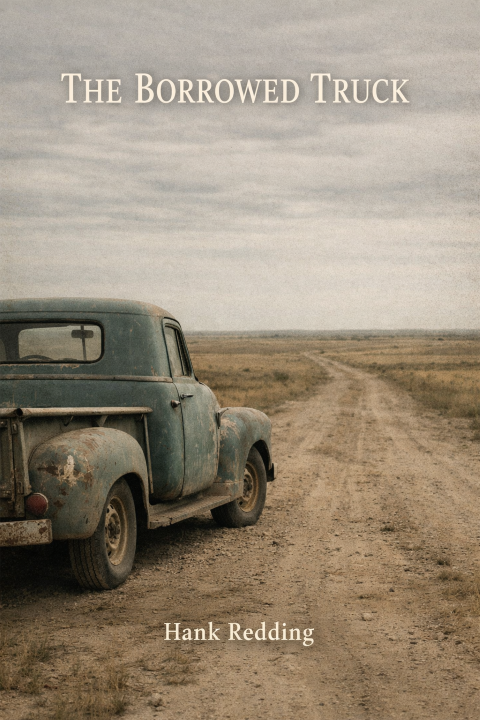
Chapter 1 — The Quit Engine
The truck quit on the edge of Dry Fork, not in it.
The engine coughed once—wet and uncertain—then again, thinner, like it was checking whether anyone was listening. After that it went quiet. Not dead exactly. Just finished.
Harlan Reed let it roll. He eased his foot off the pedal and guided the wheel toward the shoulder, gravel ticking under the tires until momentum ran out on its own. The truck leaned slightly to the right, settled, and stayed there.
He didn’t move right away.
His hands remained on the wheel, thumbs hooked along the rim, fingers loose but ready. It was the same posture he’d learned overseas—wait long enough to know whether something was actually over. Silence could mean many things. Sometimes it meant nothing. Sometimes it meant the next sound mattered more.
Nothing followed.
The dash stared back at him. No warning lights. No smoke. No drama. Just the low tick of cooling metal. Harlan breathed out once through his nose and nodded, as if the truck had made a reasonable argument.
Outside, the town sat low against the plains.
Dry Fork wasn’t arranged so much as it was allowed to happen. Buildings kept distance from one another, leaving room for wind and dust to pass through without catching. A gas station stood nearest the road, single pump, paint faded down to primer. Beyond it, a diner with a leaning sign—coffee cup chipped at the rim, letters sun-worn. Farther down, a mechanic’s shop with both bay doors open to the day, its shadow spilling onto the dirt like something that had been there a long time and planned to stay.
Harlan stepped out and stretched his back. The movement pulled at an old tightness just under his shoulder blade, a reminder he still carried water and gear differently than before. The Pacific had left that behind. The war had ended years ago, but his body hadn’t noticed.
He locked the truck out of habit, though there was nothing inside anyone would want. A duffel. A spare shirt. Tools that weren’t his. He started walking toward the shop.
As he crossed the street, the wind picked up and brought with it the smell of oil and hot metal. The ring of steel on steel carried from inside the building—steady, practiced, not hurried. Whoever was working in there wasn’t waiting on him.
The mechanic didn’t look up when Harlan stepped inside.
He was older, shoulders rounded slightly forward, face set into lines that hadn’t been earned all at once. His hair was thin and gray, cut short, the way men did it when mirrors stopped mattering. He held a wrench in one hand and a rag in the other, wiping grease without much effect.
“What happened?” the man asked, still focused on the engine in front of him.
“Quit running,” Harlan said. “No warning.”
The mechanic nodded. Not sympathy. Agreement. Engines did that sometimes. So did people.
He stepped around the hood and looked Harlan over then, not rudely. Just checking. Faded army jacket. Dust on the cuffs. Boots worn but maintained. The duffel strap across one shoulder.
“Borrowed?” the mechanic asked.
Harlan glanced back toward the road, where the truck sat angled slightly wrong, as if embarrassed. “Something like that.”
The man grunted and turned away. The name ELLIS was stitched over the pocket of his shirt, thread frayed, letters soft with age. He popped the hood of Harlan’s truck and leaned in, hands disappearing into the compartment like they knew where to go without asking.
Harlan stayed back. Men like Ellis didn’t need help from strangers. Help created expectations.
The shop was quiet except for the ticking engine and the faint radio playing somewhere behind the workbench—static-heavy, barely music. Along one wall sat shelves of parts that had seen multiple generations of use. Bolts sorted into coffee cans. Belts hanging from nails. A few thin books stacked near the counter, covers worn, pages curled. Harlan didn’t touch them.
After a while, Ellis straightened and wiped his hands again. “Fuel line’s clogged. I can clear it.”
“How much?” Harlan asked.
Ellis studied him for a moment longer than before. Took in the jacket. The duffel. The way Harlan stood like he expected to leave.
“No charge,” Ellis said. Then, after a beat, “But you’ll do me a favor.”
Harlan felt it then—the shift. Not heavy. Just enough to register. Like a weight being set on a scale somewhere out of sight.
“What kind?” he asked.
“Take something up the road. Ten miles. Won’t take long.”
Harlan nodded once. He didn’t ask what it was. The truck wasn’t moving without it.
By early afternoon, the engine was running again. Not eager, but steady. Ellis brought out a crate from the back—wooden, unmarked, heavy enough to clink softly when it moved. Harlan lifted it without comment and set it in the bed.
“Barrett place,” Ellis said. “End of the gravel track past the dry creek. He’ll know.”
“Who?”
“Barrett.” Ellis shut the tailgate. “Tell him it’s from me.”
The road narrowed as soon as Harlan left town. Pavement gave way to dirt, rutted from old rains that no longer came often enough to matter. Fence posts leaned at angles that suggested effort once, then surrender. Wire sagged between them, holding nothing.
The land was scraped thin here. Fields that had blown away in the thirties never quite came back. What grew did so cautiously, low to the ground, like it was testing whether it would be allowed to stay.
The dry creek cut across the track a mile out—a shallow scar in the earth, its bed packed hard and pale. It must have carried water once. Enough to earn a name. Now it just shaped where people went.
The Barrett place sat beyond it.
The house looked temporary despite its foundation. Weathered siding. Porch with one chair. A shed leaned close, as if listening. A man stepped out as Harlan pulled up—tall, thin, eyes narrowed against the sun.
“You from town?” the man asked.
“Ellis sent me.” Harlan lifted the crate from the bed.
The man took it, set it down, pried the lid with a pocketknife. Inside were cans of oil, bolts, a coil of wire. Useful things. He nodded once.
“He say why?” the man asked.
“No.”
The man glanced at the truck. “That his too?”
“Borrowed.”
A thin smile crossed the man’s face. Not unkind. Not welcoming. “Everything is.”
He turned toward the house without waiting. Harlan followed.
Inside, the air smelled of coffee and dust. A boy sat at the table, pencil in hand, drawing lines across a piece of paper. Not pictures. Paths. Intersections. Places that led somewhere else.
“Sit,” the man said. “Coffee?”
Harlan sat. The chair creaked once and held.
The boy looked up then, eyes sharp. “You fight?” he asked.
“Yeah.”
“Kill anyone?”
The man cleared his throat. “Enough.”
The boy returned to his paper. The pencil moved slower now, more deliberate.
Harlan sipped the coffee. Strong. Bitter. It did what it was supposed to do.
Outside, the wind shifted. The house stayed quiet.
He realized then that the favor had already stretched beyond delivery. Not because anyone had asked. Because places like this didn’t let things pass through untouched.
And he stayed, for the moment, because the road would still be there when he left.
Chapter 2 — What Stayed Open
The shop stayed open because Ellis did.
That was how people said it, though they didn’t say it often. Dry Fork didn’t waste breath on explanations that didn’t change anything.
The building itself wasn’t much—corrugated siding patched in three places, roof tarred so many times it looked quilted—but it held. The doors were never locked during daylight. Not because Ellis trusted people, but because locking up suggested a kind of confidence the place couldn’t afford. If someone needed something, they came in. If they didn’t, the doors stayed open anyway.
Harlan showed up just after eight the next morning.
He’d slept in the truck, angled off the road near the gas station, the window cracked enough to let air move through. The engine had started clean when he turned the key, which felt like a favor already spent. He shut it down and walked.
Ellis was inside, same as the day before. Same shirt. Different stain.
“You eat?” Ellis asked, not looking up.
“No.”
“Diner’s open. She’ll charge you.”
Ellis said it like a warning and a courtesy at the same time.
“I’ll get to it,” Harlan said.
Ellis nodded and went back to the engine in front of him. A Ford, older than the truck, hood propped with a length of wood. The radio was on again—low, distant, talking about weather in places that mattered to someone else.
Harlan stood near the counter and waited.
There were books there. Not many. Thin, soft-backed, pages curled and darkened at the edges. They weren’t arranged by date or size. They weren’t labeled. Some were stacked. Some were laid flat and forgotten. Harlan didn’t touch them. He didn’t need to. The covers told him enough.
These weren’t records for anyone outside the room.
Ellis straightened and rolled his shoulders. “I’ll need you to pull that carb later,” he said. “Hands still steady?”
“Yeah.”
Ellis glanced at him again, a little longer this time. “Where you from?”
“East,” Harlan said.
Ellis snorted. “That’s not an answer.”
“It’s enough of one.”
Ellis accepted that. He always seemed to accept things—not approve of them, not forgive them, just set them where they landed.
They worked in silence for a while. Harlan held the light when asked. Passed tools when Ellis nodded. The Ford came apart piece by piece, patient and reluctant. When something resisted, Ellis waited. He didn’t force. He knew better.
Around midmorning, the door creaked open and a man Harlan hadn’t seen before stepped inside. Younger than Ellis, older than Harlan. Hat in his hands. Dust on his cuffs.
“You got the belt?” the man asked.
Ellis wiped his hands. “I got one that’ll fit.”
“What’s it cost?”
Ellis shrugged. “We’ll see.”
The man nodded, relief flickering across his face. “I can bring eggs tomorrow. Or wire. I got some left.”
Ellis waved him off. “Just bring yourself back in one piece.”
The man laughed, quick and nervous, and took the belt.
After he left, Ellis didn’t say anything. He went back to the Ford.
Harlan understood then how the place functioned. Not on numbers. On memory. On who came back. On who didn’t.
Near noon, the diner filled enough to matter. Ellis closed the hood on the Ford and washed his hands at the sink in back. The water ran rusty for a second before clearing.
“You can eat now,” Ellis said. “I’ll still be here.”
Harlan crossed the street.
The diner smelled like coffee, grease, and something baked early that morning. The woman behind the counter looked up when he came in. Mid-forties, maybe. Hair pinned back. Apron clean, though the hem was frayed.
“You the one with the truck?” she asked.
“Yes, ma’am.”
She poured coffee without asking. Set the cup down in front of him. “You want eggs?”
“Yes.”
She wrote something on a pad behind the counter, pencil stub worn flat. Harlan noticed she didn’t tear the page off.
A few men sat at the tables, hats on, voices low. They talked about the wind. About Vaughn being back in town. About the creek, like it might hear them.
“He says it’s all legal,” one man said.
“Legal don’t mean fair,” another answered.
“No,” the first said. “But it’s what counts.”
Harlan ate. The eggs were good. The coffee refilled itself without ceremony.
When he stood to leave, the woman touched the counter lightly with her finger. “You can pay when you’re through,” she said. “Or when you’re gone. Either way.”
“Thank you.”
She nodded. “You’ll find most things work like that here.”
Back in the shop, Ellis had moved on to something else. A pump this time. Older. Stubborn.
“You hear about Vaughn?” Ellis asked, casual.
“A little.”
Ellis grunted. “He comes every few years. Always polite. Always early. Always right.”
“What does he want?”
Ellis looked at Harlan then. Really looked. “Same thing everyone wants,” he said. “What’s left.”
The afternoon stretched. Harlan worked. Held parts. Cleaned what Ellis asked him to clean. By late day, his hands were black with grease that wouldn’t come out without effort. He didn’t bother yet.
As the sun dipped, a pickup rolled past the open doors. Clean. Newer. Didn’t slow.
Ellis watched it go. “That’s him.”
“Vaughn?”
Ellis nodded. “Won’t stop unless he has to.”
Harlan thought of Barrett. The boy’s drawings. The crate in the bed.
“You staying tonight?” Ellis asked.
“Don’t know.”
Ellis shrugged. “Most folks don’t.”
The light faded. The shop stayed open.
And Harlan understood something else then—not fully, not cleanly—but enough to feel it settle.
The favor hadn’t been the crate.
The favor was staying visible.
And once seen, it was hard to pass through unnoticed.
Chapter 3 — The Gravel Track
Harlan left Dry Fork early, before the diner filled and before anyone could decide his name belonged in their mouths.
The truck started on the first turn. That small cooperation felt like it cost something. He let it idle while he checked the crate in the bed—still there, corners rubbed raw where he’d slid it in. He didn’t open it. Not because he was noble. Because opening it would make it his in a way he didn’t want.
He drove out with the sun low and flat, pulling light across the plains like a sheet being dragged. The town fell behind quickly. Dry Fork didn’t cling. It didn’t have the energy.
The road was paved for less than a mile. After that, it thinned into dirt without ceremony. No sign. No transition. Just the sound changing under the tires—rubber to gravel, gravel to packed earth. The truck rattled into a rhythm that felt older than the vehicle itself.
Fence lines began. Not continuous. Not proud. Just attempts.
Posts stood at intervals that used to be standard—ten feet, maybe twelve—though some leaned so far their shadows looked like they’d slipped. The wire between them hung with a tired curve. In places it was tightened and twisted fresh, bright metal against dull, like someone had tried to argue with time. In other places it sagged enough that a calf could step through if there were calves left to test it.
The land didn’t offer much to look at, but it offered plenty to notice.
Grass grew in low patches, pale and sparing. Not the thick kind that promised hay, just the kind that proved a root could still keep its claim if it didn’t ask for more. The soil showed through in wide stretches, cracked in some places, smoothed in others where wind had combed it down. Harlan saw old furrows that didn’t line up anymore—evidence of planting done out of habit long after it stopped making sense.
He kept driving anyway, because driving was the one thing he could do without needing permission.
The dry creek appeared the way scars do—not announced, not dramatic. Just a cut across the land where something had once moved often enough to shape it. The bed was pale and hard-packed, a shallow trough of stones and compacted silt. A few cottonwoods stood along its bend, stubborn trunks twisted like they’d spent decades leaning away from the same wind.
He slowed as the truck dipped into it and climbed out.
The crossing wasn’t marked. There was no bridge. Just ruts and packed earth, proof that people had chosen this path often enough to harden it. Harlan glanced down at the creek bed as he passed. It held a line of darker soil in its lowest channel—an old memory of water, held like a bruise.
On the far side, the road narrowed further. The truck’s tires found the deepest ruts and stayed there. Dust rose in a soft curtain behind him, not thick enough to blind, but persistent enough to follow.
Ten miles didn’t take long, but it took longer than it should have.
The track turned slightly and the Barrett place came into view—a house that looked like it had been set down temporarily and then forgotten there. Weathered siding the color of bone. A porch with one chair angled toward the road like it was assigned to watch. A shed leaned close, door half-hung. A windmill stood behind it, blades still, as if waiting to be asked.
No vehicles in the yard. No animals. No movement until Harlan stopped.
Then a man stepped out from the side of the house, as if he’d been there the whole time. Tall and gaunt, sleeves rolled. His hair was dark with gray at the temples. He carried himself like someone who had learned not to waste energy on suspicion. Suspicion required imagination.
He looked at the truck first, then at Harlan.
“You from town?” the man asked.
“Ellis sent me.”
The man’s eyes narrowed a fraction. Not hostile. Assessing.
Harlan walked to the bed and lifted the crate down. It was heavier than it looked, metal shifting inside with that same small clink. He set it on the dirt near the porch steps.
The man crouched, pried the lid with a pocketknife, and peeled it open. Inside were cans of oil, bolts, a coil of wire—things that mattered more than they should have. He nodded once, satisfied.
“He say why?” the man asked, though it sounded like he already knew the answer would be no.
“No.”
The man stood and wiped his hands on his pants. “Barrett,” he said, like the name was enough.
“Harlan.”
Barrett glanced at the truck again. “That his too?”
“Borrowed.”
A thin smile touched Barrett’s mouth and vanished. “Everything is.”
He turned toward the house without inviting Harlan, which was its own kind of invitation. Expectation was cleaner than hospitality.
Inside, the air was cooler. Dust held in the corners. Coffee smell lived in the wood like it had soaked in years ago and refused to leave. The floorboards creaked in places that had been creaking long enough to warn you before they did it.
A boy sat at the table. He held a stub pencil the way some kids held a knife—confident, careful. Paper lay before him, flattened by a mug. He wasn’t drawing pictures. He was drawing lines: intersections, branching paths, tight curves that returned to themselves. He didn’t look up right away.
Barrett spoke toward the back of the house. “Coffee.”
There was no answer. He filled a kettle anyway and set it on the stove, as if silence didn’t change the routine.
“Sit,” Barrett said.
Harlan sat.
The chair groaned once and held. The table was scarred, not from fights or drama—just years of setting things down in a hurry and picking them up again. There was a shallow burn mark near the edge where something hot had been left too long, the wood darkened and permanent.
The boy finally looked up.
His eyes were sharp in a way that didn’t belong to his age. Not hard, exactly. Observant. He looked at Harlan’s jacket, then his hands, then the way his shoulders sat.
“You fight?” the boy asked.
Harlan didn’t answer immediately. It wasn’t the question. It was how easy it was to ask.
“Yeah,” he said.
The boy nodded, like he’d confirmed a line on a map.
“Kill anyone?”
Barrett’s voice came quick, not loud. “Eli.”
The boy’s name landed in the room like a fact that had always been there. Eli didn’t flinch. He looked at Barrett, then back at Harlan.
Harlan held the boy’s gaze for a moment, then looked down at the paper.
“What are those?” he asked.
Eli’s pencil hovered. “Routes.”
“Routes to where?”
Eli shrugged like it was obvious. “Elsewhere.”
Barrett set coffee cups on the table—one chipped, one cracked, one intact. He poured without measuring. The coffee was strong enough to smell bitter before you tasted it.
Eli slid his paper across the table toward Harlan, cautious but willing. Harlan didn’t touch it right away. He leaned forward and looked.
Lines. Crossings. A few circles, tight and repeated, like Eli had tried to draw something that wouldn’t open. One route ran straight to the edge of the paper and stopped. Another turned back on itself three times before finding a way out.
“What’s this one?” Harlan asked, pointing to a thickened knot of pencil strokes.
Eli leaned in. “That’s where the road lies.”
“Where?”
Eli tapped the spot again, impatient. “Where it says it does, but it doesn’t.”
Barrett watched, arms crossed, expression unreadable. The boy’s words weren’t poetic. They were practical. They sounded like something he’d heard too often.
Harlan slid the paper back. “You ever been past town?”
Eli’s mouth tightened. “Once.”
“Where’d you go?”
Eli didn’t answer. He picked up his pencil and began to draw again, working around the routes he’d already made. A new line started at the center and moved outward, steady, like he was testing whether something could go in one direction without apology.
Barrett sat across from Harlan with his coffee and didn’t drink it immediately. His gaze moved over Harlan the same way Ellis’s had—measuring what kind of trouble a man could carry without showing it.
“You passing through?” Barrett asked.
“Yes.”
“Good.”
It wasn’t dismissal. It wasn’t kindness. It was warning stripped down to its useful parts.
Harlan drank his coffee. It burned his tongue slightly. He welcomed it. Pain you could name was easier.
Barrett’s eyes shifted toward the window, past Harlan, toward the fields. “Ellis still open?” he asked.
“Yeah.”
Barrett nodded once. “He always is.”
Harlan didn’t ask why. If he asked, Barrett would answer in the same stripped voice and it would make it sound simple. It wasn’t simple.
Outside, wind pressed against the house and moved on. The porch chair creaked faintly. The truck sat in the yard with dust settling on its hood, becoming part of the place without permission.
Eli’s pencil scratched in the quiet. Barrett stared at the coffee like it might cool faster if he watched it. Harlan sat there and felt the day widen, not because anyone demanded he stay, but because leaving now would feel like running from something he hadn’t earned the right to name.
And the worst part was that no one would stop him.
That was how places like this kept you: not with gates, not with threats—just with the soft, persistent weight of being seen, once, and then expected to remain real for a while.
Barrett finally drank. “After you’re done,” he said, as if continuing a thought that had started yesterday, “you can go.”
Harlan nodded, because nodding was what a man did when he didn’t know how long “done” might take.
Eli’s pencil paused. He looked up again, quick.
“Your truck yours?” he asked.
Harlan looked out the window at the hood, dust settling, sun dull on metal.
“Not yet,” he said.
Eli nodded, satisfied by the honesty more than the answer.
He went back to drawing routes that didn’t promise anything.
Chapter 4 — Held Overnight
The storm came in without weather.
There was no build to it—no thunder stacked on the horizon, no warning smell in the air. Just a steady increase in wind, as if someone had turned a dial while no one was looking. Dust lifted first, thin and dry, then thicker, carrying grit that tapped against the windows and found seams in the door.
Barrett noticed before Harlan did.
He stood at the window, coffee cup still half-full, and watched the line of it move across the fields. “That’ll sit awhile,” he said.
Harlan followed his gaze. The sky hadn’t darkened much. It didn’t need to. The air itself looked occupied.
“I can still go,” Harlan said.
Barrett shook his head. “You could. You shouldn’t.”
It wasn’t advice. It was the kind of statement made by someone who had tested it enough times to stop pretending.
They went out anyway, because some things had to be done whether you stayed or not.
The fence along the east edge leaned worse than Harlan had noticed from the road. Two posts had pulled loose where the soil had given up holding. Barrett fetched wire and a post driver from the shed. The tools were worn but kept clean, handles smoothed down to the shape of the hands that had used them longest.
They worked without talking.
Harlan held the post steady while Barrett drove it in. Each strike rang dull, the sound swallowed quickly by wind. The soil resisted, then accepted. When the post finally set, Barrett tested it with his weight. It held enough.
They twisted wire together, old to new, the metal biting into their palms when they weren’t careful. Harlan noticed how Barrett measured distance—not in feet, but in how far he could reach without stepping. Efficiency born from repetition.
“You done this before,” Barrett said.
“Some,” Harlan answered.
Barrett nodded. “Shows.”
The storm settled into itself by midafternoon. Dust thickened the air and pressed against the house until the world beyond the windows went flat and colorless. Visibility dropped to a few hundred feet, then less. The wind found its way into the walls, into the floorboards, into the cups on the table, rattling them softly.
Barrett shut the windows and set weights along the sill. A brick. A piece of iron. Small, deliberate acts.
“You’ll stay,” he said, not asking.
“Yes.”
Eli watched from the doorway as they came in, eyes bright with a kind of energy that came from weather that forced adults to rearrange plans. He hovered near the table, pencil abandoned for now.
Barrett filled the stove and set a pan on. Beans, reheated. Bread cut thick.
Harlan washed his hands at the sink. The grease came off in layers, leaving behind the dark half-moons at the nails that never quite left. He dried them on a towel that had started life white.
They ate without ceremony.
The beans were plain. The bread dense. Enough.
Eli pushed his bowl away early and climbed onto the chair backward, knees tucked up. “How long you stay?” he asked Harlan.
Harlan didn’t answer right away. He watched Barrett chew, swallow, wipe his mouth.
“Tonight,” Harlan said. “Maybe tomorrow.”
Eli nodded, like he’d expected something shorter.
After the meal, Barrett cleared the table and set the kettle back on. He moved with the economy of someone who knew which motions mattered and which didn’t. Nothing wasted. Nothing rushed.
“You can take the room,” he said, gesturing down the hall. “She left it.”
He didn’t say who.
The room was spare. A narrow bed. A dresser with one drawer that stuck. A window with a view of the shed and nothing beyond it once the dust thickened. On the dresser sat a single object Harlan didn’t touch: a hairpin, bent slightly, the metal dulled from use. It had been left where someone thought they’d be back.
He set his duffel down and didn’t unpack.
That night, the wind pressed hard enough to wake him. Not with noise, but with insistence. The house creaked, adjusted, held. Somewhere in the distance, metal clanged once and stopped.
Harlan lay on his back and stared at the ceiling. The dark brought things with it—not memories exactly, but shapes of them. A shoreline that wasn’t a shoreline. The smell of wet canvas. A sound like an engine failing, then nothing.
He rolled onto his side and waited until his breathing slowed.
In the other room, Eli coughed once in his sleep and settled again. Barrett’s footsteps crossed the floor, paused, then moved away.
Morning came pale and thick.
The storm hadn’t moved on. It had simply eased, leaving dust piled in corners and against the door like it had been poured there. The sky was a uniform gray, no depth to it.
Barrett was already up, pulling on his boots. “We’ll check the north fence,” he said.
They worked again, quieter now. The storm had scoured the land down to its simplest form. No tracks. No movement. Just work and the sound of it.
By midday, the wind dropped enough to let the world show itself again.
Barrett stood at the edge of the yard and looked out. “She thought the city would hold better,” he said suddenly.
Harlan didn’t turn. “Did it?”
Barrett’s mouth tightened. “For a while.”
They stood there, the distance between them measured in shared labor, not words.
Eli came out with a piece of paper in his hand. He’d drawn a new route—shorter this time, less tangled. It didn’t go far. It stopped near the edge of the page.
“You can go when it clears,” he said to Harlan, not looking at him.
Harlan nodded.
The storm lifted fully by late afternoon. The road would hold. The truck would run.
Barrett walked Harlan back toward the yard. “Ellis’ll ask if you stayed,” he said.
“What should I say?”
Barrett considered. “Say the weather had its way.”
Harlan smiled once, small and private.
As he loaded his duffel back into the truck, dust fell from the bed in a soft sheet. The crate was gone. The favor had shifted form again.
Harlan sat behind the wheel and waited a moment before starting the engine. The house stood quiet behind him. The porch chair faced the road. Eli watched from the doorway, paper in his hand, pencil tucked behind his ear.
Harlan started the truck.
The engine caught.
He hadn’t expected relief, but he felt something like it anyway—thin, temporary, already moving on.
He drove back toward Dry Fork with the dust trailing behind him, carrying nothing visible, and owed more than when he arrived.
Chapter 5 — Back Through Town
Dry Fork looked different on the return, though nothing had changed.
The storm had scoured the place clean of tracks and then left them all again at once—fresh tire marks near the gas station, boot prints half-filled with dust, the shallow drag of something heavy pulled toward the shop. The air smelled sharper, stripped down to metal and dirt. Even the light felt thinner, as if it had less patience for settling.
Harlan drove straight to the mechanic’s and shut the truck down where Ellis could see it from inside.
Ellis was already watching.
“You made it,” he said, not surprised.
“Yeah.”
Ellis wiped his hands and came out into the open doorway. He leaned his shoulder against the frame, eyes on the truck first, then the empty bed.
“Storm hold you?”
“Overnight.”
Ellis nodded once. “It does that.”
He didn’t ask about the crate. He didn’t need to. The absence said enough.
“You eat?” Ellis asked.
“Yesterday.”
Ellis turned back into the shop. “Then you can work.”
Harlan followed.
The day filled itself with small, specific tasks. A hose split near the clamp. A generator that wouldn’t hold charge. A fan belt that squealed no matter how it was set. Each job had its own pace, its own refusal to be rushed. Ellis let Harlan handle what he could and corrected him only when something would matter later.
“You tighten that too much,” Ellis said once, not unkind. “It’ll crack when it heats.”
Harlan loosened it without argument.
Midmorning brought a woman Harlan didn’t recognize. She carried a cardboard box against her hip, the bottom bowed with weight.
“I was told you might want these,” she said, setting it down. Inside were spark plugs—used, cleaned, sorted by size.
Ellis glanced in. “You keeping the old mower?”
She shook her head. “Doesn’t matter now.”
Ellis slid the box under the counter. “All right.”
She hesitated. “You tell him I brought them?”
Ellis shook his head. “He’ll know.”
She left without another word.
Harlan watched the door settle back into place. “Does everyone—”
Ellis cut him off gently. “No.”
They worked until noon, when the diner filled again and the smell of food drifted across the street like a reminder. Ellis didn’t stop. Harlan did.
The woman behind the counter—he’d learned her name was May—set his plate down without asking. Eggs again. Potatoes this time, cooked soft.
“You staying?” she asked.
“Not sure.”
She nodded, as if he’d given a complete answer. “Truck running?”
“For now.”
“That’s usually how it is.”
He ate. Laughed once at something a man at the next table said about the storm not knowing when it was beat. The laugh surprised him, thin but real. It settled in his chest and stayed longer than he expected.
When he stood to leave, May reached under the counter and pulled out the pad. She flipped it once, then again, pencil hovering.
“Leave it,” she said finally.
“For when?”
“For when it makes sense.”
Back in the shop, Ellis had opened one of the thin books. He wasn’t reading so much as checking—eyes moving, finger following a line, then stopping.
“You going back out there?” Ellis asked, not looking up.
“Maybe.”
Ellis closed the book and slid it back into place. “He won’t ask you to stay.”
“I know.”
“That don’t mean he won’t need you again.”
Harlan wiped his hands and leaned against the bench. “You need me?”
Ellis met his gaze. “Not yet.”
The afternoon passed with fewer interruptions. Vaughn’s pickup didn’t come back. No one mentioned him. That absence pressed more than his presence would have.
Near dusk, Harlan stepped outside and leaned against the truck. The hood was warm under his palm. Reliable, for the moment.
Across the street, May locked the diner door and stood there a moment longer than necessary, keys in hand. She looked up when she saw him.
“You heading out?” she asked.
“Soon.”
She nodded. “Drive careful.”
“I will.”
She didn’t smile. She didn’t need to.
As the sun dipped and shadows lengthened, Harlan realized something else had shifted—not the weight, not the obligation, but the direction of it. The town hadn’t asked him to stay. It had simply made room for him long enough to notice.
Ellis shut the shop doors partway, leaving them open enough to say tomorrow was expected.
Harlan climbed into the truck and sat there with the engine off, hands on the wheel, waiting to see if silence meant anything this time.
It didn’t.
He turned the key and drove, not away exactly, but not deeper either—just far enough to believe he still had a choice.
Chapter 6 — The First Refusal
Harlan drove out past the last house and stopped where the road dipped and rose again, the place where people decided whether they were leaving or just making space.
He shut the engine off and listened.
Wind moved through the grass in uneven passes. Somewhere far off, metal struck metal once and then didn’t repeat. The truck ticked as it cooled, a small sound, patient. Nothing urgent followed.
He stayed there longer than necessary, not because he was weighing anything, but because stopping had become a habit he didn’t rush through anymore.
When he turned back, it felt deliberate enough to count.
Dry Fork took him back without comment.
Ellis was closing up when Harlan returned, pulling one door nearly shut, leaving the other open the width of a man. The shop light spilled out onto the dirt like it didn’t mind being seen.
“You forget something?” Ellis asked.
“No.”
Ellis nodded. “That happens too.”
Harlan leaned against the workbench and waited. He’d learned the rhythm now. Questions came when they needed to. Silence did the rest.
After a minute, Ellis said, “Vaughn stopped by.”
Harlan didn’t move. “When?”
“An hour ago. Asked if I’d seen you.”
“And?”
Ellis wiped his hands. Took his time. “I said you’d passed through.”
“That enough?”
“For now.”
Ellis reached under the counter and brought out a small box—tin, dented, lid loose. Inside were bolts sorted by size, ends worn, threads smoothed from years of reuse.
“Take these back out there,” Ellis said. “Barrett’s fence’ll need them after that wind.”
Harlan looked at the box. It wasn’t heavy. That was worse.
“I already did one thing,” Harlan said.
Ellis met his eyes. “I know.”
Silence stretched, thin but firm.
“I’m heading west,” Harlan said finally. “That’s still true.”
Ellis didn’t argue. He set the box down between them, not pushing it closer. “So is this.”
Harlan stood there, feeling the weight of a thing he hadn’t picked up yet.
“No,” he said.
It came out even. Not sharp. Just placed.
Ellis watched him for a long moment. Then he nodded. “All right.”
He didn’t look disappointed. He looked relieved, in a way that surprised Harlan more than resistance would have.
“You’ll still eat,” Ellis said. “May’s got stew.”
Harlan shook his head. “Not tonight.”
Ellis accepted that too.
Harlan left the shop and crossed the street, not to the diner, but to the gas station. The pump was old, handle chipped, numbers yellowed and slow. He filled the tank partway—enough to go, not enough to commit.
As he worked the handle, Vaughn’s pickup rolled past, clean and quiet. It didn’t slow. It didn’t need to.
Harlan watched it go and felt the refusal settle in his chest—not as relief, not as guilt, but as something heavier and more exact. Saying no hadn’t freed him. It had only clarified the shape of what he was standing inside.
He finished fueling and screwed the cap back on. The truck smelled like gas and dust and heat. Familiar things.
He drove out again, this time past the dip, past the place where hesitation lived. The road opened wider, flatter. The sky stretched thin and pale.
Ten miles out, the engine faltered.
Not much. Just a stutter. A reminder.
Harlan eased off the gas and listened. The sound evened out. The truck kept going.
He didn’t turn back.
But he didn’t feel gone either.
The road held him, for now, the way Dry Fork had—without promise, without release—just enough to let him believe movement still counted as choice.
Behind him, the town stayed where it was.
Ahead, the land waited, indifferent and wide, offering nothing but distance and the chance to carry what he hadn’t put down.
Chapter 7 — The Stutter
The stutter came again five miles out.
Sharper this time. Not enough to kill the engine, but enough to make Harlan ease off the gas and listen. The truck held speed, reluctant, like it was reminding him of something he’d already been told.
He pulled over where the road widened into nothing—a flat stretch without fence or post, just grass bent the same way as the wind. He shut the engine down and stayed where he was.
The cooling tick started immediately. Familiar now.
Harlan opened the hood. Dust had already settled across the block, thin and even. He checked the fuel line Ellis had cleared, the clamps, the carb. Everything looked the way it was supposed to.
The stutter wasn’t mechanical. Or not only.
It was the kind of thing that happened when a machine had been asked to do more than it wanted to.
He closed the hood and leaned against it. The metal was still warm. He looked back the way he’d come. Dry Fork was too far to see, but the land remembered the direction. Flat. Wide. Unconcerned.
He could keep going.
The tank was half full.
West was still west.
Instead, he got back in and turned the truck around.
Not because he’d decided anything. Because the stutter had asked a question he didn’t have an answer for yet.
The road felt narrower in reverse. Familiar places didn’t offer the same space when you came back to them. When Dry Fork came into view, the sun was low and stretched the town thin across the dirt.
Ellis’s shop doors were half-closed. Light spilled through the gap.
Harlan parked where he had before and walked in.
Ellis was under the Ford again, trouble light clipped to the hood. The radio murmured weather that had already passed.
“Back,” Ellis said.
“Engine stuttered.”
Ellis straightened slowly. “Figured it might.”
Harlan waited.
Ellis wiped his hands. “Not the fuel line. Something else.”
Harlan nodded. He hadn’t come for a diagnosis.
“Barrett called on the wire,” Ellis said. “Boy’s gone.”
The words didn’t rush. They didn’t need to.
“Gone where?”
“Out. Took his drawings. Said he was following one.”
Harlan felt the refusal from earlier shift inside him. Not undone. Just heavier.
“When?”
“After you left.”
Harlan looked toward the street. The diner light was on. May moved behind the counter. Vaughn’s pickup hadn’t passed.
“I’ll go,” Harlan said.
Ellis didn’t argue. He reached under the counter and set the tin box of bolts back where it had been before.
“Take these,” he said. “Fence still needs them.”
Harlan took the box. It fit in one hand.
He drove the gravel track slower this time. The dry creek looked unchanged—pale scar, cottonwoods leaning. Dust from the storm still hung low and caught the last light.
The Barrett place stood quiet. Porch chair empty. Shed door half-hung. Barrett was in the yard, hands in his pockets, looking down the road like he’d been doing it for hours.
He nodded once when Harlan stopped.
“Where’d he go?” Harlan asked.
Barrett pointed north, toward the low rise where the fence sagged worst. “Said the road lies that way.”
“The one that doesn’t,” Harlan said.
Barrett nodded. “That one.”
Harlan followed the fence line north. The ground roughened. Ruts deepened. Grass thinned to bare patches. He kept the windows down and listened.
Half a mile out, he saw the paper.
Caught on a barb of wire. Flapped once and held. One of Eli’s drawings. Pencil lines still sharp. A knot in the middle. One route ran straight off the page.
Harlan stopped and took it down carefully. Folded it once and put it in his pocket.
The boy wasn’t far.
Eli sat on the rise with his knees pulled in, watching the horizon where the land flattened into nothing. He didn’t look startled when Harlan approached.
“You followed the wrong one,” Harlan said.
Eli shrugged. “They all look right until you walk them.”
Harlan sat a few feet away. The light was nearly gone. The air cooled fast.
“Your dad knows you’re here?”
“Yeah.”
“He didn’t come.”
Eli looked out at the darkening land. “He knows I’ll come back.”
Harlan nodded. That kind of knowing didn’t ask for proof.
They stayed until the stars came out sharp and close. When Eli stood, Harlan stood too.
They walked back without talking.
Barrett was still in the yard. He opened the door and stepped aside. Eli went in without a word.
Barrett took the folded paper when Harlan handed it to him. He opened it, studied the lines for a long moment, then folded it again.
“Truck still stutter?” Barrett asked.
“Yeah.”
Barrett nodded. “It’ll settle.”
Harlan drove back to town in the dark. The engine held steady now. No hesitation.
Ellis had left one shop door open. The light was on.
Harlan went in. Ellis sat at the bench, cleaning parts under the lamp.
“Boy all right?” Ellis asked.
“Yeah.”
Ellis set the part down. “Good.”
Harlan leaned against the wall. “I said no earlier.”
“I heard.”
“Still here.”
Ellis looked at him then. Not measuring. Just seeing.
“Sometimes no’s just the start of something else,” he said.
Harlan didn’t answer.
When Ellis shut the doors, Harlan walked out to the truck and climbed in. He sat with the key in his hand and the engine quiet.
He didn’t turn it.
Not yet.
Chapter 8 — Town Threads
Harlan woke in the truck just after dawn, the light pale and undecided.
He’d parked along the far edge of town, near the empty lot where a house had once stood before the roof gave up and no one argued with it. The ground there held heat poorly. Cold rose through the cab and settled into his back. He lay still for a moment, listening.
Dry Fork was already awake, but quietly. A door shut somewhere. A cough carried, then didn’t repeat. The wind moved through the lot and lifted a curl of dust, then let it fall again.
He sat up and reached for his boots.
The shop light was on when he walked over. Ellis hadn’t bothered closing it the night before. He never did when he expected morning to show up.
Ellis stood at the bench, hands deep in a motor casing, sleeves rolled. He didn’t look up.
“You sleep?” he asked.
“Enough.”
Ellis nodded. “Then you can work.”
That was how Harlan became part of the day.
By midmorning, the shop had filled itself the way it always did—without announcement. A man came in with a pump that rattled even when it wasn’t running. Another brought a tire that had been patched so many times the rubber looked stitched. Someone left a sack of potatoes by the door without saying who it was for.
Ellis handled each thing the same way. He listened. He looked. He waited before deciding what could be done and what would have to be lived with.
Harlan learned quickly where to stand, when to step in, when to disappear. He cleaned parts, sorted bolts, set things aside that might matter later. He noticed how often people watched Ellis’s hands instead of his face.
Around noon, May came in with a paper sack.
“Don’t say no,” she said, setting it on the counter.
Ellis glanced inside. Bread. Cold meat. An apple. “I wasn’t going to.”
She looked at Harlan then. “You sticking around?”
“Maybe.”
She nodded. “That’s what most folks say right before they do.”
She left without waiting for a response.
They ate standing up, the way men did when stopping felt like it might turn into something else. The food was simple and better than it needed to be.
“You pay her yet?” Ellis asked.
“Not yet.”
Ellis chewed. “She won’t remind you.”
“I know.”
Ellis finished the apple and wiped his hands. “That’s not kindness,” he said. “That’s accounting.”
Harlan didn’t argue.
The afternoon brought Vaughn’s name back into the air without bringing Vaughn himself. Two men spoke about him near the gas station, voices low, words clipped. Someone else mentioned a survey crew seen two towns over. No one said what it meant. They didn’t need to.
Harlan felt it anyway—the way pressure didn’t arrive all at once. It seeped.
Late in the day, a young man came into the shop and stopped just inside the door. He couldn’t have been more than twenty-five. His jacket was too heavy for the season. His eyes didn’t settle on anything for long.
“You fix radios?” he asked.
Ellis shook his head. “Sometimes.”
The young man nodded, like that answered something else. He set a small unit on the counter. The casing was cracked, antenna bent.
“Cuts out,” he said. “Mostly at night.”
Ellis opened it, peered inside, then closed it again. “That’s not the radio.”
The man swallowed. “I know.”
Harlan watched the man’s hands. They shook slightly, then steadied when he pressed them flat on the counter.
Ellis slid the radio back. “Sit with someone,” he said. “That’ll do more than I can.”
The man stood there a moment longer, then nodded. He left the radio behind anyway.
When he was gone, Harlan asked, “He serve?”
Ellis nodded. “Late.”
They didn’t say anything else about it.
As evening came on, Harlan stepped outside and leaned against the truck. The engine was cool now. It hadn’t stuttered all day. That didn’t mean anything.
May closed the diner just after sunset. She stood on the step with her keys in hand, watching the street the way people did when they were deciding whether to go straight home.
“You eating tonight?” she called.
“I can,” Harlan said.
She unlocked the door again without comment.
Inside, only one table was occupied. A man ate slowly, hat beside his plate. No one spoke. The quiet felt practiced.
May brought stew and set it down. She didn’t sit. She wiped the counter that was already clean.
“You ever think about staying?” she asked, not looking at him.
Harlan considered the question. Not the answer.
“Sometimes.”
She nodded. “That’s usually enough to keep a place hopeful.”
“And you?” he asked.
She paused, cloth still in her hand. “I think about not having to.”
He ate. The stew was good. The warmth settled in his chest and stayed.
When he paid, May tore the page from the pad and folded it once before tucking it into the drawer. He noticed his name wasn’t written on it. Just a number.
Night came clean and cold. The town dimmed but didn’t disappear. Lights stayed on where they were expected.
Harlan walked back to the shop. Ellis was closing one door, leaving the other open.
“You’ll sleep where?” Ellis asked.
“Truck.”
Ellis nodded. “Weather’ll hold.”
Harlan climbed in and lay back. The ceiling of the cab felt close. He didn’t mind.
Somewhere down the street, someone laughed. Just once. It surprised him, the sound sharp and unguarded.
He smiled before he could stop himself.
The town didn’t notice. It kept doing what it did—holding together by thin threads, each one small, each one necessary, none of them named.
And Harlan lay there awake, not counting what he owed, not counting what he’d done—just aware that staying had started to feel like a thing that happened quietly, without asking.
Chapter 9 — What Holds
The next morning came in uneven.
Clouds moved low and slow, not thick enough to promise rain, just enough to make the light feel provisional. The air held a dampness that hadn’t decided what to do with itself. Harlan woke before the truck warmed, breath fogging once against the glass before clearing.
His hands ached the way they did after a full day of work—dull, honest pain. He flexed his fingers, felt them answer.
The shop light was off when he crossed the street. Ellis hadn’t opened yet. That, more than the weather, told Harlan the day would ask for something different.
He went to the diner.
May was already there, apron tied, hair pinned back. She didn’t look surprised to see him. She poured coffee and slid the cup across without asking.
“Shop closed?” she said.
“Not open yet.”
She nodded. “Ellis takes mornings when he needs them.”
They stood in the quiet, the coffee steaming between them. Outside, a pickup passed slow, tires crunching. No one waved.
May wiped the counter, stopped, wiped the same spot again. “You help with fences?” she asked.
“Some.”
“There’s a stretch east of town that keeps going down. Wind took it last storm.”
“Who’s fence?”
She smiled faintly. “Everyone’s.”
They didn’t say anything more about it.
Harlan finished his coffee and left the cup where it was. May didn’t move it. She added a mark to the pad and slid it back into place.
The fence ran along the edge of a field that hadn’t been planted in years. Old furrows still showed when the light hit them right. The posts leaned toward each other like men who’d stopped pretending they could stand straight alone.
Two others were already there when Harlan arrived—one older, one not. They nodded, handed him wire without comment. Work began the way it always did: with hands finding their place.
The soil was stubborn near the surface, packed hard, then suddenly willing if you pushed through far enough. They set posts, tightened wire, tied off breaks that had been there long enough to feel intentional. No one spoke much. There was no need.
By midday, the line held better than before. Not perfect. Enough.
The older man wiped his face with his sleeve. “It’ll lean again,” he said.
“Probably,” Harlan answered.
The man nodded, satisfied by the honesty.
When they finished, the younger one offered Harlan a cigarette. Harlan took it, didn’t light it. Held it between his fingers like a placeholder.
“You passing through?” the younger man asked.
“Was.”
The man grinned. “That’s how it gets you.”
They left the fence as they’d found it—standing, but not proud. The field stayed empty. The sky stayed undecided.
Harlan walked back toward town, dust clinging to his boots. The shop door was open now. Ellis stood inside, sorting parts into trays.
“You eat?” Ellis asked.
“Fence,” Harlan said.
Ellis nodded. “That counts.”
They worked the afternoon without interruption. No Vaughn. No news. The quiet felt earned.
Near dusk, Barrett’s truck rolled in slow and stopped short of the shop. Barrett got out, hat in hand. He didn’t come all the way in.
“Fence held?” Ellis asked.
“For now.”
Ellis nodded. “That’s usually the measure.”
Barrett looked at Harlan. “You all right?”
“Yes.”
Barrett accepted that. “Boy’s drawing again.”
Harlan nodded. He didn’t ask what.
Barrett left as quietly as he’d come.
When the light finally thinned enough to matter, Ellis closed the doors halfway. The radio stayed off.
“You can leave if you want,” Ellis said.
Harlan considered the truck. The road. The half-full tank.
“I know,” he said.
Ellis wiped his hands and set them flat on the bench. “Staying don’t mean settling,” he added. “It just means you’re still here.”
Harlan nodded.
Outside, May locked up the diner and stood there a moment longer than necessary. She caught his eye.
“You eat?” she asked, hopeful but not invested.
“I did.”
She smiled anyway, a small thing, and went home.
Harlan climbed into the truck as night settled. The engine started clean. No stutter. That didn’t mean anything either.
He lay back and watched the ceiling, listening to the town breathe around him. A door shut. A dog barked once. Somewhere, a radio came on low and stayed there.
He thought about the fence—how it leaned but held, how holding didn’t require belief, just repetition.
Sleep came slow but honest.
And when it did, Dry Fork stayed where it was, doing what it always did—asking nothing directly, taking everything that was offered, and holding just enough to make leaving feel unfinished.
Chapter 10 — The Polite Offer
Morning brought a clarity the clouds hadn’t promised.
The sky was high and pale, wind steady but not sharp. Harlan woke to the sound of Ellis’s wrench on metal—early, deliberate, the shop already open. That sound had weight to it. Not urgency. Intention.
He crossed the street without hurry.
The diner door stood ajar. Coffee smell drifted out ahead of the day. May was at the counter, pad open, pencil moving through yesterday’s numbers. She looked up when he entered.
“Ellis open?” she asked.
“Yeah.”
She poured without asking. “Vaughn’s coming by later. Said he wanted to talk.”
Harlan took the cup. “To who?”
She shrugged. “Everyone who’ll listen.”
She didn’t say it like a warning. Just a fact.
The shop was already busy when Harlan stepped in. A carburetor lay in pieces on the bench. A starter motor sat open, stubborn and inert. Harlan worked beside Ellis, hands finding the rhythm they’d settled into. Neither spoke about the night before. Nothing from it needed carrying forward out loud.
Midmorning brought the young man back—the one with the radio. He stopped just inside the door, hands in his jacket pockets, eyes unfocused.
“It cut out again,” he said.
Ellis nodded. “Sit.”
The man hesitated, then pulled a stool over and sat. He didn’t talk. He watched Ellis work on something else. Harlan noticed how his shoulders eased, small increments at a time, as the shop filled with ordinary noise.
Around noon, Vaughn’s pickup appeared at the far end of the street.
Clean. Slow. It parked in front of the diner. Vaughn stepped out—pressed shirt, hat shaped just right, shoes that hadn’t learned the town yet. He went inside without looking around.
Harlan watched from the shop doorway. Ellis didn’t pause.
Vaughn stayed twenty minutes.
When he came out, he stopped on the step, adjusted his hat, and looked toward the shop. Not directly at Harlan. At the building itself. Then he got back in the truck and drove off.
No wave. No stop.
May crossed the street later with two plates covered in cloth. She set them down on the bench without ceremony.
“He offered to buy,” she said.
Ellis straightened. “The diner?”
“And the lot behind it,” May said. “Says it’d make a good storage yard. Trucks coming through more often.”
Harlan looked at her. “What’d you say?”
“I said I’d think.” She glanced toward the open door. “Thinking’s free.”
Ellis lifted one cloth and steam escaped. “He mention the creek?”
May nodded once. “Said damming upstream would help everyone. Steady water. Better prices.”
No one spoke. The food cooled between them.
After she left, Ellis ate standing. Harlan did the same.
“You believe him?” Harlan asked.
Ellis chewed, swallowed. “I believe he believes it.”
The afternoon thinned out. The young man stayed longer than he needed to, sorting washers into trays without being asked. When he finally left, he took the radio with him.
“Keep it close,” Ellis said.
The man nodded. “Thanks.”
Dusk came early under the clouds. Harlan stepped outside and leaned against the truck. The street had quieted. Lights came on down the way, one by one. May locked the diner and stood a moment longer than necessary before walking home.
Harlan thought about the offer.
Polite. Practical. Legal.
The kind that didn’t require force—just time.
Ellis came out and wiped his hands on a rag that had stopped pretending to get clean.
“You still heading west?” he asked.
Harlan looked at the road. It hadn’t changed.
“Not today.”
Ellis nodded. “Tomorrow’s another day.”
Harlan climbed into the truck. The engine started clean. He let it idle, listening for the stutter that didn’t come.
He didn’t drive out.
He sat there until the light failed completely, the town settling around him the way dust did after wind—quiet, thorough, and impossible to rush.
And for the first time, the silence didn’t feel like something to escape.
It felt like something he could stay inside of awhile longer.
Chapter 11 — How Things Run
Barrett’s truck came into town just after morning settled into itself.
It didn’t announce anything. It rolled in slow, tires crunching once on the edge of the street before quieting. Barrett cut the engine and sat there a moment longer than necessary, hands on the wheel, looking at nothing in particular.
Harlan saw him from the shop doorway.
“You heading out?” Ellis asked, not looking up.
“Looks like it.”
Ellis nodded. “Don’t break anything that don’t want fixing.”
Barrett got out when Harlan crossed the street. Eli followed a second later, carrying a small metal box with a loose latch. He held it carefully, like the contents mattered even if he didn’t know why yet.
“Ellis said you might show him a few things,” Barrett said, nodding toward Eli. “If you had time.”
Harlan looked at the boy, then at the box. “What’s in there?”
“Parts,” Eli said. “Sort of.”
Harlan opened the latch. Inside were washers, springs, a bent bolt, a length of wire coiled too tight. Nothing useful yet. Everything possible.
“Yeah,” Harlan said. “I got time.”
They set up behind the shop where the ground was packed flat and the light came clean through the open doors. Harlan dragged a small engine over—one Ellis had already decided wasn’t worth much more than learning from. He set it down between them and knelt.
“This is how it runs,” Harlan said. “Not why. Just how.”
Eli crouched beside him, eyes level with the engine, attention complete. Harlan showed him where fuel came in, how air mattered, where heat went when it had nowhere else to go. He didn’t dress it up. He didn’t simplify past the point of truth.
“When it stutters,” Harlan said, tapping the housing lightly, “it’s telling you something. Doesn’t mean it wants to stop. Just means it’s unhappy.”
Eli nodded like this confirmed something he’d suspected.
They took it apart slowly. Harlan let Eli loosen bolts, even when it took longer than necessary. He corrected only when a mistake would cost something later. Most things didn’t.
Barrett stood back, leaning against the truck, hands in his pockets. He didn’t interrupt. He watched the way men did when they were learning how their sons would learn things.
At one point, Eli held up a spring and frowned. “This one’s wrong.”
“Why?”
“It doesn’t push back the same.”
Harlan smiled before he could stop himself. “That’s right.”
They worked until noon. Eli’s hands blackened with grease, his movements growing more confident. When they finished, the engine sat open and quiet between them.
“You can put it back together,” Harlan said. “It’ll still run.”
Eli looked at him. “Even if I mess it up?”
“Especially then.”
Barrett came over then. “Dinner,” he said. Not asking.
At the house, they ate without hurry. Beans again. Bread cut thick. Barrett poured coffee and let it sit.
“You leaving today?” Barrett asked Harlan.
“Not sure.”
Barrett nodded. “That’s been working.”
Afterward, Eli brought out his drawings. He laid them on the table this time, not cautious. The lines were different now—fewer knots, longer stretches. One route stopped halfway and turned into a blank space.
“What’s this one?” Harlan asked.
Eli shrugged. “Haven’t walked it yet.”
Harlan tapped the paper lightly. “That’s all right.”
Barrett watched them, saying nothing.
Later, back at the shop, Harlan helped Ellis close up. The engine Eli had worked on sat on the bench, reassembled and imperfect.
“Run?” Ellis asked.
Harlan nodded. “It will.”
Ellis smiled faintly. “Good.”
As evening came on, Harlan sat in the truck and listened to the town. The engine started clean when he turned the key. No stutter. That didn’t settle anything.
Across the street, Barrett’s truck passed, Eli in the passenger seat, his hands still stained dark. He looked out as they went by and raised two fingers in a small salute. Not goodbye. Not thanks. Just acknowledgment.
Harlan returned it.
The light faded. The shop stayed open a little longer than it needed to.
And Harlan understood something else—not enough to name, not enough to act on—but enough to feel it take hold:
Teaching wasn’t staying.
But it wasn’t leaving either.
It was something that ran in between.
Chapter 12 — Pressure Without Sound
The heat came on slow and stayed.
By late morning the air had settled into the town like it intended to see the day through. No wind to speak of. No cloud worth counting. The kind of heat that didn’t announce itself, just made everything else move a little less.
Harlan worked in the shop with his shirt sleeves rolled, sweat drying before it could gather. Ellis had the radio off. He said it made the heat worse.
A man came in with a length of pipe bent just enough to be a problem. Ellis held it up to the light, turned it once, then set it down.
“That’ll hold,” he said.
“For how long?”
Ellis shrugged. “Longer than you want it to.”
The man nodded, satisfied. He left a sack of feed by the door on his way out and didn’t look back.
By noon, the street had gone quiet. Even the gas station sat empty, pump handle hanging like it had forgotten its job. Harlan stepped outside and leaned against the shop wall, feeling the heat bleed into his back.
Vaughn’s pickup came through town without stopping.
It moved slower than it needed to, as if the driver wanted the place to notice the restraint. It passed the diner, the shop, the gas station, then turned at the far end of town and disappeared.
No wave. No dust kicked up. Just presence, then absence.
Ellis didn’t comment.
In the afternoon, May came by with a pitcher of water and three glasses. She set them down on the bench and didn’t say anything until Ellis finished tightening a bolt.
“He’s talking to folks outside town now,” she said. “Offering better terms.”
Ellis poured water and drank. “Better for who?”
May smiled faintly. “Depends who’s listening.”
Harlan drank too. The water tasted faintly of metal. He didn’t mind.
Later, Barrett called on the wire. Ellis took the message and handed it to Harlan without opening his mouth.
“Fence by the north rise gave again,” he said. “Not urgent.”
Harlan nodded. “I’ll go tomorrow.”
Ellis looked at him, then away. “All right.”
That evening, the diner filled more than usual. Not with noise—just bodies. People ate slower. Stayed longer. No one mentioned Vaughn by name, but his timing sat in the room with them.
Harlan sat at the counter and listened.
A man talked about water rights like they were weather—unfair, unavoidable. Another said his brother was thinking of selling while the offer was still clean. Someone else laughed once and stopped.
May moved between tables, steady, careful. She refilled cups before they were empty.
When Harlan paid, she tore the page from the pad and folded it twice this time before putting it away.
Outside, the heat finally let go. The night came in cooler, air moving just enough to remind the town it wasn’t sealed.
Harlan walked back to the truck and sat with the door open, feet on the ground. The stars came out slowly, not sharp yet. He watched them find their places.
From somewhere down the street, a radio came on—low, indistinct. A voice talked about markets two states away.
Harlan thought about the fence, about Eli’s hands on the engine, about the offer that didn’t need repeating to keep working.
Pressure didn’t always arrive with sound.
Sometimes it just stayed, patient, until everything else adjusted around it.
He closed the truck door and lay back, the heat still in the metal, the town quiet but awake.
Tomorrow, there would be work.
And that, he was learning, was often how things decided themselves.
Chapter 13 — What Moves and What Doesn’t
The fence by the north rise had fallen in a way that suggested it had been waiting.
Harlan saw it before he stopped the truck—the wire slack and pooled, one post snapped clean at the base, the others leaning in like they’d been expecting company. The ground there was thin and pale, grass burned short by heat and wind. No tracks yet. That would come later.
Eli was already there when Harlan pulled up.
He sat on the hood of Barrett’s truck, feet dangling, the metal warm enough that he shifted once and then stayed still. He’d brought the metal box again. It sat open beside him, contents rearranged since the last time Harlan had seen them.
“You didn’t wait,” Harlan said.
Eli shrugged. “It wasn’t going to fix itself.”
Barrett stood a few yards off, hat low, hands on his hips. He didn’t speak. He rarely did when work was about to start.
They set to it without ceremony.
Harlan dug the hole deeper than it had been before. The soil resisted at first, then gave way suddenly, the post sinking lower than expected. He reset it, packed dirt back in with the heel of his boot, tested it with his weight.
Eli handed him wire without being asked.
“Not that one,” Harlan said, nodding toward the thinner coil.
Eli switched it out, watching closely. “Why?”
“That’ll stretch too fast.”
Eli nodded, filed it away.
They worked through the heat, sweat darkening shirts, dust clinging to skin. No one complained. The fence rose again, imperfect but upright. It wouldn’t last forever. It wasn’t meant to.
When they finished, Barrett came over and tested it once with his shoulder. It held.
“That’ll do,” he said.
They stood there a moment longer than necessary, looking out over the land. The rise didn’t offer much of a view—just more ground, more sky, nothing waiting.
“You hear anything?” Barrett asked.
“Some,” Harlan said.
Barrett nodded. “So have I.”
They walked back toward the trucks. Eli lingered, eyes on the fence like he was memorizing it.
“You ever see one stay up?” he asked.
Harlan considered. “For a while.”
“That good enough?”
“It has to be.”
Barrett drove off first. Eli rode with him, box on his lap, lid rattling once before he caught it.
Harlan sat in his truck and waited until the dust settled.
Back in town, the shop was quiet. Ellis sat at the bench, turning a small part in his fingers, not working on it yet.
“Fence up?” he asked.
“For now.”
Ellis nodded. “That’s the right answer.”
He set the part down and wiped his hands. “Vaughn’s back tomorrow.”
“Figured.”
Ellis looked at Harlan. “You don’t owe anyone anything.”
Harlan didn’t answer right away. He leaned against the bench and looked at the floor where oil had soaked into the wood so deep it would never come out.
“I know,” he said finally.
Ellis studied him. “Knowing and acting aren’t neighbors.”
That night, the diner closed earlier than usual. May left the lights on but locked the door, like she wanted the place to remember what it was for.
Harlan ate at the counter alone. When he finished, May brought him a slice of pie he hadn’t ordered.
“Don’t argue,” she said.
“I wasn’t going to.”
She leaned on the counter across from him. “You staying?”
“For now.”
She nodded. “That’s what most people do when something’s about to move.”
“Is it moving?” he asked.
She looked toward the window, out at the street. “Some things only move when you stop pretending they won’t.”
Harlan paid and stood. The pie sat heavy and sweet in his chest, the sugar grounding him in a way he hadn’t expected.
Outside, the air had cooled. The town held itself in a kind of pause. No wind. No noise worth naming.
Harlan climbed into the truck and sat there with the door open, one foot on the ground. The engine started clean when he turned the key. It idled steady.
He didn’t shut it off.
He didn’t drive either.
The fence stood.
The town waited.
And whatever was coming hadn’t arrived yet—but it had begun to lean.
Chapter 14 — Unspoken Weights
The notice went up without ceremony.
Someone tacked it to the board outside the diner sometime after dawn—a sheet of paper curling at the corners, ink already fading where the sun hit it first. A gathering that evening. Music, if anyone had it. Food to be shared. Nothing mandatory. Nothing promised.
By midmorning, everyone had seen it.
Harlan noticed the change before anyone mentioned the words. The way people paused longer than necessary in the street. The way conversations stopped when someone new stepped close. The way Ellis worked with the radio off and the doors open wider than usual, as if air needed room to move through the place.
“You going?” Harlan asked.
Ellis didn’t look up. “I’ll be there.”
“That’s not an answer.”
Ellis smiled faintly. “It is here.”
The heat held through the day, pressing the town down into itself. Work slowed, then shifted into preparation without ever saying so. Someone brought a crate of onions to the diner. Someone else dropped off a sack of flour with no name attached. May moved steadily, sleeves rolled, hair pinned tighter than usual.
Harlan worked until his hands ached again, then washed them and stood in the doorway watching the street fill.
By evening, tables had been pulled together outside the diner. A man tuned a guitar badly and didn’t try to hide it. Children ran between legs until someone told them not to, then kept doing it anyway. Food appeared in bowls and pans that had been part of other kitchens that morning.
No one called it a festival. That would have asked too much of it.
Harlan stood near the edge with a plate he hadn’t filled yet, watching how people arranged themselves. Families first. Then pairs. Then the ones who didn’t belong anywhere obvious, hovering close enough to listen.
Vaughn arrived late.
His pickup parked cleanly at the far end of the street. He walked in without looking for permission, hat in hand, sleeves rolled as if he’d expected the heat. He smiled easily and spoke to no one in particular.
“Evening,” he said.
A few people nodded back. Most didn’t.
He didn’t press.
Music started eventually—not good, not loud, but enough to give the night a shape. Someone laughed, full and surprised. Someone else joined in, then stopped like they’d gone too far.
Harlan ate standing up. The food was better than it had any reason to be. He felt the pleasure of it and didn’t pretend he didn’t.
May came up beside him, handing him a cup. “You all right?”
“Yes.”
She studied him a moment longer. “If you aren’t, you don’t have to fix it tonight.”
“I know.”
Vaughn made his way through the tables slowly, speaking in low voices, never staying long. He didn’t interrupt conversations; he waited for them to finish. He listened more than he talked. When he spoke, it was with the confidence of someone used to time working in his favor.
When he reached Harlan, he stopped.
“You’re the truck,” Vaughn said.
Harlan nodded. “Sometimes.”
Vaughn smiled. “I like people who don’t mind being useful.”
Harlan didn’t answer.
“I’m making offers,” Vaughn continued, conversational. “Nothing urgent. Just wanted folks to know options exist.”
“Options for who?”
“For anyone who’s tired,” Vaughn said, evenly. “Nothing wrong with being tired.”
Harlan took a drink and felt the words land where they were meant to.
“Barrett won’t sell,” Harlan said.
Vaughn didn’t look offended. “Not yet.”
“You planning on changing that?”
Vaughn shrugged. “Planning doesn’t do much good out here. Weather does. Markets. Time.”
“And you.”
Vaughn’s smile thinned, but it stayed. “I help time along.”
A voice rose near the tables—sharp, unguarded. The young man with the radio stood with his hands clenched, face flushed.
“You don’t get to call it help,” he said, too loud.
Vaughn turned slowly, attentive. “I didn’t mean offense.”
“You never do,” the young man said. “That’s the problem.”
Someone tried to pull him back. He shook them off. The music faltered, then stopped.
Harlan stepped between them without thinking. He didn’t touch either man. He just stood there.
“That’s enough,” he said, not to Vaughn, not to the young man—just into the space.
Vaughn raised his hands slightly, placating. “I agree.”
The young man breathed hard, then turned away. He walked off into the dark without looking back.
The night exhaled. Conversations resumed, quieter now. Someone retuned the guitar and failed again.
Vaughn inclined his head to Harlan. “You’ve got a way of settling things,” he said. “You ever think of staying?”
Harlan met his eyes. “I already am.”
Vaughn smiled like he’d been given something useful. “Then we’ll talk again.”
He left shortly after, pickup rolling away clean as before.
The gathering thinned. Dishes were cleared. Children fell asleep in chairs and were carried home. The night cooled and held.
Harlan helped May stack tables. She didn’t mention Vaughn. She didn’t mention the young man.
When it was done, she stood with her hands on her hips and looked at the street. “You didn’t have to do that,” she said.
“I know.”
She nodded. “That’s how it works.”
Harlan walked back to the truck alone. The engine started steady. No stutter. The quiet felt heavier than before, weighted with things that hadn’t been said and wouldn’t be taken back.
He sat there a long time, listening to the town settle again—slower now, more careful.
He had stepped in.
Not to save anything.
Just to stop it from tipping all at once.
And he knew, even then, that doing so would be remembered.
Chapter 15 — After the Music
Morning came slower after the gathering, as if the town needed time to decide what it had agreed to by standing together the way it had.
Harlan woke in the truck with his jaw tight and his shoulders set. The engine smell lingered, warm and familiar. He sat there longer than usual before opening the door, listening to Dry Fork reassemble itself—one door at a time, one footstep, one unspoken decision after another.
The diner opened late.
May stood behind the counter with her sleeves rolled higher than before, hair pinned but looser, like she hadn’t bothered redoing it once she started. Coffee was already on. She poured without asking and set the cup down harder than she meant to.
“Everyone sleep?” Harlan asked.
She smiled without humor. “Enough.”
A man at the end of the counter stirred sugar into his cup until it dissolved completely, then kept stirring anyway.
“They remember things like last night,” May said. “Even when they pretend not to.”
Harlan nodded. He hadn’t expected otherwise.
The shop opened on time.
Ellis worked slower than usual, hands deliberate, as if he were placing things in order that had nothing to do with engines. Harlan noticed how often people stopped just inside the doorway, looked around, then decided whether to come in.
By midmorning, Vaughn’s name had passed through the room three times without Vaughn appearing. Someone said he’d stopped at a place west of town. Someone else said he’d made an offer that sounded generous until you followed it all the way through.
No one said what that meant for Barrett.
Harlan went out there after lunch.
The road felt the same. That didn’t comfort him.
Barrett was fixing a gate when Harlan arrived. Eli sat on the fence rail, legs swinging, metal box open beside him. He didn’t look surprised to see Harlan.
“You hear?” Barrett asked, without turning.
“Some.”
Barrett nodded. “He’ll come again.”
“When?”
“When it suits him.”
They worked on the gate together, adjusting hinges that didn’t quite line up anymore. Eli watched closely, handing tools before they were asked for.
“Why don’t you sell?” Harlan asked, not looking up.
Barrett tightened a bolt. “Because it won’t be mine anymore.”
“That’s not how he’ll put it.”
Barrett leaned his weight into the gate and tested it. “That’s how it’ll be.”
Eli jumped down and picked up his drawings, holding them against his chest. “He won’t sell,” he said, like it was a rule that couldn’t be bent.
Barrett didn’t correct him.
They finished the gate and stood there, hands resting on wood that had already decided how long it would last.
When Harlan left, Barrett said, “You didn’t have to step in last night.”
“I know.”
“That doesn’t stop it from mattering.”
Harlan drove back into town with the windows down, letting dust and heat settle where they would.
That afternoon, the young man with the radio came into the shop again. He didn’t bring the radio. He brought a bag of bolts and set it on the bench without saying why.
Ellis looked at it. Looked at the man. Then nodded once.
The man stayed for an hour, sweeping, sorting, listening. When he left, his shoulders sat differently.
At dusk, May brought Harlan a plate he hadn’t ordered. She didn’t stay to talk.
The town quieted early.
Harlan sat in the truck again, hands on the wheel, engine off. He thought about the moment he’d stepped between Vaughn and the boy, how easy it had been, how quickly it had closed something behind him.
Intervening didn’t feel like courage.
It felt like habit.
And habits, he knew, were how men ended up staying long after they told themselves they were passing through.
The stars came out one by one. Somewhere, a radio played low. Somewhere else, a door closed and stayed closed.
Harlan didn’t start the engine.
Not because he couldn’t.
Because tonight, leaving would have meant explaining something he didn’t yet understand.
So he stayed where he was, letting the town carry what it would, knowing that whatever came next would not arrive loudly—and that when it did, it would remember where he’d been standing.
Chapter 16 — The Weight of Not Asking
The heat broke overnight without apology.
A thin wind moved in from the north, carrying the first real coolness in weeks. It slipped through open windows, stirred curtains that hadn’t moved in days, and left the air feeling lighter, as if the town had exhaled once and didn’t intend to explain it. Harlan woke to it—his breath visible for a moment, then gone.
He sat up in the truck cab and watched the sky pale from black to gray to something almost blue. The hood was cold under his palm when he touched it on his way out.
No stutter.
No reminder.
Just metal, still and waiting.
The shop doors were wide when he crossed the street. Ellis had a fan turning slow on the bench, radio low. The weather report said the pattern would hold for a few days, then shift.
Ellis didn’t look up. “Cooler.”
“Yeah.”
“That’ll change how things move.”
Harlan nodded. Ellis didn’t say what things. He didn’t have to.
They worked through the morning without hurry. A generator that had overheated the week before came back for a second look. Harlan cleaned the windings while Ellis tested the output. The fan pushed air across both of them, steady and indifferent.
Around ten, Barrett’s truck appeared at the far end of the street. It slowed, then turned toward the diner instead of the shop. Eli rode in the passenger seat, head turned, watching the town pass like he was learning its order by heart.
May met them at the door. Harlan caught her smile—small, unguarded—before they went inside.
Ellis wiped his hands. “They’ll eat.”
Harlan kept working.
By noon, the street had filled with quiet movement. People lingered longer in doorways. Conversations shortened. No one mentioned Vaughn by name, but his absence carried weight now—the kind that pressed without touching.
May crossed the street with a thermos of coffee and two cups. She set them down and leaned against the doorway.
“Barrett says the north fence held through the night.”
Harlan nodded. “Good.”
“He also said Eli’s been asking about engines again.”
Ellis looked up. “Boy’s got questions.”
May smiled. “He’s got answers too. Just not the ones he wants.”
She left the thermos and went back. Harlan poured coffee for both of them. It tasted sharper in the cool air.
The young man came in again that afternoon. This time he carried nothing. He stood just inside the door, hands loose at his sides.
“I slept last night,” he said.
Ellis set the wrench down. “Good.”
The man glanced at Harlan. “Thanks for last night.”
Harlan shook his head. “Didn’t do anything.”
“You stood there.”
Harlan didn’t argue.
The man stayed a while longer, sweeping corners that didn’t need it. When he left, Ellis watched him go.
“He’ll be all right,” Ellis said. “For a while.”
Harlan didn’t answer.
Late in the day, Vaughn’s pickup rolled through again. Slower than before. It stopped in front of the diner, engine idling. Vaughn stepped out, hat in hand, and went inside.
No one moved in the shop.
Ten minutes later, Vaughn came out and crossed the street. He stopped just outside the open doors. Didn’t step in.
“Afternoon,” he said.
Ellis nodded. Harlan stayed where he was.
Vaughn’s eyes moved over the bench, the tools, then settled on Harlan. “Still here.”
“For now.”
Vaughn smiled—thin, patient. “I’ve been making offers. Some folks are listening.”
Ellis kept working. “Some folks always do.”
Vaughn’s gaze stayed on Harlan. “Barrett’s place is good ground. Shame to see it sit empty.”
“It’s not empty,” Harlan said.
“Not yet,” Vaughn agreed.
He adjusted his hat and stepped back. “I’ll be around.”
The pickup pulled away clean, leaving no dust worth noticing.
Ellis waited until the sound faded. “He’s polite.”
Harlan set the part down. “That’s the worst part.”
Ellis grunted. “Polite gets further than loud.”
They worked until the light slanted low. Harlan stepped outside and leaned against the truck. The air felt clean, almost soft.
May locked the diner and came over. She stood beside him without speaking at first.
“You all right?” she asked.
Harlan looked at the road leading out. It felt farther than it had yesterday.
“Yeah.”
She nodded. “That’s enough for tonight.”
She went home. Harlan stayed where he was until the stars came out.
He climbed into the truck and started the engine. It caught clean. He let it idle, listening to the steady rhythm.
He thought about Vaughn’s words.
About Barrett’s fence.
About Eli’s questions.
About the young man who had slept.
He thought about the weight of not asking—how it settled on a man until he carried it without noticing.
He shut the engine off.
The silence returned, comfortable now.
He lay back and closed his eyes.
Tomorrow would bring whatever it brought.
Tonight, Dry Fork held him the way it held everything else—quietly, without promise, and without letting go.
Chapter 17 — What Stayed
Ellis woke before the light, the way he always did when the air changed.
Cool mornings made the shop feel bigger. Sound traveled farther in them. Even the quiet had reach.
He sat on the edge of the bed and pulled on his socks, feeling the ache in his knees register and then settle. It wasn’t pain exactly. It was memory that had decided to live in bone. He’d learned not to fight it. Fighting wasted strength you needed later.
The house behind the shop was still. He boiled water, poured it over grounds he’d already used once, and drank the coffee standing up. It tasted thin. That was fine.
When he opened the shop doors, the hinges complained the same way they always did. He let them. Things that worked long enough earned the right to make noise.
The light came in slow and flat, laying itself across the floor. Ellis stood there a moment longer than necessary, just looking. At the bench. At the shelves. At the places where oil had soaked in so deep it had become part of the wood.
He remembered when there had been more of it.
Back then, men came in loud, voices full of plans. They wanted engines to run faster, plows to cut deeper. They talked about acreage like it was something you could stack if you worked hard enough.
Then the wind came.
It didn’t arrive all at once. It never did. It showed up as dust in the mouth, grit in the eyes, a cough that didn’t leave. It turned fields into guesses and work into something you did because stopping felt worse.
Ellis had been younger then. Stronger. He remembered tightening bolts while the sky turned the wrong color outside the open doors. He remembered telling people their machines would run again, because sometimes that was the only thing a man could say that kept another man standing.
The war came later.
Ellis hadn’t gone. His number had come up wrong. Or right. He never decided which. He watched boys leave instead—some with smiles, some with shoulders already set for the weight they hadn’t lifted yet.
A few came back. Different. Quieter. Like Harlan.
Ellis knew that kind of quiet. He’d learned it early.
He wiped the bench clean and set out tools he might need. Not because anyone had asked. Because it helped to be ready.
When Harlan arrived, Ellis felt it before he heard it—the slight shift in the air when someone entered a space they hadn’t decided to leave yet. He didn’t look up.
“You’re early,” Ellis said.
“Didn’t sleep much.”
Ellis nodded. He didn’t ask why.
They worked side by side for an hour without speaking. Ellis listened to Harlan’s hands, the way he treated parts like they’d answer if asked right. He approved of that. Machines responded to respect better than force. People did too, when they were able.
Vaughn crossed the street midmorning. Ellis saw the shadow before he saw the man.
Vaughn stopped at the edge of the shop and didn’t step in. He never did. Men like him knew thresholds mattered.
“Morning,” Vaughn said.
Ellis nodded once. “You find what you were looking for?”
Vaughn smiled. “I’m patient.”
“So am I.”
Vaughn adjusted his hat. “Not everyone can afford that.”
Ellis didn’t answer. Vaughn didn’t wait for one. He moved on, shoes clean against the dirt.
Ellis watched him go and felt the old weight settle—not fear, not anger. Familiarity. He’d seen men like Vaughn before. Not the same man. The same shape.
They always arrived after the hard work had been done. After the ground had been proven stubborn enough to be valuable.
Ellis went back to the bench.
Later, when the shop was quiet again, he opened one of the thin books. He didn’t read it. He just turned pages, letting names pass under his fingers. Some had lines through them. Some didn’t.
He stopped on a page he remembered starting.
A man had brought him a part once and said he’d pay later. Ellis had nodded. Later had turned into years. The man had left town. Then the man’s brother had come in, then his son.
None of them had ever said the words out loud. They didn’t need to. The work had been done. The doors had stayed open.
Ellis closed the book and slid it back where it belonged.
That afternoon, he told Harlan something he hadn’t planned on saying.
“You don’t owe anyone anything,” he said.
Harlan looked at him. Ellis held the gaze.
“I know,” Harlan said.
Ellis believed him. Knowing wasn’t the same as leaving.
When evening came, Ellis shut the doors himself. He left the light on longer than he needed to. Not as a signal. Just because it had been a long time since anyone had stood beside him and worked without asking what it meant.
He went back into the house and sat at the table with his coffee gone cold.
Outside, the town settled. Not peacefully. Not completely. Just enough.
Ellis didn’t think about what would happen next. He never had.
He thought instead about what had stayed.
About the shop.
About the hands that kept finding their way back to it.
About the way work, done quietly and often enough, could hold a place together longer than promises ever did.
When he turned out the light, the darkness felt earned.
And in it, Ellis rested—not because things were finished, but because they would still be there in the morning, waiting to be worked on again.
Chapter 18 — The Speculator’s Time
Vaughn did not return the next morning.
That, more than his presence, unsettled the town.
Dry Fork knew how to brace against what arrived openly. It had learned that skill early. What it had less practice with was absence used deliberately—time applied like pressure, quiet and exact.
Harlan felt it before anyone said the words.
The diner opened on time. The shop did too. Trucks passed through without stopping. A man who usually came in for coffee before work walked by instead, hat pulled low, eyes forward. May watched him go and said nothing.
Ellis worked with the radio off.
By midmorning, word moved without sound. Vaughn had been seen west of town. Then east. Then nowhere specific at all. Someone said he’d met with a surveyor. Someone else said papers had already been drawn. No one claimed certainty. Certainty wasn’t useful yet.
Harlan went out to Barrett’s after lunch.
The road held. The creek hadn’t changed. The land didn’t care who was counting it.
Barrett was in the yard splitting old boards down for reuse. The wood cracked unevenly, dry and brittle. Eli stacked pieces without being asked, setting aside the ones that might still take a nail.
“He’s not here today,” Barrett said, not looking up.
“I know.”
Barrett drove the wedge again. “That’s how it starts.”
Eli paused, then asked, “Does waiting help?”
Barrett set the maul down and wiped his hands. “Waiting doesn’t help. It just happens.”
They stood there together, the three of them, measuring a day that refused to declare itself.
“I heard he’s talking to people with land closer to water,” Harlan said.
Barrett nodded. “He’d have to.”
“You think they’ll sell?”
Barrett shrugged. “Some already have. Some will. Doesn’t make them wrong.”
Eli looked up sharply. “It does.”
Barrett rested a hand on the boy’s shoulder. “It makes them tired.”
They worked until the sun leaned west. No fence to fix. No gate to hang. Just small things—sorting boards, clearing a path, setting aside what might matter later.
When Harlan left, Barrett didn’t walk him to the truck.
“You don’t have to come back tomorrow,” Barrett said.
“I know.”
“That doesn’t mean you won’t.”
Harlan nodded and drove.
Back in town, Vaughn’s pickup was parked outside the diner.
May stood at the counter, posture straight, face composed. Vaughn sat at a table near the window, hat beside his plate, eating slowly.
Ellis didn’t look up when Harlan entered the shop.
Vaughn stayed another twenty minutes.
When he left, May didn’t follow him out. She wiped the table where he’d sat and kept wiping until the surface dulled.
“He made an offer,” she said when Harlan came in.
Ellis asked, “You say no?”
“I said I’d think.”
Ellis nodded. “That’s right.”
Vaughn crossed the street instead of driving off.
He stopped just outside the shop doors again.
“Mr. Ellis,” he said. “Always a pleasure.”
Ellis nodded once.
Vaughn’s gaze moved to Harlan. “You’re busy.”
“Usually.”
“I respect that,” Vaughn said. “I also respect efficiency.”
Harlan waited.
“Barrett’s land sits between two parcels already spoken for,” Vaughn continued. “It complicates access.”
“That’s not his problem,” Harlan said.
Vaughn smiled gently. “It becomes everyone’s problem, eventually.”
Ellis set a wrench down. “You done?”
“For today,” Vaughn said. “Just wanted to be clear.”
He adjusted his hat and stepped back. “Time has a way of making decisions easier.”
When he left, Ellis didn’t move for a long moment.
“He’s right about one thing,” Ellis said finally. “Time moves.”
Harlan nodded. “So do people.”
Ellis looked at him. “Not as often as they think.”
That night, the town went quiet early. No radio. No laughter. Just doors closing and staying closed.
Harlan sat in the truck with the engine off and felt the pressure settle—not sharp, not urgent. Just present.
He thought about the road. About leaving before the weight tipped. About how often he’d done that and called it choice.
The thought didn’t bring relief.
When he lay back, sleep came unevenly. He dreamed of fences he hadn’t finished, of engines that ran only when no one watched.
Morning would come. Vaughn would return.
Time, he understood now, was not neutral.
It belonged to whoever waited best.
Chapter 19 — Markers
They put the stakes in before anyone could decide how to feel about them.
Thin strips of wood, pale and new, driven into the ground along the low places where water still remembered itself. Pink ribbon fluttered from a few of them, bright enough to look out of place. The land accepted them without comment.
Harlan saw the first one on his way out to Barrett’s. It stood just off the track, straight and certain, as if it had been waiting for instruction. He stopped the truck and got out.
The ribbon snapped once in the light wind. The wood was clean, edges sharp. Whoever had placed it hadn’t lingered.
He drove on.
Barrett was at the fence again, the same section, the wire holding but pulled tight in a way that made it look temporary. Eli wasn’t there.
“Morning,” Harlan said.
Barrett nodded. “He’s gone up toward the creek.”
“By himself?”
“Yeah.”
Harlan felt the old question rise—why didn’t you stop him—and let it pass. Stopping wasn’t how things worked here.
“Did he say where?”
Barrett shook his head. “Said he wanted to see something.”
They stood there, the fence between them and the open ground beyond. The day was clear, light sharp enough to make distance feel shorter than it was.
“I’ll look,” Harlan said.
Barrett nodded. “He’ll see you coming.”
Harlan drove north, then left the truck where the ground softened and went on foot. The creek cut the land shallow and wide here, stones pale, banks worn smooth by years that had taken more than they’d given back. Stakes lined the edge in uneven intervals. More ribbon. More certainty.
Eli sat on a flat rock near the bend, knees pulled in, the metal box open beside him. He held one of the survey stakes across his lap, turning it slowly like a tool he was trying to understand.
“You shouldn’t take those,” Harlan said.
Eli didn’t look up. “They’ll put them back.”
“Probably.”
Eli ran his finger along the ribbon. “They all point the same way.”
“That’s the idea.”
“Does it mean it’ll flood?”
“Eventually,” Harlan said. “If they get what they want.”
Eli nodded, filing it away. “Then the fence won’t matter.”
Harlan sat a few feet away. The creek smelled faintly of damp earth, a smell that came and went depending on the day.
“Your dad know you’re here?” Harlan asked.
“Yeah.”
“He worried?”
Eli shrugged. “He’s always worried.”
Harlan smiled once. “That’s not nothing.”
They watched the ribbon move. It caught the light and let it go again.
“You ever see one pulled out?” Eli asked.
“Yeah.”
“By who?”
“People who live there.”
Eli thought about that. “Does it work?”
“Sometimes,” Harlan said. “Sometimes they put them back. Sometimes they move them.”
Eli picked up the stake and drove the pointed end into the soft bank, not deep, just enough to stand. He tied the ribbon again, tighter this time.
“Why do that?” Harlan asked.
Eli didn’t answer right away. He stepped back and looked at it. “So they know I saw it.”
Harlan nodded. That made a kind of sense.
They walked back together. Barrett was waiting at the fence, hat low, hands in his pockets. He didn’t scold. He didn’t ask questions that wouldn’t help.
“You see them?” he asked.
“Yeah,” Eli said.
Barrett nodded. “All right.”
Back in town, the shop felt tighter. The stakes had reached it before Harlan did.
Ellis stood at the bench, jaw set, sorting parts into trays that were already sorted. He didn’t look up.
“They’re marking,” Harlan said.
“I know.”
May came in with a pitcher of water and set it down hard enough to slosh. “They did it quiet,” she said. “Like it was already decided.”
Ellis poured a glass and drank. “Nothing’s decided until it is.”
“And then?” May asked.
Ellis set the glass down. “Then you live with it.”
Vaughn didn’t come by that afternoon. His absence pressed harder now that it had shape.
Harlan walked the edge of town at dusk. Stakes showed there too, driven near the low lots, ribbon catching in weeds. Someone had cut one down already. It lay on its side, ribbon torn, wood snapped.
Another stood ten feet away, untouched.
That night, Harlan sat in the truck and watched the stars come out. The engine stayed quiet. He didn’t turn the key.
Markers didn’t move on their own.
People did.
The question, he knew, wasn’t whether the land would change.
It was who would still be standing when it did.
Chapter 20 — Borrowed Time
The stakes didn’t disappear overnight.
They stayed where they were, pale against the darker soil, ribbons dulled by dust and morning light. A few leaned where the ground hadn’t taken them cleanly. One lay flat, cut and left where it fell, as if whoever had done it wanted the effort to be visible.
Harlan noticed which ones were still standing.
The shop opened late. Ellis took his time with the doors, testing the hinges, adjusting the gap so they stayed where he put them. He didn’t turn on the radio.
“You see?” Harlan asked.
Ellis nodded. “Everyone did.”
They worked anyway.
A man brought in a pump that leaked no matter how it was seated. Ellis took it apart, laid the pieces out in a row, then put them back together without comment. When he finished, the pump still leaked. He handed it back.
“That’s as good as it gets,” he said.
The man nodded, relief and disappointment sharing space on his face. He left a box of nails by the door and didn’t wait for thanks.
Around midmorning, Vaughn’s pickup appeared again—this time parking by the gas station. Vaughn stood there a moment, speaking with the owner, then got back in without filling up. The truck rolled on.
“He’s counting,” May said later, setting coffee down harder than she meant to.
“Counting what?” Harlan asked.
“Who looks. Who doesn’t.”
Ellis wiped his hands. “That’s always been the count.”
Barrett came in just after noon. He stood near the door, hat in hand, dust on his boots.
“They’re talking about water rights,” he said. “Saying it’ll be cleaner this way.”
Ellis nodded. “Cleaner for who?”
Barrett didn’t answer. He didn’t need to.
Eli waited outside, leaning against the fence across the street, metal box at his feet. He kicked at the dirt, watching the ribbon tied to the nearest stake flutter and twist.
Harlan stepped out to him. “You all right?”
Eli nodded. “For now.”
Harlan smiled faintly. “That’s becoming popular.”
They sat on the curb and watched the street. A truck passed through without slowing. Another stopped, then thought better of it.
“You ever think about leaving?” Eli asked.
“All the time.”
Eli considered that. “Does it work?”
Harlan didn’t answer right away. “It works for leaving.”
Eli nodded, satisfied enough.
Late afternoon brought heat back in small, deliberate increments. The cooler air retreated, leaving the town to settle again into what it knew best.
Vaughn didn’t return.
That absence did more work than his presence had.
By evening, someone had pulled two more stakes. Someone else had driven one deeper, ribbon tied tight enough to tear. No one claimed responsibility. No one asked.
Harlan walked the edge of town again as dusk came on. He stopped where the creek dipped shallow and watched the light drain from the waterless bed.
Borrowed time felt different than waiting.
Waiting assumed something would happen. Borrowed time knew it would end.
Back at the truck, Harlan sat with the door open, one foot on the ground. The engine started when he turned the key. It ran steady. No stutter. No warning.
He shut it off again.
Across the street, the diner lights dimmed, then went out. The shop stayed dark. Houses settled into themselves.
Harlan lay back and looked up at the stars. They were sharp tonight, unbothered by what happened below.
He thought about how long he’d been here. How little he’d promised. How much had already been taken for granted.
Borrowed time didn’t announce itself when it ran out.
It just stopped being there.
And Harlan, awake in the cooling metal of the truck, knew that whatever came next would arrive the same way—quiet, exact, and already decided by the way people had been standing while they waited.
Chapter 21 — The Line That Bends
The stakes began to disappear one at a time.
Not all at once. Not in a way that could be called rebellion. Just gone when the light hit them again the next morning. A ribbon left fluttering on the ground. A hole filled loosely with dirt. Sometimes the wood was snapped and laid neatly beside where it had stood. Sometimes it was simply missing, as if the land had decided it no longer fit.
No one spoke about who was doing it. No one needed to. The town had learned long ago that some things were better understood without words.
Harlan noticed the pattern on his way out to Barrett’s. Three stakes gone along the track. One still standing, but the ribbon had been untied and wrapped around the post like a bandage. He slowed the truck, looked, and kept driving.
Barrett was in the yard when he arrived. Eli sat on the porch step, metal box open, sorting pieces that didn’t need sorting.
Barrett didn’t greet him with words. He nodded toward the north fence.
“Still there,” he said.
Harlan looked. The wire held. The posts stood straight enough.
“For now,” Harlan said.
Barrett grunted. “That’s the phrase.”
They walked the line together. No new stakes overnight, but the ground felt watched. The creek bed lay quiet, stones pale and dry. No water. No promise.
Eli followed at a distance, kicking small stones ahead of him. When they reached the rise, he stopped and pointed.
“One’s gone.”
The place where the stake had stood was empty. A shallow depression remained, already filling with dust.
Barrett crouched and touched the dirt. “Pulled clean.”
Eli looked at Harlan. “You?”
Harlan shook his head. “Not me.”
Eli nodded, satisfied. “Good.”
They didn’t stay long. The wind picked up again, grit stinging the eyes. Back at the house, Barrett poured coffee and let it sit.
“You think they’ll put more?” Eli asked.
“They will,” Barrett said. “Until they don’t have to.”
“Why?”
“Because they can.”
Eli took a spring from his box and turned it slowly between his fingers. “Like this,” he said. “It pushes until it can’t.”
Harlan watched him. “Something like that.”
Back in town, the shop felt smaller. Ellis had the doors half-closed, fan turning slow. He was sorting bolts into trays already full.
“Stakes are thinning,” Harlan said.
Ellis nodded. “Heard.”
“Anyone claiming credit?”
Ellis set a tray down. “No one needs to.”
May came in later with water. She set the pitcher down and leaned against the bench.
“Vaughn’s been quiet,” she said.
“Too quiet,” Ellis answered.
May looked at Harlan. “You staying out of it?”
Harlan met her eyes. “Trying.”
She smiled faintly. “Trying’s a start.”
The afternoon passed without incident. No new stakes. No trucks passing slow. Just the town doing what it did—holding, waiting, adjusting.
Near dusk, the young man came in. He stopped just inside the door, hands in his pockets.
“I pulled one,” he said.
Ellis didn’t look surprised. “Which one?”
“By the gas station. Closest to the lot.”
Ellis nodded once. “All right.”
The man shifted his weight. “Felt right.”
“It was,” Ellis said.
The man stayed a while longer, sorting washers that didn’t need sorting. When he left, his step was lighter.
Harlan watched him go. “He’ll do more.”
Ellis didn’t answer.
That night, Harlan sat in the truck with the door open. The air was cool enough to feel clean. Stars came out sharp and close. Somewhere down the street, a door closed softly.
He thought about the stakes—about the ones that had been pulled, the ones still standing. About how the land didn’t care which won.
He thought about Vaughn’s patience. About Barrett’s quiet refusal. About Eli’s questions that didn’t want answers yet.
He thought about his own hands—grease-stained, steady—and how they had found work here without being asked.
The engine stayed off.
He lay back and let the night settle over him.
Tomorrow would bring whatever it brought.
But tonight, the line had bent.
Not broken.
Just enough to show it could.
And in Dry Fork, that was often the first real movement.
Chapter 22 — Terms
Vaughn didn’t wait for morning.
He came in just after noon, when the day had settled enough that people were less likely to scatter. The pickup parked by the diner again—same place, same angle, tires clean. Vaughn stepped out and stood for a moment, letting the street notice him without insisting.
Harlan saw him from the shop doorway.
Ellis didn’t look up.
Vaughn crossed the street and stopped at the threshold, the open doors marking a line he didn’t step over. He took his hat off and held it in both hands, polite as ever.
“Afternoon,” he said.
Ellis nodded once. “You’re early.”
“Early enough,” Vaughn said. His eyes moved, cataloging—bench, tools, the fan turning slow, Harlan by the door. “I was hoping to speak with you.”
Ellis kept working. “You are.”
Vaughn smiled faintly. “Fair enough.”
He shifted his attention to Harlan. “You’ve been busy.”
“Usually am.”
“That’s good,” Vaughn said. “People trust men who keep busy.”
Harlan didn’t answer.
“I won’t take much time,” Vaughn continued. “I’m putting things in order. Water rights, access, storage. Nothing dramatic. Just making sure when movement comes, it comes clean.”
Ellis set a wrench down. “Movement for who?”
Vaughn met his eyes. “For everyone who’s been waiting.”
“No one here’s been waiting,” Ellis said. “They’ve been working.”
Vaughn inclined his head. “Working is one way of waiting.”
Harlan felt the space tighten—not hostile, not loud. Just narrower.
“I hear some stakes were pulled,” Vaughn said, conversational. “That happens. I don’t take it personally.”
Ellis didn’t respond.
Vaughn went on. “I also hear some people are worried about Barrett.”
Harlan spoke before he meant to. “He’s not for sale.”
Vaughn’s eyes stayed on him, calm. “Everything is, at the right time.”
“Not to you,” Harlan said.
Vaughn considered that. “You’re new.”
“That doesn’t make me wrong.”
Vaughn smiled again, patient. “It makes you temporary.”
Ellis stepped between them then—not physically, just enough with his voice. “You said you had terms.”
Vaughn nodded. He reached into his coat and took out a folded paper, but he didn’t open it. He held it like proof, not threat.
“Barrett’s land sits where it complicates flow,” he said. “If it stays as it is, access becomes inefficient. That inefficiency spreads.”
“And if he sells?” Ellis asked.
Vaughn shrugged. “Then he leaves with enough to start clean somewhere else. The town gets water that behaves. Trucks come through. People eat steadier.”
Harlan watched the paper in Vaughn’s hand. “And if he doesn’t?”
Vaughn didn’t hesitate. “Then the water still moves. Just not kindly.”
Ellis’s jaw tightened. “That’s not a term. That’s weather.”
Vaughn smiled. “Weather has terms. People just don’t negotiate them.”
Harlan felt the urge to push—harder words, sharper edges—but he didn’t. He’d learned here that pushing only gave shape to what wanted time.
“What do you want from me?” he asked Vaughn.
Vaughn looked surprised, then pleased. “I want you to stay out of it.”
Ellis let out a short breath. “He’s not in it.”
“Everyone who stands where things touch is in it,” Vaughn said. He turned to Harlan. “You’re respected. People notice where you put your weight. I’m asking you not to put it there.”
“And if I don’t?” Harlan asked.
Vaughn folded the paper once more and slid it back into his coat. “Then you’ll be choosing sides without meaning to.”
“I already did,” Harlan said.
Vaughn studied him—really studied him this time. “You don’t strike me as a man who likes staying.”
“I don’t,” Harlan said. “I like things being honest.”
Vaughn nodded, as if that clarified something. “Then we’re done for today.”
He put his hat back on and stepped away from the door. “I’ll be around,” he said lightly. “Time’s generous when it’s used right.”
The pickup rolled off without hurry.
Ellis waited until it was gone. Then he turned to Harlan.
“You didn’t have to do that,” he said.
“I know.”
Ellis wiped his hands. “That doesn’t stop it from counting.”
Harlan stepped outside and leaned against the truck. The sun was high, the air steady. The town moved at its usual pace—slow, deliberate, pretending nothing had shifted.
But it had.
Terms had been set.
Not written.
Not agreed to.
Just placed where everyone could see them.
Harlan sat in the truck later with the engine off and the door open, listening to the day wind down. He felt the familiar pull—the urge to leave before the edges closed.
He stayed.
Not because he thought he could stop what was coming.
Because leaving now would have meant pretending he hadn’t already put his weight somewhere.
And whatever happened next, he wanted it to know where he’d been standing.
Chapter 23 — What It Costs
The town didn’t react all at once.
There was no meeting. No shouting. No line drawn in chalk or ink. What happened instead was smaller and harder to measure—the way people adjusted their days. The way certain doors stayed open longer than usual. The way others closed earlier and stayed that way.
Harlan felt it in the work.
Engines came in that didn’t need fixing yet. Fences were tightened that might have held another season. A man replaced a hinge he’d been stepping around for years. No one said why. They didn’t have to. Preparing didn’t require agreement.
Ellis worked with the radio off again.
“You hear from him?” Harlan asked.
Ellis shook his head. “He said what he needed to.”
That answer sat heavy.
Midmorning, May crossed the street with a tray of cups and set them down without ceremony. She poured coffee, then leaned against the counter, arms folded.
“He asked me again,” she said.
Ellis looked up. “Different terms?”
“Same ones,” she said. “Just said slower.”
Harlan watched her hands. They were steady.
“You thinking?” he asked.
She met his eyes. “I’m always thinking. That’s not the same as moving.”
Ellis nodded. “People confuse the two.”
Later, Barrett came into town alone.
He didn’t stop at the diner. He didn’t go to the shop right away. He walked the street once, slow, hands behind his back, looking at buildings like he was measuring how much of the place he still recognized.
When he came into the shop, Ellis shut the doors halfway.
“You all right?” Ellis asked.
Barrett nodded. “For now.”
That phrase again.
“They say the water’ll come through clean,” Barrett said. “Say it’ll behave.”
Ellis snorted softly. “Water behaves when it’s trapped.”
Barrett looked at Harlan. “You didn’t have to speak for me.”
“I didn’t,” Harlan said. “I spoke where I was standing.”
Barrett considered that. “That counts.”
They stood in silence for a long moment. Outside, a truck passed without slowing.
“I’m not selling,” Barrett said finally. Not defiant. Just stated.
Ellis nodded once. “All right.”
“And if they force it?” Harlan asked.
Barrett’s mouth tightened. “Then it’ll cost.”
They didn’t say what. They didn’t need to.
That evening, Eli came into town with a paper folded too many times. He handed it to Harlan without explanation.
It was one of his drawings. Lines thinner now. Less wandering. One path stopped short of the edge.
“What’s this?” Harlan asked.
Eli shrugged. “The one that bends back.”
Harlan nodded. “You walk it yet?”
“Not all the way.”
“Good.”
Eli smiled faintly and went to help May stack chairs.
Night settled early again.
Harlan sat in the truck with the engine off, hands resting on the wheel. He thought about cost—not money, not land, but the quieter things. Time. Attention. Where a man put himself when it mattered.
Leaving always had a cost.
Staying did too.
The difference, he was learning, was who paid it.
Across the street, the diner lights dimmed. The shop stayed dark. A door closed and stayed closed.
Harlan didn’t turn the key.
Whatever was coming would come whether he was there or not.
But if he stayed, he would know what it asked.
And that, he understood now, was the cost he’d already agreed to—without saying so, without being asked, simply by standing where he stood and not stepping away when the line began to bend.
Chapter 24 — Enough Done
The paper arrived without ceremony.
It was folded once and slipped under the diner door sometime before dawn. No envelope. No stamp. Just a name written clean across the front—Barrett—and a corner creased from being carried in a pocket too long.
May found it when she opened. She didn’t read it. She set it on the counter and made coffee first, letting the smell settle into the room the way it always did. Then she crossed the street with the cup in her hand and the paper tucked under her arm.
Ellis was already in the shop.
He took the paper, weighed it once in his hand, then set it down unopened. “He won’t like this,” he said.
“Does he have to?” May asked.
Ellis shook his head. “No.”
Harlan came in while they stood there. He saw the paper on the bench and understood what it was without needing to touch it.
“What’s it say?” he asked.
Ellis opened it and read just enough to be sure. He didn’t read it aloud. He didn’t need to.
“They’re changing the line,” he said. “Moving it back off Barrett’s ground. Not much. Enough.”
“Why?” Harlan asked.
Ellis folded the paper again, slower this time. “Because forcing it would cost more than waiting.”
“Who decided that?”
Ellis looked at him. “Everyone.”
They went out to Barrett’s midmorning.
The stakes were gone where they’d been worst. Not pulled clean this time—removed and carried off. The ribbon lay in a coil near the truck tracks, bright and out of place, like it had missed its chance to matter.
Barrett stood by the fence with Eli beside him. Neither spoke when Harlan pulled up. They just waited.
Ellis handed Barrett the paper.
Barrett read it all the way through. When he finished, he folded it once and put it in his pocket.
“That’s it?” Eli asked.
Barrett looked at the fence, then at the creek bed beyond it. “That’s enough.”
Harlan helped tighten the wire anyway. Not because it was needed. Because it was there.
They worked until the sun leaned west. No speeches. No handshakes. Just the sound of metal turning and holding.
When they were done, Barrett stepped back and tested the line with his shoulder. It held.
“That’ll do,” he said.
They stood there a moment longer than necessary, the land quiet around them.
“You staying?” Barrett asked Harlan.
“Not long.”
Barrett nodded. “That’s honest.”
Back in town, Vaughn’s pickup passed once, slow, and didn’t stop.
May closed the diner early. Ellis shut the shop and turned off the light without leaving it on.
Harlan loaded his duffel into the truck as the sky faded. He didn’t rush. He didn’t check the engine twice. It started clean when he turned the key.
Eli came running from the porch with the metal box in his hands. He stopped short of the truck and opened it.
Inside was a small wrench, worn smooth, size stamped so faint it was almost gone.
“For when it doesn’t run right,” Eli said.
Harlan took it and felt the weight—light, exact, earned. “Thanks.”
Eli nodded. “You’ll bring it back?”
“Maybe.”
“That’s okay.”
Harlan drove out as night settled, the road opening the way it always had. The truck held steady. No stutter. No warning.
He didn’t look back when the town fell behind him.
He didn’t need to.
Some things had been held.
Some lines had bent and stayed that way.
Nothing had been settled.
And that, he understood as the miles gathered and the dark widened, was enough done.
Epilogue — The Road After
The road didn’t change because he left.
It stayed flat and wide, the same pale ribbon stretching west through land that didn’t bother remembering who passed over it. Harlan drove until the town lights thinned and then vanished, until the dark took back what it had loaned for a while.
The truck ran clean.
That didn’t mean it would keep doing so.
He stopped once, not for fuel, just to step out and feel the air. Night carried a cold edge now. The stars were sharp and indifferent, set too far apart to mean anything together. He leaned against the hood and listened to the engine tick as it cooled, a sound that had become familiar enough to trust without believing.
He thought about Dry Fork—not as a place, but as a weight.
About Ellis’s hands moving over metal like memory lived there.
About May wiping a counter that didn’t need it.
About Barrett standing at the fence, knowing exactly how much ground he could lose before it stopped being his.
About Eli’s drawings, lines tightening, bending, learning what stayed.
He didn’t wonder if Vaughn would come back.
Men like that always did.
The question wasn’t whether the land would change. It would. It always did. The question was who would still be standing when it did—and who would have already learned how to carry what couldn’t be fixed.
Harlan got back in the truck and drove on.
Some miles later, the engine gave a small hitch. Not a stutter. Just a reminder. He eased his foot and felt it smooth out again.
He smiled once, without humor.
Borrowed things ran best when you treated them like they weren’t yours.
The wrench sat in the passenger seat, catching light when the road bent just enough. He didn’t pick it up. He didn’t need to. Its weight was already accounted for.
Ahead, the road stayed open.
Behind him, the town would keep doing what it did—holding, bending, adjusting, never naming the cost out loud.
Nothing had been saved.
Nothing had been lost cleanly.
No line had held forever.
And Harlan drove on knowing only this:
He had stood where it mattered.
He had not stepped away.
He had left without pretending the leaving solved anything.
The rest—what came next, what returned, what broke later—would happen whether he watched it or not.
The road didn’t promise answers.
It never had.
It just kept going.