Part I — The Lot
The church sat west of town, past the grain elevator and the last service station that still fixed flats instead of selling soda. You couldn’t see it from the highway unless you were already slowing down. It wasn’t hidden. It just wasn’t announcing itself anymore.
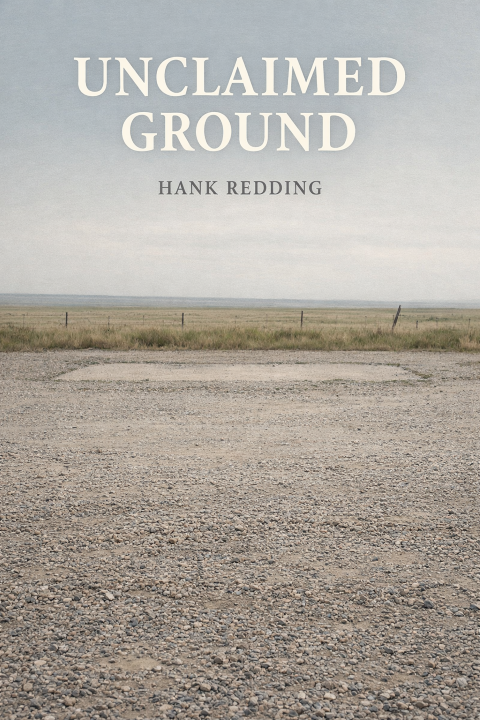
By the time I came back, the lot had been resurfaced. New gravel. Fewer weeds. Someone had decided it should look intentional again. That was the first thing that felt wrong.
In the seventies, it had been the kind of place you ended up only if you meant to stop moving. No lines. No signs. Just space and the suggestion of order. A white building set back from the road, paint thinning where the wind worried it most. The doors stayed locked during the week. On Sundays they opened like a habit, not an invitation.
We parked behind it because nobody checked there. The preacher lived in town. The sheriff didn’t come out that far unless there was trouble worth explaining later. Her father never took that road unless he was already angry, and anger made him efficient. We relied on his efficiency to keep us safe.
I was seventeen. The truck was older than I was and ran like it knew it didn’t have many seasons left. The bench seat sagged toward the passenger side, so she always ended up closer than she planned. I told myself I didn’t adjust the steering for that reason, but I did.
I don’t remember the first night clearly. I remember the pattern more than the beginning. Gravel under tires. Engine ticking as it cooled. Wind coming through the open wing window, carrying dust and alfalfa and the far-off sound of something mechanical that never quite shut down.
She had her mother’s lighter. Red plastic. Cheap. It made a good sound when it caught. She liked that part—the click, the brief resistance before fire agreed to exist. She didn’t smoke the way people do when they mean something by it. She smoked like she was checking a fact.
I watched her hands more than her face. I didn’t know why at the time. I know now it was because hands give things away faster. Faces learn how to lie.
Nothing about those nights felt important while we were in them. That’s the part people get wrong. Importance arrived later, after everything had moved on and left them behind. Back then, it was just a place where the rules didn’t follow very well.
The cross hung from my mirror because my mother put it there and I never took it down. It tapped the glass when the truck shifted, like it was keeping time with something else. I didn’t pray. I didn’t rebel. I just let it hang.
That felt like enough.
Part II — Fathers & Boundaries
Her father worked nights at the plant until the plant stopped pretending it would last. Before that, he ran cattle with a precision that didn’t leave room for stories. He didn’t yell. He didn’t threaten. He believed in outcomes. You learned what he expected by watching what survived.
I met him twice.
The first time, he shook my hand and asked where my people were from. Not where I lived—where I was from. I told him the truth. He nodded once, like he’d filed it away. He didn’t smile. He didn’t frown. He just held my hand a moment longer than necessary, measuring pressure like it might reveal something I didn’t know I was giving.
The second time, he didn’t shake my hand at all. He stood on the porch while I waited by the truck, engine running. She came out slow, like she’d already decided something and didn’t want to rush the consequences. He said her name once. That was all. She looked at him, then at me, then back at the house like she was checking whether it still belonged to her.
She got in anyway.
He didn’t follow. He didn’t raise his voice. He let the night do what it was going to do.
That was the shape of his authority. It didn’t pursue. It remembered.
My mother believed in rules the way other people believed in weather. You didn’t argue with them. You adjusted. Church was a fixed point. Dinner at six. Shoes by the door. Silence after ten unless it was important enough to be explained in the morning.
She didn’t ask where I was going when I left in the evenings. She asked what time I’d be back. If I didn’t know, she nodded like she’d expected that answer. If I said late, she reminded me of school. If I said early, she reminded me not to rush things that didn’t need finishing.
I don’t remember her asking about the girl. I remember her noticing the lighter once when it fell out of my jacket pocket onto the kitchen floor. She picked it up, turned it over, set it back down without comment. That was worse than a lecture. It meant she’d decided to watch instead of interfere.
Between them—her father and my mother—there was a corridor of expectation neither of us knew how to step out of. The parking lot worked because it wasn’t theirs. It didn’t belong to anyone we had to answer to. It was unclaimed ground, and that mattered more than privacy.
The truck became our boundary. Inside it, time behaved differently. Outside it, everything was already decided.
We learned how to sit without touching, then how to touch without making promises, then how to make promises without saying them. She rested her head against the window sometimes, smoke drifting out the crack, eyes half-lidded like she was listening for something that might interrupt us.
“Do you ever think about leaving?” she asked once, not looking at me.
I said yes because it felt like the right answer. I didn’t know where I’d go. She nodded like she hadn’t expected details.
“I don’t think I’d be good at it,” she said.
At the time, I thought she meant leaving town. I know now she meant something else. She meant leaving people intact.
We weren’t reckless. That’s another lie people tell about youth. Recklessness requires confidence. We were careful in small, unspoken ways. We watched headlights. We listened for engines. We left when the wind shifted and carried sound too far.
Sometimes the preacher’s truck passed slow on the road out front. Sometimes it didn’t. We didn’t speculate. We just waited.
Waiting became the skill we practiced most.
Part III — Fire & Motion
She didn’t light the cigarettes right away. She liked to hold them first, rolling the paper between her fingers, reading the warnings like they were instructions meant for someone else. When she finally struck the lighter, she cupped the flame carefully, shielding it from the breeze that moved through the cab.
Fire behaves differently when you’re young. It feels cooperative. Like it wants to help.
The lighter had a chip near the bottom where it had been dropped too many times. The wheel caught unevenly. Sometimes it sparked and quit. Sometimes it flared brighter than expected. She never flinched. She trusted it to settle into something manageable.
That should have told me something.
We didn’t talk much those nights. Not because there was nothing to say, but because saying things made them heavier. Words suggested sequence—before and after. We were living in the space that exists before things start asking to be named.
She leaned back against the seat, one knee pulled up, heel resting near the glove compartment. Ash fell where it wanted. The truck had already earned its stains. It wasn’t keeping score.
Once, she traced the crack in the dashboard with her fingertip and asked how something breaks like that without anyone noticing when it starts.
I told her most things do.
The radio worked when it wanted to. Country stations faded in and out, songs repeating the same truths with different instruments. Sometimes a preacher came on late, voice low and urgent, talking about choice like it was something you could pick up and set down again.
She laughed at that. Not cruelly. Just amused.
“Everybody acts like it’s loud,” she said. “It isn’t.”
She was right. Choice didn’t announce itself. It waited until you weren’t paying attention.
The nights stacked up without marking themselves. We didn’t count them. We didn’t need to. Each one felt like a continuation, not an addition. When someone ran us off—deputy tapping the window, voice tired rather than angry—we moved without protest. That mattered too. Resistance would have made it something else.
We always came back.
The church doors stayed closed during the week. Once, curiosity got the better of us. She walked up and tried the handle. Locked. She leaned her forehead against the wood for a moment, listening like the building might answer if she waited long enough.
“What do you think it sounds like in there?” she asked.
I pictured empty pews, dust settling, the echo of a place designed for voices that came in unison. I didn’t say any of that.
“Quiet,” I said.
She smiled. “Figures.”
She didn’t want to go inside. That wasn’t the point. The idea mattered more than the space. Standing there was enough.
When we sat back in the truck, she reached up and touched the cross on the mirror, setting it swaying. It tapped the glass softly, marking time again. Neither of us commented. There are some symbols you don’t argue with because they aren’t asking for agreement.
The fire burned down to filters. We stubbed them out carefully, grinding ash into gravel until there was nothing left to see. Evidence mattered, even if we didn’t know what we were protecting ourselves from.
One night—later than most—she asked me if I’d ever get married.
The question wasn’t sudden. It had been waiting.
“Maybe,” I said.
She nodded. “Me too.”
She didn’t say to you. I didn’t ask.
The wind picked up, carrying the smell of rain from somewhere it hadn’t arrived yet. The lot felt larger then, like the dark had pulled back a little. I remember thinking that if we stayed long enough, something would change. Not dramatically. Just enough to make staying harder.
That was the first time I felt weight settle where light had been.
Part IV — The Question
The idea didn’t arrive all at once. It surfaced the way weather does—first a shift in air, then a sense that something was gathering whether you acknowledged it or not.
She started asking questions that weren’t questions. How long it took to drive to Billings. Whether the plant would reopen under new ownership. What happened to people who stayed when the thing they stayed for changed shape.
I answered the best I could, which meant I answered narrowly. Facts were safer than forecasts.
One Sunday afternoon, we drove past the church instead of parking behind it. The lot was full then. Cars angled neatly, hoods warm, doors closing with purpose. Families moved toward the entrance in loose clusters, their conversations seen but not heard. Dresses, jackets, ties that came out only once a week.
She watched them longer than I expected.
“Do you think they know?” she asked.
“Know what?”
“That it doesn’t stay like that.”
I didn’t respond. Not because I disagreed, but because agreeing would have required more explanation than I had.
We didn’t stop. We kept driving, road narrowing, pavement giving way to dirt without ceremony. When we finally pulled over, it wasn’t the parking lot. It was just a wide place where the land didn’t object to being paused on.
She didn’t smoke that afternoon. She sat with her hands folded, eyes forward, like she was waiting for a verdict to be read.
“Do you ever think,” she said, “that people get married just so something will stand still for a while?”
“Yes,” I said. That answer came easier than the others.
She turned then, really looked at me. Not searching. Measuring.
“If we did it,” she said, “I don’t think it would be for the right reasons.”
That sentence held more truth than either of us knew what to do with. It didn’t accuse. It didn’t confess. It simply existed.
“We wouldn’t even have to go inside,” she added. “Just say it where it could hear us.”
The church stood empty behind us, white walls catching light without reflecting warmth. The idea of it listening felt reasonable in a way belief never quite had.
I imagined walking through those doors. Imagined my mother’s face—not anger, but the kind of disappointment that rearranges furniture in your chest and leaves it there. I imagined her father standing still on the porch, letting the outcome teach whatever lesson it wanted.
“People would talk,” I said, which was cowardly and accurate.
“They always do,” she replied.
That was the moment the question settled fully between us. Not marriage itself, but what asking meant. It meant acknowledging time. It meant letting the future touch us before it was ready.
She didn’t push. She never did. That was part of why the weight felt heavier—there was no resistance to lean against.
That night, we went back to the lot. It felt smaller than it used to. The gravel seemed closer, the dark less forgiving. We sat without touching longer than usual.
“Whatever happens,” she said finally, “I don’t want to pretend this wasn’t enough.”
I nodded. I believed her. I believed myself.
That belief didn’t last. But it was honest while it held.
________________________________________
Part V — Leaving Without Leaving
Nothing ended. That’s the hardest part to explain.
The nights simply spaced themselves out. Once a week instead of every few days. Then less. There were reasons—school, work, obligations that arrived wearing responsibility like a uniform. Each reason was reasonable. Together, they were decisive.
She started working mornings. I picked up extra shifts. We still saw each other, but not in the dark spaces that had made everything else feel optional. Daylight has a way of clarifying what it expects.
We never said goodbye to the lot. We just didn’t return.
One evening, I drove past it alone. The truck sounded louder without her weight on the seat. The cross on the mirror tapped harder than it used to, like it had opinions now. I didn’t stop. I didn’t slow down. I told myself I could anytime.
I didn’t.
She stayed in town longer than I did. Long enough for people to stop speculating and start assuming. I left without ceremony—no argument, no blessing. My mother hugged me like she was pressing something back into place. My father shook my hand like it was an agreement neither of us needed to spell out.
I didn’t look for her before I went. That felt kinder than asking for something I couldn’t carry.
Years passed. Then more.
I heard she married someone who stayed. Someone who understood the shape of land and the usefulness of quiet. I heard she did fine. I heard nothing at all. Both reports felt accurate.
The church closed. The plant followed. The town adjusted the way towns do—by shrinking without admitting it. When I finally came back, the lot was cleaner, more deliberate. Someone had decided it should look like it was meant for something again.
That’s when I knew it was over.
Places like that only work when they aren’t maintained. They rely on neglect the way memory does—selective, forgiving, unfinished.
I stood there a long time, listening to nothing in particular. No engine ticking. No lighter catching. No voice asking questions that weren’t meant to be answered.
What we had wasn’t forever. It wasn’t even close. But it was sufficient. It held while it needed to.
That’s what people misunderstand. They think meaning requires endurance. Sometimes it only requires presence—complete, unburdened, and brief.
I don’t regret leaving. I don’t regret staying as long as I did.
Some things are only light once.
And if you try to keep them that way, they break.
Part VI — What Stayed Light
I didn’t come back looking for anything. That’s the lie I tell myself when I’m feeling generous.
The truth is quieter. I came back because the town had stopped appearing in my dreams, and that felt like a loss I couldn’t name. Places don’t disappear all at once. They thin. They fade at the edges. They stop insisting on being remembered. When that happens, you either let them go or return once more to see what remains.
The church lot was empty when I arrived. Late afternoon. No cars. No sound except wind moving through what used to be grass. The building itself was gone, cleared down to foundation and memory. Someone had done a good job. Too good. The space felt intentional now, like it had been reassigned.
I stood where the truck used to idle, boots sinking slightly into gravel that wasn’t the same gravel. New stones. Sharper edges. Less give. Even the ground had learned how to hold itself better.
I tried to remember the exact angle we parked at, the way the hood dipped just enough to make the cross swing. I couldn’t. Memory doesn’t preserve measurements. It preserves feeling, and even that only selectively.
For a long time, I believed what we had was special because it kept us from harm. That it was a shelter from consequence. I understand now that it wasn’t protection—it was postponement. The weight hadn’t arrived yet. That was all.
And that was enough.
I think people are wrong about youth. They talk about it like it’s reckless, loud, careless. It isn’t. It’s light because it hasn’t been asked to carry very much yet. The rules exist, but they haven’t learned your name. The future is real, but it hasn’t leaned its full weight into the room.
We didn’t defy anything. We didn’t conquer a system or escape a fate. We simply existed in a gap before decisions became permanent and language hardened around outcomes.
The fire mattered because it was small and controllable. The truck mattered because it moved, even when it stayed still. The church mattered because we didn’t go inside. It listened better that way.
I don’t know what she remembers, if she remembers it at all. I don’t know if those nights stayed light for her, or if they eventually took on the weight of everything else—flattened into meaning, repurposed as regret or nostalgia or something easier to explain.
For me, they remain unburdened. Not because they were perfect, but because they didn’t ask to last.
That’s the mistake people make when they look back. They try to measure the past by what it led to. They want it to justify itself. To prove it was necessary.
Some things don’t need to be necessary. They only need to be sufficient.
I left the lot without ceremony. No final look. No inventory of what was gone. The road out of town bent the same way it always had. The horizon held. The light was steady, not dramatic, not trying to impress anyone.
Driving away, I didn’t feel loss. I felt completion.
What stayed with me wasn’t her face, or the questions, or even the place. It was the absence of weight. The rare knowledge of how it feels when life hasn’t yet pressed down and demanded proof.
That kind of light doesn’t return.
But it doesn’t disappear either.
It just stops asking to be remembered.