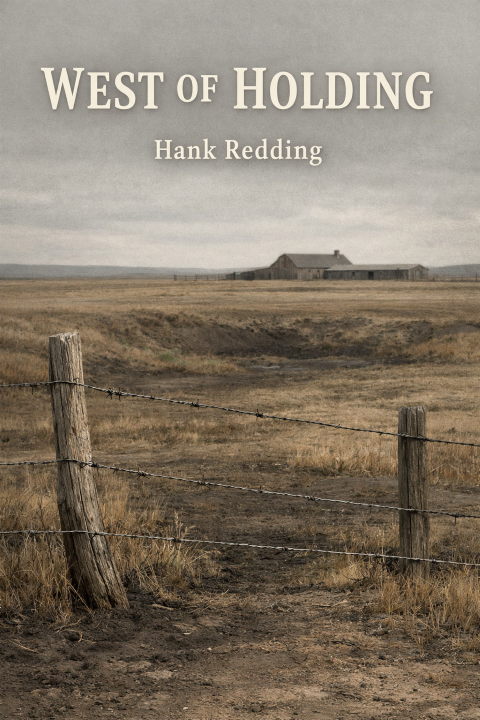
CHAPTER ONE — The Weight of the South
Gideon Holt walked in from the south, where the land flattened until distance stopped meaning anything. To most men, that horizon was a promise of open space; to Gideon, it was something that never finished taking. The heat had been there since morning, heavy and unembarrassed, pressing down as if it had arrived early and decided to stay. It wasn’t just the sun. It was the way the earth itself seemed to remember every fire it had ever held.
He felt it first in his knees—a dull, grinding ache that spoke of miles he hadn’t counted—then in the small bones of his feet, the way he always did when the ground held too much warmth overnight. He had been walking since before sunup, driven by a restlessness that felt less like ambition than eviction. The hat on his head was soft from use, the brim no longer straight, shaped instead by hands that had pinched it down against wind more times than he could remember. It smelled of salt, old rain, and the dust of three different territories.
His shirt clung to him in places and lifted in others, salt-marked at the seams like a map of where his effort had been spent. The dust on his boots was pale and fine, the kind that did not shake loose when you stopped—the kind that stayed with you until you found water or a grave.
Ahead, the land dipped. Not sharply, but with a suddenness that felt intentional. Just enough to gather things—shade, water, work.
He slowed without meaning to.
Rook Canyon sat where the draw bent inward, buildings spaced evenly as if measured by someone who disliked waste. It was a precision Gideon recognized—the kind of order that required constant attention. Corrals stood clean and intact. Fence lines ran straight without sag, posts sunk deep enough to resist time. There were no signs posted, no warnings nailed up.
That was what unsettled him.
In his experience, places that failed advertised it. Broken gates. Rotted rails. The scraps of effort left where hope had quit. Places that prospered beyond reason did the opposite. They looked calm. Assured. As if survival were a private arrangement made quietly with the land.
Gideon stopped at the edge of the main yard. He stood long enough to be seen, but not long enough to appear uncertain. Too quick and you seemed hungry. Too slow and you invited questions.
A man stepped out from the barn shade, wiping his hands on his trousers. Younger than Gideon. Strong. The kind of body that hadn’t yet learned what it cost to keep working.
“You lost?” the man asked.
Gideon shook his head. “Looking for work.”
The man took him in without hurry, his gaze traveling over the scuffed boots and sweat-darkened hat. He noticed the way Gideon held his shoulders narrow, as if space itself were something to be rationed.
“We’re full up,” the man said, though his eyes lingered a moment longer on Gideon’s hands.
Gideon nodded once. Rejection was a rhythm he knew. He turned slightly, already measuring how far he could get before dark.
The man hesitated—a half-step delayed.
“Where you come from?”
“West,” Gideon said. It was always true enough.
The man looked past him, out toward the open land where the heat shimmered, then back. “You can see Mr. Bramwell. Main house.”
Gideon thanked him and moved on.
The house sat a little apart from the working buildings, not elevated, just placed. The wood had weathered to a color that suggested age without neglect. Windows clean. Porch swept.
When Gideon stepped up, the boards beneath his boots did not creak.
That registered.
Silas Bramwell stood when Gideon approached—not out of hospitality, but because he preferred to meet new elements at full height. He was tall and lean, his hair silvered but intact, his posture unbent by years that usually bowed a man’s spine.
“You’re looking for work,” Bramwell said.
“Yes, sir.”
Bramwell studied him the way a surveyor studies land—evaluating slope, drainage, usefulness. It was not a cruel gaze. It was worse than that. It was exact.
“What can you do?”
Gideon considered the answers that made men necessary and let them pass.
“Fence. Stock. Repairs.”
Bramwell waited.
Gideon did not add to the list.
“How long you plan to stay?”
“As long as I’m useful.”
Bramwell’s mouth twitched, almost a smile. “That usually answers itself.”
He stepped aside and called for Elowen.
She came from inside the house with her sleeves rolled to the elbows, a loose strand of hair escaped from its pins. She did not look at Gideon immediately. She took in the space first—the posture of the men, the way the light settled, the quality of the quiet.
“This is Gideon Holt,” Bramwell said. “If we have room.”
Elowen looked at him then. Really looked. Her eyes moved the way his did—quick, thorough, unadorned.
“We have room,” she said.
The work began without ceremony.
Gideon followed another hand to the far fence line, where a section had begun to lean against the scrub. As the sun climbed, sweat came, and his body settled into the familiar rhythm of labor.
He worked carefully, but not slowly. He braced posts with precision, tamped earth firm, tested each rail twice before moving on. He did not hurry. He did not linger.
Around him, the ranch moved as if it knew its own shape. Cattle shifted when they were meant to. Tools passed without words. At noon, a bell rang once, and the work ceased without complaint.
The water was offered then.
A tin cup, clean and cold, filled from a pump near the yard. Gideon took it because refusal would have been noticed. He drank because thirst insisted.
The water was cold. Too cold.
It settled in his mouth with a faint metallic tang, like a sharpening stone rather than earth. His throat tightened briefly. He lowered the cup slowly.
No one watched him.
That was worse.
He worked through the afternoon with a growing sense of compression, as though the air itself were narrowing. The ranch did not creak. It did not strain. It held.
By evening, his muscles ached honestly. He was shown a bunk in the longhouse. Clean. Thin mattress. An empty hook beside it.
He did not hang his hat.
At supper, names were spoken, but they felt like labels rather than identities. A seat at the far end of the table remained empty. No one remarked on it.
Afterward, Gideon stepped outside alone. The land lay quiet, cooling slowly as stars needled through the dark. Somewhere beyond the yard, water moved where it should not have been able to.
He stood still and let the dark come on.
He had walked into it again.
Not the ranch.
The condition.
That night, sleep came in pieces. He counted his breaths without numbers, spacing them carefully so none felt heavier than another.
Do not be necessary.
Do not be named too clearly.
Do not let the Count settle on you.
Outside, the wind moved through posts and rails, wood tightening and easing as the temperature dropped.
The sound was steady.
Measured.
Like something keeping time.
CHAPTER TWO — The Shape of Quiet
Elowen Bramwell first noticed the stranger because he carried no past with him.
Other men arrived trailing pieces of their ruin—failed claims, betrayed partners, winters that had starved them out. The stories slipped free in small ways: a bitter remark about bad feed, a forced laugh over a broken tool, the way they angled their chairs toward the lamp as though waiting for someone to confirm they had suffered enough. They needed the ranch to see the scars they wore.
Gideon Holt arrived without any of that.
Heat still rose from his clothes like smoke; dust had become part of the weave. He stood at the yard’s margin where he could be observed without demanding to be. When her father turned that cold, measuring look on him, Gideon gave nothing back—no appeal, no performance.
That stillness marked him.
She watched him through the afternoon from the edges of tasks. She had learned early how to observe without being seen—how to listen for the anger in a hammer strike, the laziness in a half-hearted knot. Holt showed neither.
His work was careful in the way of someone who had once paid dearly for carelessness. Every post he set, every wire he stretched, every tamp of earth felt measured against some invisible cost. He did not hurry to prove himself. He did not linger to be noticed. He simply reduced the space between himself and the job until friction disappeared.
Men who moved like that usually carried expensive lessons.
When she brought water at noon the sun had flattened every shadow into a thin black line. The pump handle felt cool and familiar under her fingers, worn smooth by generations of thirst. She filled each cup without waste.
When she reached him she looked at his hands before his face.
They were scarred in small, deliberate ways. Steady. Almost silent.
Then she felt it—a tiny skip in time. The briefest hesitation where breath and motion should have continued without pause. The air itself seemed to pause with him.
She lifted her eyes.
The cup was already lowered. His expression had not altered. Had she not spent years attuned to the smallest falter in the ranch’s perfect rhythm, she would never have caught it.
He made no comment on the water.
Most men would have said something—marveled at the cold, called it a gift in this furnace of a place. His silence felt heavier than any remark could.
The rest of the afternoon unfolded without error. No strap snapped. No horse broke through wire. Tasks shifted and filled gaps before the gaps could widen. The ranch continued as though nothing had tried to interrupt it.
At supper she sat beside her mother, the way she had since the evenings when Margaret’s fingers first began to tremble. She portioned food by long habit, knowing exactly who would take more and who would refuse the extra bite.
Gideon chose the chair farthest from the center, where lamplight barely reached. Next to him an empty place remained.
She did not stare at it. She felt its shape the way the tongue finds the gap left by a lost tooth.
Names moved across the table—short, grunted, functional. Gideon’s name was spoken once, a flat statement, then allowed to sink. No one fished it back up with a question.
After the meal she stood just inside the doorway while the men filed into the cooling dark. Gideon paused on the threshold a moment—deciding between stepping out and staying—then chose the night.
Her father stayed seated at the head of the table, hands resting lightly on the wood, eyes fixed on something far beyond the walls.
“You brought him in fast,” she said.
Silas did not raise his gaze. “He works.”
“Plenty of men work.”
“Not like that.”
She let the silence sit between them a moment. “He didn’t ask for wages. Didn’t ask for terms.”
A faint curve touched Silas’s mouth. “Men who ask for nothing usually cost the least.”
The sentence settled like lead between them.
Later, when the house had gone quiet, she moved through the familiar closing tasks—aligning chairs already aligned, wiping surfaces already spotless, checking tins she knew were full.
The routine had always anchored her.
Tonight it felt hollow.
She stopped in the hallway and listened.
The ranch at night spoke its own tongue—timber contracting as heat bled away, cattle stirring in the pens, wind brushing dry grass near the draw.
Underneath it all ran something steadier.
Something kept.
She thought of the empty chair at supper. The bare hook beside the new man’s bunk. The way no one had offered an explanation for either.
She had spent her life believing survival here demanded vigilance. That loss was simply another season to prepare for. That perfect order was the only thing standing between them and the desert’s indifference.
In that dark hallway she felt the belief crack—not from disaster, but from the absence of disaster.
She returned to her room and lay down with her thoughts arranged as precisely as folded sheets. Sleep came late and shallow. When it arrived it carried a single image: water trapped inside a vessel too small, pressing steadily against the walls, waiting for the first hairline fracture.
Tomorrow the bell would ring. Work would resume. She would watch Gideon Holt more closely still. She would tell herself it was only good management.
But as she listened to the ranch draw its slow, even breaths in the dark, she understood that something inside her had already shifted.
Not the land.
Her.
CHAPTER THREE — The Collection of Absences
Maribel Rusk woke before the bell, the way she always did. Not from eagerness. Her body no longer trusted sound to warn her when the world had tilted.
She lay still a moment, listening. The ranch at rest had its own grammar: timber sighing as night cooled, a blanket shifting over someone turning in sleep, a cough swallowed then let out. She did not tally the sounds. She simply noted they were still present. Still holding.
She dressed in darkness and moved to the kitchen before light reached the windows. Same dress most days. Sleeves thin at the elbows. Hair tied back with twine. She moved without noise, not from fear, but from long habit.
Hooks along the wall mostly held their loads. Pots in place. Knives returned clean to their slots. At the far end one apron hung untouched.
She did not move it.
Some things were safer left exactly where they had stopped. Touching them invited questions. Questions invited notice. Notice here had a way of settling extra weight on people already carrying enough.
She set water heating and began slicing bread. Knife moved steady, each cut even and practiced. Slices stacked on cloth until the pile felt right, then covered.
A boot scuffed behind her.
She did not turn.
“Morning,” her brother said.
“Tobin.”
His voice carried the deep, bone-level tired that drought presses into a man over time.
“You sleep?” he asked.
“Enough.”
He shifted his weight. Hesitated. “Saw the new hand yesterday.”
“Yes.”
“He works solid.”
“So do you.”
Tobin gave a small smile, grateful for the anchor.
“He don’t talk much,” he said. “I like that.”
Maribel slid the pan onto the stove. Metal rang once in the quiet. “Men who stay quiet usually hear more.”
“That bad?”
She thought of the untouched apron. The bare hook. The brief hitch she had noticed when the new man drank. “Depends what they hear.”
The day opened without orders. Bell rang. Men moved. Work found its shape and kept it.
Maribel watched from the sides.
She saw how Gideon Holt occupied less space than his frame required. How he stepped aside even when room existed. How he waited before sitting, before speaking, before drinking.
Midday heat pressed thought flat. She carried water to the yard, filled cups, passed them without words. When she reached Gideon she looked at his hands clearly for the first time.
Scarred here and there—not showy scars, just the small honest marks of work interrupted by force.
He took the cup. Nodded once. Did not thank her.
She liked that he did not.
She watched him drink. The pause came again—small, in the throat.
“You don’t like it,” she said, voice low.
He met her eyes, startled just enough for something unguarded to flicker through. “It’s fine.”
“That’s not what I asked.”
He paused. “I’ve tasted water like this before.”
“Where?”
He shook his head once. “Doesn’t change anything.”
She believed him—not because the words were true, but because truth here was often the first thing that caused trouble.
That afternoon one of the younger hands did not return for the second shift. No shout went up. No search party formed. Work simply flowed around the gap. Maribel saw who stepped into it.
Not Gideon. Not Tobin. A man from the far bunkhouse—eager, grateful.
Silas passed later and gave the replacement a single nod. Nothing else.
That night Maribel folded laundry under lamplight. Shirts. Trousers. Socks. Each pile built carefully. One stack stayed smaller than the rest.
She did not add to it.
Instead she opened the drawer beneath the table and lifted out a button. Plain. Dark. Edge chipped in one place. She turned it once between thumb and finger, then set it back among the others.
She kept a small collection of such things. Unclaimed fragments. Pieces left behind without explanation or name.
No need to write any of it down.
When she blew out the lamp she paused and listened again.
The ranch breathed evenly. Calm. Held.
Maribel lay awake longer than usual, thoughts circling the same empty space from different angles. She thought of her brother’s quick smile and how easily gratitude could be shaped into something else. She thought of Gideon Holt, how deliberately he refused to be shaped at all.
For the first time in years she did not wonder how long the quiet could last. She wondered what it would demand next to keep lasting.
CHAPTER FOUR — The Architecture of Necessity
Silas Bramwell preferred the hour just before heat thickened, when the land still showed its clean edges. In that pale light a man could separate honest effort from mere endurance. Later everything blurred into strain.
He stood on the porch, coffee cooling in his grip, and watched the yard come awake. Men moved in even lines, spacing themselves without words, beginning work as though the day had already been decided. The ranch stirred the way it always had—quietly, without asking permission.
To Silas this was evidence.
Disorder shouted. Chaos arrived with raised voices, wasted motion, arguments over small things. A place that needed yelling to function was already dying.
This place never yelled.
He watched the new hand cross from bunkhouse to east fence line. Gideon Holt. Silas had spoken the name once and let it lie. Names gained weight when handled too often.
The man walked with careful economy. No rush. No hesitation. Steps that suggested long practice in places where a mistake cost more than pride. He did not seek eyes. He did not linger near authority.
That was useful.
Men who wanted too much were unpredictable. Men who wanted nothing usually lasted.
Silas sipped coffee through the bitterness. Behind him the house stayed quiet. Margaret would rise soon, slower now. Elowen was likely already awake, turning thoughts over like stones she had not yet named.
His daughter saw too much. Always had.
She believed order was a kind of virtue.
Silas knew better. Order was necessity.
He had not built this place from nothing. His father had held it before him, and his father’s father before that. They had taken land that should have failed long ago. Old stories wrapped survival in luck or foresight or divine favor.
Silas had long since stopped confusing result with reason.
The ranch endured because it was kept in balance.
Balance demanded adjustment.
Adjustment demanded choice.
He did not call those choices cruel. Cruelty was careless. Emotional. What he did was deliberate. Required.
He stepped down into the yard and gave a passing hand a single nod. The man straightened instinctively, pleased to be noticed. Silas registered it and moved on.
Gratitude steadied people.
At the east fence he rested a palm on a post Holt had set the day before. Earth tamped hard around it. Rail aligned clean. No wasted force. No excess motion.
Silas approved.
“Good work,” he said.
Holt looked up—surprised just enough to show he had not heard the approach—then dipped his head. “Thank you, sir.”
No smile.
Silas found that reassuring.
As the day climbed, heat pooled in the draw. Cattle drifted toward what shade remained. The ranch shifted without command.
That, too, was right.
At midday Silas ate with the men. He listened more than he spoke, noting which voices rose and which faded. An absence registered—not loud, not alarming—but enough to require the work to flow around it.
By second shift the gap had already filled itself.
No one complained.
Silas felt the familiar tension ease.
In the afternoon he walked the boundary alone. He did this often. Land spoke when given attention. He saw where grass thinned, where cracks appeared differently than last week.
Near the draw the air cooled. Water moved beneath the surface, steady and clear.
Silas knelt and touched it.
Cold. Dependable.
People liked to believe survival came from virtue alone. Silas had abandoned that comfort years ago. Survival came from management—from recognizing when something carried too much and lightening the load before the whole structure gave way.
Later there would be quiet exchanges. Not meetings. Just words passed carefully.
We’re carrying heavy this season. This place can’t hold forever. It’s held before.
No one needed to say more.
They never had.
As evening settled Silas returned to the porch. The ranch lay calm, labor folded back into the ground. Beyond the fences other places failed with noise and collapse.
This one did not.
Silas permitted himself a moment of certainty.
Whatever adjustment was required, he would make it.
That was what stewardship meant.
CHAPTER FIVE — The Friction of the Count
Gideon woke with his jaw locked tight enough to ache. It was an old, architectural pain — the kind that came from holding against something invisible all night.
The bunkhouse was too still for the hour. Normally there would be the scratch of a match, the low grunt of boots being dragged on, the rustle of men readying themselves for daylight. This morning there was only absence.
The quiet pressed in close, as though the room itself expected him to account for his presence. He stayed flat on his back, staring at the rough rafters, waiting for his body to remember how to move. The jaw eased first. The tightness in his chest stayed.
He sat up slowly. Swung his feet to the floor. Boards cool but not biting — the night had not let go of yesterday’s heat. It lingered in the wood, in the walls, held over like unfinished business. Outside the sky was already turning a flat, punishing gray.
He dressed with precision. Not routine — precision. Movements small, guarded. The blanket remained folded exactly as issued, untouched by the sprawl of a man planning to stay. He left the hook beside the bunk empty. Hooks were commitments. Gideon had learned to travel light.
When he stepped into the yard the resistance hit immediately. Not noise. Not motion. A thickening of the air, as though the space had contracted overnight. He took a few careful steps, testing the ground. His knees grated in a way they had not the day before. Joints felt misaligned, worked while he slept.
He told himself it was only heat lingering in the bones. He knew better.
Work started the same. He was sent to the east fence where the land rolled in uneven rises. Gideon took the heaviest posts without being asked, hoping labor would burn off whatever had settled in his chest. He tamped earth with care, but sweat came faster than it should have. Breath shortened. He paused more than he wanted, leaning against the posts he had just set.
By midmorning the pressure had rooted itself fully. Not sharp pain. Load. Something added where it had no business being.
His hands shook faintly when he reached for the next rail. He closed his fingers into fists until the tremor passed. Looked around. Half-expecting eyes on him.
No one looked.
That was worse than staring.
Elsewhere a man faltering drew notice. Here it was simply absorbed.
When water came he drank without hesitation. Forced himself not to pause at the metallic edge rising in the cup. The cold drove deeper this time — a blade of ice settling low in his gut. For a heartbeat the yard narrowed at the edges, light collapsing inward like a tunnel. He braced a palm against the fence and waited for the world to steady.
He had felt this before.
Not this quickly. Not this plainly.
But the shape was familiar. This was when the count began to tilt toward a man — when the place chose where the weight would settle.
He worked the afternoon with strict restraint. Left small tasks unfinished where others could step in. Did not rush. Did not complete too neatly. Clean efficiency made a man visible. Visibility here was dangerous.
The load remained.
At supper he took the same far chair. Ate slowly, matching the room’s rhythm. Across the table a man laughed too hard at nothing. Another stared into his plate with the blankness Gideon recognized. The empty chair stayed empty.
His body noticed before his mind did — a faint pull in the chest, like absence creating suction.
Afterward he went to the pump alone. Thirst insisted. He filled the cup. Drank in small, measured swallows. The taste clung — old iron, older water. It summoned the memory of another place that stayed green while everything around it cracked. A man who stopped appearing at meals. Work continuing without pause.
He set the cup down. Hands shaking again. He wiped them on his trousers and turned away.
That was when he felt it clearly.
A tightening around his ribs. Deliberate. Testing. Like cord drawn just taut enough to measure breaking strength.
Not strangling. Measuring.
That night sleep fractured. He dreamed of walking a slope that curved inward forever — each step heavier than the last, ground behind him flattening smooth until no path back existed. He woke before dawn, heart hammering.
The bunkhouse stayed quiet.
He lay staring into darkness and felt the weight notice him awake. He recognized this stage. Recognition had passed. Pressure had begun. Soon the place would decide how to relieve itself.
He closed his eyes. Breathed slowly. Kept each breath separate from the creak and sigh of the house.
Do not be necessary. Do not stand out. Do not allow yourself to be chosen.
Outside the ranch began to stir — wood settling, earth shifting.
The condition was awake.
And it remembered him.
CHAPTER SIX — The Yield of the Draw
Tobin Rusk never decided to go down to the draw alone. Not consciously.
Later, when he tried to piece the morning together, the memory came apart like wire pulled loose from staples. Someone had mentioned a leaning stretch of fence. The cattle hands were already moving out. Heat pressed against the back of his neck, making stillness feel like surrender. By the time he realized no one else was with him, the choice had already been made for him.
The draw cut lower than the surrounding land, a narrow fold where air stayed cooler than it had any right to. To Tobin it felt almost kind — a pocket of shade, a short break from the glare that hammered everything flat. He carried his tools down the slope, boots finding grip in brittle grass, sweat running freely as he descended.
The fence sagged near a bend where the soil looked softer than it should. Any man with sense would have felt the change through his knees before putting weight on it. Tobin leaned in anyway. Usefulness here often meant stepping forward before anyone else had to.
The ground did not break. It yielded.
No crash. No violence. Just a soft, sudden release, as though the earth had grown tired of holding shape. Tobin pitched forward. Tools rang against stone. His right knee sank deep into icy mud. The cold drove through cloth and leather like a blade, pulling him down. He thrashed once — fingers scraping air — and felt balance vanish.
Panic flared, bright and brief.
Then everything stopped moving.
It was not gentle. But it was complete. Tobin found himself half-kneeling, one hand buried in wet silt, the other locked around a fence rail. Heart slammed against ribs. Breath tore in and out while he waited for the rest of the slope to follow.
It did not.
After a long moment he laughed — short, thin, surprised at the sound. He pushed upright carefully, testing the mud with his heel before trusting it. The ground held.
“Well,” he muttered into the hollow, “that was stupid.”
He climbed out slowly, one leg heavy with black mud, every step careful and proud in the way of a man who had come close and walked away. By the time he reached the yard another hand had already noticed the limp.
“You good?” the man asked.
Tobin nodded fast. “Slipped. That’s all.”
“Lucky,” the man said, grinning.
At the house Silas listened without turning from the horizon. He did not ask for details. Did not step closer.
“That ground’s been giving,” he said evenly. “Don’t work it alone again.”
“Yes, sir,” Tobin answered, quick and grateful.
“Take the rest of the day,” Silas added. “Dry out.”
Relief hit Tobin so hard it left him dizzy. He had been tested. He had been spared.
By supper the story had smoothed itself flat. A slip. A scare. Nothing more. Someone clapped his shoulder and joked that the draw had tried to keep him.
“Didn’t get me,” Tobin said, laughing.
The laugh came easy. Too easy.
Around the table the air loosened. Tension that had been gathering slipped away, spread thin across the room. The ranch leaned forward, then settled back.
Maribel watched her brother closely. She saw the faint shake in his hand when he lifted the cup. The way he held his knee just stiff enough to notice.
She said nothing.
Elowen watched too. Her gaze moved from Tobin to the draw beyond the yard and back again, expression tightening instead of easing.
Silas ate without hurry. Appetite steady.
By dark the ranch had returned to its usual shape.
In the bunkhouse Gideon lay awake and felt the load lift from his chest — just enough to be dangerous. He knew this pattern better than most. Relief that arrived too smoothly never lasted.
It was how a place convinced itself the matter was finished.
Just before it began again.
CHAPTER SEVEN — The Language of Alignment
Gideon had not planned to be alone with her.
Years of moving had taught him to let solitude happen sideways — by choosing edges, by stepping away before talk could settle into expectation. That evening he only meant to walk the perimeter once before full dark, to bleed off the false calm that had followed Tobin’s close call.
He heard her approach before he saw her. Not footsteps so much as a change in the air — the subtle shift when someone moved with intent instead of habit. He stopped at the far fence line, forearms resting on the top rail, pretending to study the shadows pooling in the draw.
“You didn’t take the rest of the afternoon off,” she said.
He kept his eyes on the land. “Didn’t need it.”
“You were offered.”
“So were others.”
She came alongside him, close enough that he felt the day’s heat still rising from her skin. She leaned on the rail the same way he did — mirroring without comment. For a moment they stood like that, facing the same darkening slope.
“The draw nearly took Tobin today,” she said.
“Nearly doesn’t count.”
“That’s what everyone keeps repeating.”
Gideon glanced at her then — brief, careful. Her face was calm but her eyes moved restlessly across the ground, as though waiting for it to answer.
“You don’t believe it?” he asked.
She let out a slow breath. “Near misses have their uses.”
He waited.
“They make people feel safe,” she said. “They make it seem like the ground knows exactly when to stop.”
“Does it?”
She hesitated — only a beat, but enough. “It holds.”
“That’s not the same question.”
She turned her head fully toward him now. “You choose your words with care.”
“I’ve had practice.”
Silence stretched between them. Deep in the draw water moved — a faint, misplaced sound in the dry season.
“You noticed it,” she said.
He stiffened slightly. “Noticed what.”
She did not answer directly. Instead: “How long have you been walking?”
“Long enough.”
“That’s not really an answer.”
A small, tired curve touched his mouth. “I don’t give many.”
She studied him again — more deliberately this time, as though tracing lines she had only just learned to read.
“You paused at the pump,” she said. “More than once.”
He did not deny it.
“And again today.”
“It happens.”
“Not to most.”
Gideon looked back toward the house lights. The weight that had eased after Tobin’s scare threatened to return, settling low behind his ribs.
“You’ve tasted water like that before,” she said quietly.
“Yes.”
“Where?”
He shook his head once. “I don’t talk about it.”
She accepted that more easily than he expected. “Does it ever stop?”
The question landed harder than any demand. Gideon’s grip tightened on the rail.
“Not the way people hope it does.”
She waited. She was good at waiting.
“It stops by adjusting,” he said. “And once you know what that feels like, you start seeing the signs.”
“What signs.”
“Pressure that doesn’t come from heat. Relief that arrives too clean. Work moving around a man without anyone saying why.”
Her expression stayed steady, but he saw the flicker — sharp, unsettled.
“You think that’s what happened today,” she said.
“I think it was enough.”
“Enough for what.”
“For the place,” he answered. “Not for the people in it.”
She looked back toward the lit windows of the house.
“My family has been here for generations.”
“So have the patterns.”
The words came out harder than he intended. He saw her shoulders set.
“You think we choose this,” she said.
“I think people choose not to look too closely,” he replied. “That’s different.”
Silence again — thicker now.
“What happens next?” she asked.
Gideon swallowed. The metallic aftertaste still clung at the back of his throat. “If the pressure builds again?”
“Yes.”
“Someone becomes necessary.”
Her breath caught — small, almost inaudible.
“You’re trying not to be,” she said.
He gave the smallest nod.
“And if you fail?”
He looked past her toward the house lights. “Then your father gets the steady hand he’s been waiting for. And you get to keep believing the ranch only takes what it has to.”
She flinched — barely, but he caught it.
He turned back to the dark. “Good night, Elowen.”
She stayed where she was a moment longer, watching him walk away. Then she looked down at the draw, where shadows had swallowed the slope.
When she finally moved toward the house, the ranch breathed its usual even breath behind her.
But something between them had already shifted.
And neither of them could pretend otherwise.
CHAPTER EIGHT — The Collection of Absences
Elowen Bramwell did not sleep.
She lay flat on her back, hands folded over her stomach, listening to the house exhale the day’s heat. Walls ticked as timber released warmth. Somewhere below the window a shutter tapped once, then fell silent.
The ranch at night had always sounded like this — contained, predictable. As a child she had found comfort in the rhythm. It meant everything remained in its place.
Now the rhythm felt intentional.
She rose without lighting a lamp. Dressed in the dark. Moved through the hallway past her father’s closed door, past her mother’s. Every latch secure. Every room sealed.
That was the trouble.
In the kitchen she poured water from the pitcher and drank without tasting. The cold struck sharp and sudden. She set the cup down and sat at the table, letting silence gather around her.
She allowed herself to remember — not with feeling, but with accuracy.
The ranch had once held more voices. More boots by the door. More places set at table. She recalled how her mother used to pause before clearing a room, how certain belongings lingered longer than necessary before being quietly removed or reassigned.
She had called that mourning.
Now she saw it as postponement.
She crossed to the wall of hooks and let her gaze travel along them. One hook remained bare. It had stayed bare for years. She tried to summon the face that once belonged there and found only blank space where memory should have been.
Her chest constricted.
Gideon’s words returned without invitation. Pressure that has nothing to do with weather. Relief that arrives too smoothly.
She thought of Tobin in the draw — the way the ground had opened and then closed just enough. She remembered the loosening she had felt afterward, how the ranch seemed to inhale again. She had welcomed that release.
That was when the understanding arrived.
The ranch did not avoid loss. It consumed it.
Absence came in tolerable forms — a man drifting away on his own, an injury that quietly removed someone from the hardest labor. Enough to ease the strain. Not enough to force anyone to look too closely.
She thought of Gideon Holt standing always at the margin, his body already answering a pressure she was only beginning to feel. He refused to become useful because he understood what happened to men who fit too perfectly.
Elowen pressed both palms flat against the table.
Her father believed survival proved its own rightness. The ranch still stood, therefore the methods were sound. She had believed the same.
But survival without visible cost did not mean no cost existed. It meant the cost was being paid in silence.
She thought of what she would pass on — not only land and stock, but habit. How naturally the language of necessity would settle into the next generation. How easily the ranch would continue to choose without ever naming the choice.
Unless the pattern was interrupted.
Interruption would not look like defiance. It would look like disruption. A small, deliberate misalignment introduced so carefully it could not be quietly repaired.
She did not yet know the exact shape of that act. Only that Gideon Holt could not be allowed to become the next clean solution.
She climbed the stairs again and sat on the edge of her bed, staring at the faint rectangle of the window. Outside the land waited for morning.
Order would continue for now.
But as she lay back and closed her eyes she was not seeking rest.
She was beginning to plan.
Once the pattern had been seen, it could not be unseen.
CHAPTER NINE — The Shifting of the Load
Elowen Bramwell picked a morning when nothing else was out of place.
The sky stood hard and clear. Heat had not yet turned vicious. In the yard men moved through early tasks with the usual unhurried rhythm. Her father stood on the porch, coffee in hand, content with the day’s familiar shape.
It was exactly the kind of morning the ranch trusted.
She waited until the bell’s echo died and the first jobs were underway but still loose. Then she walked to the supply shed behind the barn — a low, narrow building most hands passed without a glance — and pushed the heavy door open.
Cool air spilled out, carrying the smell of burlap and dry earth. Shelves stood full.
Over-full.
She stood with palms flat on the rough wood and let herself feel the excess. Grain stacked double. Coiled harness leather unused. Tools duplicated, waiting for need that never arrived. Not waste. Preparedness.
She reached for the clipboard out of habit, then stopped. She did not need numbers.
She selected three sacks of grain — enough to register, not enough to cause alarm — and marked their corners with a faint chalk line. Then she lifted them herself. Arms tightened. Breath shortened. She carried them into the yard.
She did not call for help.
At the edge of the yard she intercepted a wagon already loaded for the east fields.
“Take these,” she said, nodding to the marked sacks. “Navarro’s short.”
The driver glanced toward the distant fields, then shrugged and shifted the load. No one questioned her.
That mattered.
By midmorning the change began to spread. A job planned for later was pulled forward. Another was left to wait. A hand who usually rode east was sent west instead. The day stretched and adjusted, finding balance a little less smoothly.
Elowen found Gideon near the far fence line, his hands on a gate hinge that did not yet need repair.
“You’re moving weight,” he said without looking up.
“Yes.”
“It’ll be felt.”
“Not today.”
He tightened the bolt, then turned. “Why.”
She watched his hands a moment before answering. “If the ranch carries less, it has less reason to choose who to lighten.”
“That’s not how it decides.”
“I know,” she said. “That’s why I’m not repairing it.”
By noon the sun pressed harder than the morning had promised. The missing grain was not yet a crisis, but it was noticed. Portions shifted slightly at midday. Afternoon work rearranged itself with a small hitch where once there had been none.
Silas watched from the porch. He saw the stutter and did nothing. The ranch still held.
But the draw — avoided these last days — was worked again. A man returned from it with mud on his boots and unease in his face. Whatever had been eased before had not finished settling.
Elowen felt the pressure spread rather than release.
That evening she walked the perimeter alone. An unfinished rail. A tool hung on the wrong hook. A bunk reassigned too quickly. Small things. Ordinary things.
Not here.
At supper conversation faltered in places. Tobin laughed, but the sound fell short. Maribel watched more closely than usual. Gideon ate little, his movements careful, as though testing for a trap.
Afterward Elowen stood at the window and watched the yard darken. The ranch drew breath unevenly now, adjusting as it went.
She had not broken anything.
She had disturbed it.
Tomorrow the ranch would try to restore order. It always did. But this time the restoration would not arrive without friction.
She had made her first move.
The place had registered it.
CHAPTER TEN — The Anatomy of a Ghost
The memory did not arrive all at once.
It rose the way pressure does — gradual, patient, at first no different from the ordinary fatigue of a man who had spent years working against wind and grade. Gideon felt it midmorning while lifting a rail that should not have felt heavy.
The weight stayed in his forearms even after the wood was set. Muscles refused to release. He straightened, wiped palms on trousers, waited.
It did not pass.
It shifted.
Air thickened around him — not dust, but resistance. Each breath took deliberate effort. Chest constricted in a way he had not felt since crossing into this territory — the body remembering a promise quietly rewritten.
Then the smell arrived.
Iron. Damp timber. Water held too long in shadow.
His stomach knotted.
For a heartbeat the yard dissolved. He was somewhere else — bent beside a trough that never ran dry while the land around it split open like dry bone. Boards beneath his boots swelled soft with moisture, giving underfoot.
“Gideon.”
His name spoken plainly, without warning, set nerves alight. He turned too fast. Heart slammed.
“You alright?” a hand asked, coil of wire balanced on his shoulder.
“Just the heat,” Gideon said. The lie tasted metallic.
He waited until the man moved on, then pressed tongue to the roof of his mouth, anchoring himself in the present.
The past did not retreat.
It drew closer.
A deep ache settled into his hands — structural, not sharp — as though the bones had been asked to carry something they had never agreed to bear. He remembered other hands like his — scarred, careful — and voices that had praised his quiet.
You’re steady, Gideon. You don’t take up much room.
He understood now what those words had measured.
He resumed work, but movements had thinned, turned ghostly. He stayed near the yard’s edges, close to the draw where the pull felt strongest. By midday sun hammered white overhead, shirt cold and salt-stiffened against skin. Heart beat too hard for the little he was doing.
The memory sharpened.
He saw the other place clearly — work growing quieter as men stopped appearing, relief arriving smoothly before the next absence. A task reassigned without remark. A conversation held just out of earshot. The moment he realized the place had chosen.
Gideon clenched fists until shaking stopped. He did not panic. Panic was noise. Noise drew notice.
At the table he forced food down. It sat in his gut like stone. Across from him Tobin laughed too freely, too loud — a man convinced he had slipped past something that had only changed direction.
Gideon looked away.
He knew that laugh.
In the afternoon he braced against a fence post. Wood radiated heat — too much, as though drawing it up from below. Another memory surged: a hand on his shoulder, firm, familiar; a voice speaking calmly about what was required.
We’re all doing our part.
He released the post as though it scorched him. Stepped back. Breath shallow but controlled. Scanned the yard. Half-expecting Silas watching.
No one was.
The ranch continued — orderly, composed — as though nothing had shifted.
That was when Gideon knew the pressure had returned in full.
Not enough to force a choice yet.
Enough to prepare one.
That night on his thin mattress he stared at rafters and felt the past settle over him like a second skin. It was not the memory itself that frightened him.
It was how easily he still fit the shape.
He closed his eyes. Counted breaths. Kept each one separate from the creak and sigh of the house around him. Outside water moved where drought should have silenced it. The draw cooled in darkness.
The past had found him.
And it was content to wait.
CHAPTER ELEVEN — The Surveyor’s Blindness
Silas Bramwell watched Gideon Holt begin to disappear, and he found the process quietly satisfying.
It was not a sudden vanishing that might unsettle the yard or interrupt the day’s flow. It happened slowly. Sensibly. The kind of fading Silas had spent decades encouraging in men who understood their role.
Holt drifted toward the margins — taking fewer central tasks, appearing where work was needed but not spotlighted. He arrived when the bell sounded, left when the job was done, spoke only when silence would have caused delay. From the porch, in the clean morning light, it looked to Silas as though the stranger’s rough edges were finally wearing smooth.
Silas respected men who knew how to step back. They understood load. They knew when to stop pushing and start supporting. The yard reflected it — patterns shifting without friction, other hands moving into the center without protest. No orders required. The work arranged itself.
This, to Silas, was balance.
He walked the perimeter slowly, eyes on soil as much as men. He noted the draw was being worked less, labor redirected toward firmer ground on the west line where risk stayed manageable. Near the pump he paused while two hands finished drawing water.
When Gideon stepped forward next, Silas watched his grip on the handle.
There was a small brace against the cold. Silas took note. To him it signaled awareness. The man felt the conditions of the place and was shaping himself to fit.
That evening, while Margaret moved through the table-clearing with her steady, practiced motions, Silas allowed himself quiet confirmation.
“The new hand is settling in,” he said.
Margaret glanced up. “Is he.”
“He knows how to remain useful without drawing eyes,” Silas replied. “That’s uncommon.”
Later, when heat released its hold on the canyon walls, Silas waited near the corral until Gideon’s path brought him close. He did not raise his voice.
“You’ve slowed your pace,” Silas said.
“Yes, sir.”
Silas studied the man’s face, seeing only what labor revealed. “No need to make yourself smaller here,” he said, though the ranch itself suggested otherwise. “We may need a steady hand in the eastern fields before long. Not today. But soon.”
Gideon nodded quickly. “I can do that.”
Silas accepted the answer at face value. “Good. Timing is everything.”
He watched Gideon walk away — steps light, contained.
He understands, Silas thought. He feels the load and doesn’t fight it.
That night Silas remained on the porch after the yard emptied. The ranch lay calm, labor folded back into the earth. He felt the familiar loosening in his chest — the sense that things were finding their proper place.
He believed the situation was resolving itself.
What Silas could not see — what his way of seeing would never allow him to see — was the difference between a man stepping aside to make room and a man hollowing himself out to avoid being crushed. From where Silas stood, Gideon Holt was becoming precisely what the ranch required.
From Gideon’s side of the fence, the cord was drawing tighter.
Inside the house Elowen stood at the window and watched her father’s solitary figure on the porch. She saw his calm certainty and recognized it for what it was.
Silas believed the ranch had noticed Gideon’s withdrawal and accepted it as readiness.
Elowen knew the ranch was only preparing to feed again.
CHAPTER TWELVE — The Margin of Error
Elowen Bramwell selected a morning when the ranch felt entirely at ease.
Sky stood clear and hard. Heat had not yet sharpened its edge. In the yard men moved through early chores with the usual quiet confidence. Her father stood on the porch, coffee cooling in his hand, satisfied with the day’s familiar outline.
It was precisely the kind of morning the ranch believed in.
She waited until the bell’s single note faded and the first tasks had begun but remained loose. Then she walked to the supply shed behind the barn — a low, overlooked building most hands never entered — and pushed open the heavy door.
Cool air flowed out, smelling of burlap and packed earth. Shelves stood loaded.
More than loaded.
She placed palms on the rough wood and let herself register the surplus. Grain doubled high. Unused harness leather coiled tight. Duplicate tools waiting for a need that never came. Not extravagance. Readiness.
She reached for the tally sheet from habit, then let her hand fall. She did not need figures.
She chose three sacks of grain — enough to be noticed, not enough to cause panic — and marked their corners with a faint chalk line. Then she lifted them herself. Arms strained. Breath caught. She carried them into the open yard.
She asked no one for help.
At the yard’s edge she intercepted a wagon already bound east.
“Take these,” she said, nodding to the marked sacks. “Navarro’s running low.”
The driver glanced toward the distant fields, shrugged, and shifted the load. No one challenged her.
That mattered.
By midmorning the disturbance began to travel. A task scheduled for afternoon was brought forward. Another was left hanging. A rider usually sent east was redirected west. The day lengthened and adjusted, finding equilibrium with a small, perceptible drag.
Elowen found Gideon near the far fence line, his hands on a gate hinge that had not yet failed.
“You’re shifting weight,” he said without lifting his eyes.
“Yes.”
“It will be felt.”
“Not today.”
He finished the bolt, then turned. “Why.”
She watched his hands a moment before answering. “If the ranch carries less, it has less reason to select who to lighten.”
“That’s not how it chooses.”
“I know,” she said. “That’s why I’m not mending it.”
By noon the sun bore down harder than the morning had hinted. The missing grain was not yet a crisis, but it registered. Portions at midday shifted slightly. Afternoon labor rearranged itself with a faint hesitation where once there had been none.
Silas watched from the porch. He saw the small stutter and made no move. The ranch still stood firm.
But the draw — avoided these past days — was entered again. A man came back from it with mud caked on his boots and a tight look in his face. Whatever had been soothed before had not yet finished settling.
Elowen felt the strain diffuse rather than lift.
That evening she walked the perimeter alone. A rail left half-fastened. A tool returned to the wrong hook. A bunk reassigned too soon. Small things. Everyday things.
Not here.
At supper talk stumbled in places. Tobin laughed, but the sound dropped short. Maribel watched more steadily than before. Gideon ate little, movements deliberate, as though testing for hidden weight.
Afterward Elowen stood at the window and watched the yard fade into shadow. The ranch breathed unevenly now, shifting to accommodate the change.
She had not shattered anything.
She had nudged it.
Tomorrow the ranch would attempt to restore its usual smoothness. It always did. But this time the restoration would carry friction.
She had taken her first step.
The place had recorded it.
CHAPTER THIRTEEN — The Compression of the Field
The pressure returned without announcement.
Not as weather turning. The drought and heat were already honest in their cruelty. This arrived differently — a slow closing in the air, like a hand tightening with care.
Elowen felt it first in the way the morning opened too smoothly.
The bell rang on time. Men rose at once. Work took shape with unusual speed, as though the day had been decided before boots touched ground. The yard filled with motion that felt rehearsed rather than lived.
From the porch Elowen watched her father give the foreman a single nod.
Nothing more needed saying.
That was sufficient.
The ranch pulled inward.
Tasks once spread wide were gathered close. Men who worked alone were paired. Movement tightened. Eyes lingered. The west fence line — where Elowen had tried to draw attention — was abandoned entirely. Labor flowed back toward the draw, toward the low ground where strain collected most easily.
Gideon was not sent there.
Not yet.
The omission rang louder than any order.
By midmorning the air had thickened. Shirts soaked faster than sun alone could explain. Tempers frayed. A fence post split beneath a load it should have borne. A gate jammed, forcing two men to wrench it open.
Nothing collapsed.
Everything strained.
Elowen moved through the yard and watched how the work reorganized itself. Men who felt grateful were drawn closer to the center. Men who hesitated were eased outward. Gideon was given jobs that kept him useful but contained — repairing tack in barn shade, near enough to be watched, far enough to be held at distance.
“You feel it,” she said when she reached him.
He did not look up. “It’s no longer subtle.”
“They think it’s correcting.”
“It is,” he said. “Just not the way you hoped.”
A shout cut across the yard.
Someone had slipped near the draw again — caught himself hard enough to tear skin. Blood appeared briefly against the mud before it was bound and dismissed. The men returned to tasks with forced calm.
Another near miss.
Keener this time.
At supper the table was full. No empty places. No gaps. The ranch had drawn itself tight, weight consolidated where it could be controlled.
Talk stayed low. Tobin did not laugh. Gideon ate with careful precision, each motion measured, as though any extra gesture might count against him.
Elowen watched and felt the pressure settle.
The outline was unmistakable now.
That night she stood at her window and listened to the ranch breathe. The rhythm had altered. It stumbled, steadied, stumbled again.
If she waited longer, the place would choose for itself.
And it would select the smallest thing it could remove to keep the rest standing.
She turned from the window and opened the drawer beneath her desk. Inside lay old boundary maps and papers — things that defined where one piece of ground ended and another began.
Her next move could not be quiet.
The ranch had stopped pretending.
So would she.
CHAPTER FOURTEEN — The Gravity of the Target
No one spoke to Gideon Holt about the change.
That silence told him everything had already been decided.
He felt it the moment he stepped from the bunkhouse. Morning carried more than sunlight. It carried a slant — subtle, but impossible to miss — as though the land itself had tilted a few degrees in his direction. Men passed with extra care. Eyes slid away too quickly. Voices thinned the instant his shadow fell across them.
The yard reorganized itself around him.
He was never fully alone, yet never at the center. Always in sight. Always just outside the circle where conversation lingered. His tasks changed — not in difficulty, but in placement. He was kept ready. Sent to jobs that demanded attention now, not later. Repairs close to the draw. Checks along soft low ground.
No one gave the order.
It happened the way breathing happens — instinctive.
Midmorning a foreman stopped beside him. Did not check the work. Simply watched Gideon tighten a bolt, face intent, almost thankful.
“You don’t mind staying on this a while,” the man said.
It was not a question.
Gideon nodded once. Relief washed across the foreman’s features — open, unguarded.
At the pump the water ran colder than before. Gideon drank slowly, bracing against the handle. Taste had shifted — iron, stone, a faint sweetness beneath that turned his stomach. He set the cup down and stayed still a moment.
Across the yard Elowen saw him and did not approach.
That distance spoke louder than words.
At midday a space opened for him near the table’s center. Someone shifted to make room — a small courtesy offered too fast. He declined and took his usual edge seat.
The space remained open.
By afternoon the shift completed itself. When a job hung unfinished, eyes turned to him without thought. When a choice needed making, it drifted his way. He felt the weight settle — not as hurt, but as certainty.
He was being readied.
Not because he was the weakest.
Because he fit.
Near dusk Silas Bramwell passed behind him without stopping. Did not meet his eyes.
“You’re steady,” Silas said, to the empty air.
The words landed on Gideon’s shoulders like a hand — heavy, final.
As heat began to loosen, Gideon found himself walking toward the draw. He had not chosen the path. His feet followed the land’s slope as though no other direction remained.
Ground softened there, giving just enough to promise kindness. He closed his eyes and listened to water moving below — unseen, persistent.
This was how it ended.
Not with blame. Not with violence. With alignment. The place arranging itself until his removal became the simplest answer to a question no one would voice.
Footsteps stopped behind him.
“You don’t have to be here,” Elowen said.
“I know,” he answered, though both understood choice had narrowed to almost nothing.
“They think you’re ready.”
“I think they think I won’t fight.”
He turned to her then and saw the ranch’s decision mirrored in her face — not malice, not determination, but recognition. He was not the fix.
He was the smallest piece that could be taken without shattering the rest.
Silence closed between them — thick, airless.
The ranch had found its answer.
It had never needed to ask.
CHAPTER FIFTEEN — The Breaking of the Seal
Elowen Bramwell told no one what she intended.
She had learned young that spoken plans invited interference — fears pressing in, questions softening edges until the act itself could be folded back into the existing order. This could not be folded.
She rose before the bell. The house still held yesterday’s stale warmth, air thick and unmoving in the hallways. She dressed with unusual care, pinning hair tight enough to pull at her scalp. Not for appearance. For steadiness. Her hands would need to remain sure.
The house stayed silent as she passed through. Her father’s breathing came even from behind his door. She stepped onto the porch and felt the land waiting — vast, patient, attentive.
She went first to the west pasture.
Boundary stones lay where they had always lain, sunk generations deep. She knelt and brushed dirt from one, tracing the faint carved line with a fingertip. A simple mark. Sufficient to separate one claim from another for decades.
She walked the fence slowly — not counting distance, but continuity: posts that held firm, wire pulled taut, the unspoken authority of a line no one questioned. At the far end, where ground sloped toward the draw, she stopped.
The spring murmured nearby — cold, constant.
She felt its weight against her ribs and understood, with a clarity that stung, that she did not hate this place. That understanding made the next step harder, not easier.
She unlatched the gate and swung it wide. Then she gripped the main post with both hands and pulled.
Earth released it with a soft, wet suck. She dragged the post aside and laid it parallel to the line — no longer part of the structure.
The boundary was open.
It looked undramatic. From afar it might pass unnoticed. But the line no longer closed.
She did not pause.
She walked straight to the pump house and bypassed the main mechanism to the smaller feed line — the quiet diversion that sent excess water back to holding tanks. A valve no one touched because it had always functioned unseen. She closed it.
Across the yard pressure dropped — not enough to halt the day, but enough to be felt at every trough and sink.
By midday her father knew.
Silas stood in the yard while a foreman explained the missing post. He did not ask who had done it. He turned when he saw her.
“You’ve opened the west line,” he said.
“Yes.”
“And shut the secondary flow.”
“Yes.”
He regarded her as though a familiar tool had suddenly developed intent. “Why.”
“Because this place survives by containing everything,” she answered, voice hard as boundary stone. “And I’m finished containing it.”
Silas spoke of how the land had carried them. She spoke of how it had carried too much — paid in lives quietly subtracted.
She nodded toward the draw, where Gideon worked alone in shadow.
“The ranch has already chosen a man instead,” she said.
Silas followed her gaze. Jaw tightened. “You’ve thrown the whole place off balance.”
“Yes,” she said. “Intentionally.”
That afternoon the ranch did not fall apart.
It labored.
Water flowed unevenly — troughs filling slowly in places, overflowing in others. Men crossed paths more often than usual. Tasks overlapped where they had never overlapped. The draw spilled beyond its usual channel, seeping into ground never meant to hold it.
Nothing broke.
Everything resisted.
By evening Silas’s long certainty had cracked. The ranch endured — awkwardly, effort visible in every line.
Gideon found her at the broken boundary as sun dropped low.
“You’ve opened too many ways for it to bleed,” he said, looking at the open gate.
“That was the point.”
They stood together as light faded. Land ahead no longer neatly divided. Ranch behind them unsettled.
The Balance had not shattered.
But it had been refused its cleanest, quietest solution.
And that refusal would alter the cost of everything that followed.
CHAPTER SIXTEEN — The Imperfect Subtraction
The cost did not arrive where anyone expected.
For two days after Elowen opened the boundary and shut the secondary flow, the ranch moved under visible tension. Work continued, but effort showed — men paused more often, tempers flared and were swallowed quickly, the spring surged beyond its old channel and forced hasty choices from hands unused to resistance.
No disaster struck.
That absence frightened them most.
On the third morning the bell rang late.
Only minutes — but on a ranch where time was measured in heartbeats and precise routine, minutes were fracture.
Elowen woke before it sounded. She felt the delay in her body first — a small hitch in her pulse arriving ahead of thought. She dressed quickly and stepped onto the porch.
The yard felt wrong.
Men stood in loose clusters instead of lines. A horse shifted nervously near the corral, untethered. No one had claimed the morning yet. Silas stood near the pump house, hands clasped behind his back so tightly his knuckles had paled.
“Tobin hasn’t come in,” he said when he saw her. His voice had thinned, certainty worn away.
They found him near the draw.
He was not dead.
That would have been too final.
He sat where the ground had given way again, boots sunk deep in mud that had not existed the day before. One leg twisted awkwardly beneath him, held still by pain rather than will.
“I didn’t fall,” Tobin said, face gray. “The ground just… let go.”
Maribel stood at the edge of the gathering, face drained, watching her brother become another quiet expenditure of the ranch.
The men moved fast. Too fast. They lifted, braced, redistributed weight without a word. The work re-formed around Tobin with practiced efficiency that left no room for doubt.
Elowen watched it happen.
Tobin was carried back to the yard and laid in shade. His leg swelled as morning wore on. Someone said he would heal. No one said how much would be left when he did.
Relief moved through the yard — quiet, guilty, unmistakable.
A loss had occurred. The pressure had found its release. Air lightened just enough to notice.
“So,” Silas said softly, eyes meeting Elowen’s. “It’s chosen.”
“No,” she answered. Her voice held steady, though something in her chest did not. “It hasn’t.”
Silas waited.
“That isn’t choosing,” she said. “That’s settling.”
He said nothing more.
By afternoon the ranch had eased into a calmer pattern. The draw was avoided again. Work adjusted around Tobin’s absence the way it always had — making space without naming what had been taken.
Gideon stood apart, body loosening for the first time in days.
It was not relief.
It was recognition.
The ranch had not required him. Not yet.
It had accepted something smaller. Something easier to absorb. A subtraction that relieved strain without resolving the deeper imbalance.
He found Elowen near the broken boundary that evening.
“It took something,” he said.
“Yes.”
“But not what it wanted.”
She nodded. “Not yet.”
They stood together as light faded. Men laughed softly around Tobin in the distance — careful to sound grateful rather than afraid. The ranch wanted to believe the matter was closed.
Elowen knew better.
She had kept Gideon from being selected.
She had not ended the selection itself.
The response had been imperfect — and imperfect answers always returned for what they still claimed.
CHAPTER SEVENTEEN — The Frictionless Exit
Gideon Holt left before the bell.
He owned little that could not be replaced or abandoned without regret. The blanket stayed folded on the bunk — pristine, anonymous. The hook beside it remained empty, as though no one had ever truly occupied the space. He laced his boots slowly, each pull deliberate, then stood a moment with his hat in his hands.
The ranch slept around him — breathing uneven but calmer than it had been in recent days, like a body that had finally found a position where pain dulled enough for shallow rest.
Somewhere nearby Tobin Rusk lay awake in the dark, leg bound, future altered in ways the ranch would never name aloud. Gideon did not go to him. Some goodbyes carried weight, and weight here was the most dangerous currency.
Outside the sky held only the faintest bruise of light along the horizon. Gideon crossed the yard without haste, steps light and measured. He passed the pump where water still ran cold and relentless. He reached the broken boundary and paused, resting one hand on the rail that no longer met its post cleanly.
Elowen waited there.
She had known he would pass this way. Some things declared themselves long before they occurred.
“You don’t have to leave today,” she said, voice low against the morning air.
“Yes,” he answered softly. “I do.”
She nodded once, accepting the shape of inevitability without argument. “It eased.”
“For now.”
“It might hold.”
“It always holds,” he said. “Until it doesn’t.”
They stood together in the thin early light. Land beyond the fence lay open, unmanaged. Elowen seemed smaller to him than before — not diminished in will, but stripped of the certainty that had once armored her.
“You saved me,” Gideon said quietly.
She flinched at the word. “I delayed it.”
“That’s enough,” he said. “For me.”
She searched his face for any reason to ask him to stay and found none in the hard, survivor’s lines.
“What becomes of you?” she asked.
“I keep walking.”
“And if it follows?”
A faint, weary smile crossed his mouth. “It always does.”
She stepped closer. The space between them carried the weight of everything they had witnessed. She reached out and took his hand — not with urgency, not with possession, but with the solemn recognition of someone who had seen the same thing and lived.
“I’m sorry,” she said.
“So am I.”
He turned away before the moment could demand more. Crossed the broken boundary. Stepped into land no one claimed. He did not look back.
Elowen remained at the fence until his footsteps faded into the open ground.
Then she turned toward the ranch.
The bell rang late that morning.
No one remarked on it.
CHAPTER EIGHTEEN — The Open Proof
Years arrived without fanfare.
No sudden flood. No violent storm. They came instead like shadow creeping across canyon floor — uneven, patient, unstoppable. The ranch endured. It no longer ran with the cold, mechanical precision of Silas Bramwell’s time, but it did not collapse either.
Water — once a hidden, tightly managed miracle — now flowed less predictably. It spread into soil never asked to carry it, softening what had been dust, loosening foundations long considered permanent. Labor changed with it. Tasks demanded more hands. Coordination required effort. Loss no longer slipped in silently at night. It arrived in daylight — visible, spoken of when silence became impossible.
People noticed.
Not everyone understood.
Jonah Bramwell inherited the land without inheriting his father’s absolute certainty. What he received was responsibility with sharp edges. He learned early that the ranch could no longer be held by compression alone — by squeezing life from men to keep lines straight. Sharing the burden of survival was messy, inefficient, dulled the sharpest tools of the old way — but it was the only method that kept gates from rotting at the hinges.
The draw was worked with heavy caution. Some years it was left untouched, given back to weeds.
Tobin Rusk walked with a permanent limp — a living reminder of the morning the ground had released him. He never returned to the low ground. He found lighter work in the yard, tasks that kept him upright. He laughed less often, but he noticed more.
Maribel Rusk kept her small drawer of unclaimed fragments — buttons, buckles, bits of cloth and metal that carried no names. For a long time nothing new was added. The ranch had stopped swallowing people without sound.
Elowen Bramwell stayed.
She never married. She never left. She took up the work her father once held and stripped it of his grand words — stewardship, destiny. When she spoke it was plain. When she acted it was deliberate. The strain in the ranch remained visible, and she let it remain.
To her that visible strain was proof — proof the cost was finally being distributed instead of hidden.
As for Gideon Holt, no one could say with certainty where the road had carried him.
Rumors drifted in with seasonal hands: a man seen walking north with steps that counted themselves; a drifter who refused water tasting of iron; a hand who stayed only long enough to recognize the first tightening before moving on.
In late evenings, when heat finally broke, Elowen sometimes stood at the west pasture edge where the gate still hung slightly askew. She watched the land darken and listened for footsteps that never arrived.
One autumn, as grass turned gold and air sharpened, a stranger appeared at the fence line just before dusk. He did not cross into the yard. He stood with hat in hands, waiting with patient, hollowed grace to be noticed.
Elowen saw him from the porch and felt it — the old, familiar pressure stirring. Not urgent. Not sharp. But present. Recognizable as coming frost.
The ranch breathed.
The land waited.
And somewhere between the debt postponed and the debt that could never be fully escaped, the Balance shifted once more — unsettled, incomplete, patient as the earth itself.