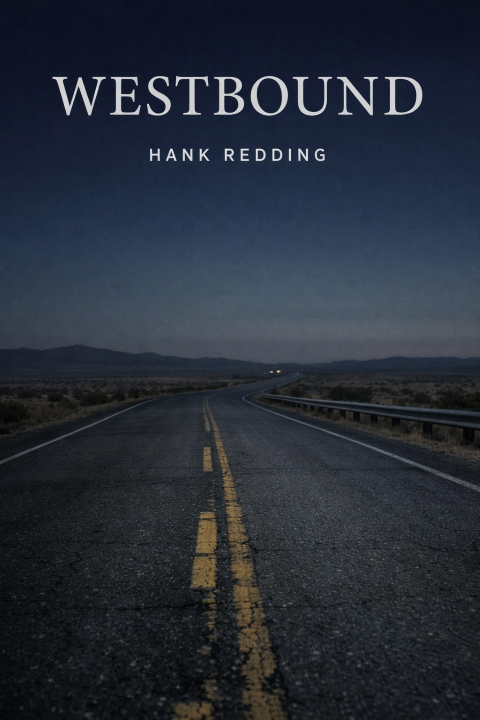
Chapter One
My brother called at night because long distance was cheaper then.
The phone hung on the kitchen wall, just above the counter where my mother kept the bills in a leaning stack. The cord had been stretched and twisted for years, the plastic gone dull, the coil remembering every hand that had yanked it into motion. When it rang, it sounded like something that shouldn’t be happening anymore—too loud, too urgent for a house that went quiet early.
Most of the time, it was for my mother.
Sometimes, it was for me.
He never said hello like he meant it. He’d come on the line already moving, already halfway through a thought, wind in the background or traffic or the flat hush of a place where you could stand outside at midnight and still hear distance.
“You awake?” he’d ask, though he already knew. He could always tell by the way I breathed into the receiver.
“Yeah,” I’d say.
“Good,” he’d answer, like that was the whole point of the call.
He talked in pictures that didn’t hold still long enough to get clear. A road stretching out and then dropping away. A parking lot with music you could feel through the soles of your shoes. A desert so empty it made you honest. Names of places that sounded like they belonged to movies. He didn’t brag. That was the strange part. He wasn’t selling it. He was reporting from it, like he’d crossed some line and was letting us know the air was different on the other side.
My mother listened with her arms folded, leaning against the doorway. She didn’t interrupt. She didn’t ask the questions she wanted to ask. She waited for the part where he’d say he was safe, because that was the closest thing to an apology he ever offered.
He always gave it in his own way.
“Got a roof,” he’d say. “Don’t worry.”
Or, “I’m working.”
Or, “I met some people. They’re alright.”
My mother would nod even though he couldn’t see her. Then she’d tell him about weather and who’d gotten married and who’d had a baby and how the price of gas had climbed again. She’d keep it small on purpose, like she was afraid if she made home sound too alive, he’d feel obligated to miss it.
When she handed the phone to me, her fingers stayed on the receiver for a second longer than necessary.
“Don’t get him started,” she’d whisper, and I never knew what she meant.
Sometimes he sounded sober. Sometimes he didn’t. He was never sloppy, never sentimental. Just louder, as if he’d stepped closer to whatever he was chasing and didn’t want it to slip away while he was explaining it.
“You should come out,” he’d say. “Just once.”
“I’ve got work,” I’d say.
“You’ve always got work,” he’d answer, not accusing. Just stating it the way you state a fact about weather.
I’d glance at the counter then. The bills. The coffee mug ring on the laminate. The calendar with my father’s handwriting still on it from years ago, as if the house hadn’t learned to stop expecting him to come through the door.
My brother had taken after him in ways my mother tried not to notice.
Not in looks. In momentum.
My father had been the kind of man who couldn’t sit still without feeling guilty, who treated rest like a debt he hadn’t earned. My brother was worse. He could rest, but only in places that didn’t ask him to explain himself. Home asked too many questions just by being familiar.
The calls came every couple of weeks. Sometimes more. Sometimes less. There were gaps that felt like someone holding their breath too long. Those were the stretches where my mother got quiet and started cleaning things that were already clean.
Then the phone would ring again and she’d answer it too fast, like she’d been standing there waiting the whole time.
One night he called later than usual. Close to midnight our time, which meant it was still evening where he was. I could hear voices behind him—laughing, arguing, music pulsing through a wall.
“Where are you?” I asked.
He hesitated, and I realized I’d stepped into a question he didn’t like. Not because he was hiding. Because naming a place made it real, made it easier to be found.
“Out,” he said.
“Out where?”
He laughed. “You always want coordinates.”
“I just want to picture it.”
“That’s the problem,” he said, and his voice wasn’t angry. It was almost kind. “You picture it and think you know it.”
Then, softer: “You wouldn’t like it like this. Not the way it is tonight.”
I held the phone tighter, listening to the background—the clink of glass, the rise and fall of strangers. It sounded bright. It sounded expensive. It sounded like a life that didn’t ask permission.
“Are you okay?” I asked.
“Yeah,” he said. “I’m great.”
He said it too quickly. Like a man answering for someone else.
My mother stood in the doorway again, half-lit by the hall light, watching me the way she watched storms in the distance. I turned my back to her, pressed the receiver closer.
“You coming back anytime?” I asked.
There was a pause—real silence this time, no wind, no traffic, no music. Just him deciding how honest to be.
“I don’t think so,” he said.
Not no. Not never. Just a sentence that left the door closed without locking it.
My throat tightened. I stared at the calendar, at the squares filled with small obligations, and felt something inside me lean forward without moving.
“Okay,” I said.
“Don’t say it like that,” he replied.
“Like what?”
“Like you’re already saying goodbye.”
I swallowed. “I’m not.”
He exhaled into the phone, long and tired. The noise behind him rose again, as if the world had waited politely and then resumed.
“Listen,” he said. “You’d love the drive. I’m telling you. Just… do it once. Fly out. We’ll get a car. I’ll show you what I mean.”
“What do you mean?”
He didn’t answer right away. When he did, his voice had changed—lower, steadier.
“I mean it’s bigger than where we came from,” he said. “Out here, you can burn off the parts of you that don’t fit.”
My mother cleared her throat behind me, a small sound meant to remind me she existed. I didn’t turn around.
“Yeah,” I said, though I didn’t know if I agreed. “Maybe.”
“Not maybe,” he said. “Promise me you’ll come.”
I looked at the bills again. At the kitchen. At the fixed point of everything my brother had escaped.
Then I said the thing I’d been saying my whole life.
“Okay.”
After I hung up, my mother didn’t ask what he said. She didn’t want details. Details were edges you could cut yourself on.
She walked to the counter, straightened the bills, and said, as if to no one at all, “He always calls when it’s cheap.”
I nodded.
But I knew it wasn’t just the rate.
It was the hour.
Night was when he could talk about leaving without having to watch anyone’s face change.
Night was when the distance sounded like freedom.
And in that kitchen, with the corded phone still warm against my ear, I realized I’d been listening to my brother like a man listening to a road he wasn’t sure he’d ever take—trying to tell whether it was calling him, or warning him.
Chapter Two
I bought the ticket two days later, at work, during lunch, with my hands sweating on the mouse like I was doing something illegal.
It wasn’t cheap. Nothing was, once you tried to cross the country in a hurry. I stared at the screen long enough for the numbers to blur, then clicked Purchase before my brain could come up with reasons to be responsible.
When I told my mother that night, she didn’t look surprised. She had the kind of face that accepted news before it arrived.
“How long?” she asked.
“A week,” I said.
She nodded once, then went back to rinsing a plate that was already clean. “He’s going to talk you into staying.”
“No,” I said. Too quickly.
She didn’t argue. She set the plate in the rack and dried her hands on a towel that had been used thin. “Call me when you land,” she said, like that was the only part that mattered.
In the days before I left, my brother called twice. Short calls, both of them. More directive than usual.
“Bring a jacket,” he said.
“It’s California.”
“It gets cold at night.”
He told me what terminal, what time, where to stand. He didn’t say I missed you. He didn’t say I can’t wait. He treated the reunion like logistics, like if he got the steps right, the feelings wouldn’t have to show up and make a scene.
On the morning of my flight, the kitchen looked the same as always. That was what made it feel strange. Coffee steaming. The wall clock ticking. My mother standing by the sink, hands resting on the counter as if she’d been placed there and didn’t know where else to go.
She didn’t hug me at the door.
She didn’t need to. She had been practicing distance for years.
“Call me,” she said again.
“I will.”
Then she did something I didn’t expect. She reached up and touched my cheek with two fingers, just once, like she was checking to make sure I was real.
“Don’t let him make you stupid,” she said quietly.
I almost laughed. “I won’t.”
But as I drove to the airport, I realized I didn’t know what she meant by stupid. There were a lot of ways to be it.
The plane felt like a capsule. A long, humming tube filled with people pretending they weren’t moving thousands of miles away from whatever they called normal. I watched the clouds flatten into a white field and tried to picture my brother beyond them—his voice on the phone, his half-sentences, his certainty that I’d love it.
We landed in the late afternoon. The airport air was warmer than I expected, carrying that mixture of exhaust and something sweet—palm trees, maybe, or just heat sitting too long on concrete.
I called my mother from a payphone because my cell service was inconsistent and because, in those days, you didn’t trust a pocket device to carry anything that mattered.
“I’m here,” I said when she answered.
She exhaled like she’d been holding her breath since morning. “Okay,” she said. “Okay. Have fun.”
Then, after a pause: “Be careful.”
As I hung up, I saw him.
He was leaning against a column near baggage claim, one foot crossed over the other, helmet in hand. Not a full-face one. Something old and scuffed. His hair was longer than I remembered. His jacket was black, worn soft at the elbows, like it had been slept in.
He spotted me and didn’t smile right away. He just stared, as if he needed to confirm I was the same person he’d been talking to through a corded phone.
Then he grinned, quick and sharp. “Look at you,” he said.
“Look at you,” I answered.
He stepped forward and pulled me into a hug that lasted half a second longer than it had to. It wasn’t dramatic. It was tight. It felt like he was checking to see if I would disappear.
He pulled back and looked me over like a mechanic. “You brought a jacket?”
“Yes.”
He nodded, satisfied. “Good. Come on.”
“Where’s your car?”
He jerked his chin toward the exit. “We’ll get one.”
We walked out into the sunlight, and the brightness hit like a slap. The sky didn’t look real. It looked painted. Everything seemed too clean at the edges.
At the rental counter, he chose a car without caring what it was, slid a card across, and signed his name like he wasn’t attaching it to anything permanent. He tossed me the keys.
“You drive,” he said.
“Why?”
“Because you’re still you,” he replied. “I want to see you do it out here.”
I didn’t understand then, but I took the keys.
On the freeway, the lanes multiplied, and the traffic moved like a living thing—fast, aggressive, confident. I held the wheel too tightly. My brother leaned back in the passenger seat like he belonged to the motion.
He pointed with two fingers when we needed to merge, when we needed to exit, when we needed to commit.
“You see?” he said, watching the city peel past us. “Nobody’s waiting. Nobody cares. It’s perfect.”
I glanced at him. “That’s perfect?”
“For me,” he said. Then, after a beat: “For a while.”
We drove until the buildings thinned and the light changed. The city fell behind us in layers. The air cooled. The road rose and dipped and opened.
He lowered the window and let wind fill the car.
“Out here,” he said, almost to himself, “you can hear your own thoughts. That’s what I like.”
“Sounds lonely,” I said.
He looked at me, not offended. Not defensive. Just honest.
“It is,” he said. “That’s the point.”
We stopped at a small market just off the road. He bought water and a pack of cigarettes, the kind my father used to smoke. He didn’t offer me one. He never had. He didn’t want me copying him, not really.
Outside the market, the heat pressed down hard, and the horizon looked too far away to be real. My brother stood with his back to the car, cigarette between his fingers, staring out at nothing like he was reading a message there.
“You hungry?” he asked.
“I don’t know,” I said, and meant it.
He flicked ash onto the dirt. “We’ll eat later. I want you to see something first.”
“What?”
He smiled without teeth. “Just… something.”
We drove again, further now, the road narrowing, the land widening. The sun dropped toward the edge of the world like it had somewhere else to be. Shadows stretched long, and the air cooled fast, as if the desert didn’t believe in gradual change.
When we finally pulled over, it wasn’t to a landmark. It wasn’t a scenic turnout. Just a place where the shoulder was wide enough to stop.
He got out and walked a few paces away from the car, hands in his jacket pockets. I followed.
For a moment, neither of us spoke. The quiet wasn’t empty. It was crowded with distance.
He looked at me, and for the first time since I’d landed, his face softened into something familiar.
“Now you know,” he said.
“Know what?”
He turned back to the land, the flat expanse and the dying light. His voice dropped.
“How small home is,” he said. “And how big it never had to be.”
I stood beside him, feeling the wind cut cool against my skin, and understood what he’d been trying to tell me on those cheap midnight calls.
It wasn’t that he wanted me to love the West.
It was that he wanted someone from home to see why he couldn’t come back.
Chapter Three
We didn’t go back the way we came.
My brother drove then. Took the keys from me without asking, like he’d decided I’d done my part. The road curved and dropped, the dark settling in fast, the sky giving up its last color all at once. The headlights cut a narrow path through it, just enough to move forward without knowing what was coming.
“You hungry now?” he asked.
“Yeah.”
“Good.”
We ate standing up at a place that smelled like grease and citrus cleaner. The tables were bolted to the floor. A television played with the sound off. He paid in cash and left the change without looking back. I watched him the way you watch someone who’s already halfway through a story you don’t know the ending to.
Later, we drove again. The city rose back up around us in layers—lights first, then sound, then density. Music leaked from cars at stoplights. People leaned out of windows like they were trying to feel something on their faces before it slipped away.
He navigated without thinking, taking turns too fast, rolling through yellow lights that felt like dares. I didn’t tell him to slow down. I didn’t tell him anything. I was trying to understand how this version of him fit inside the one who’d grown up down the hall from me.
We ended up in the hills. Not the kind with gates and guards, but close enough that the road started climbing without warning. The car struggled. He laughed and downshifted.
“Almost there,” he said.
The house didn’t look like anything from the outside. Stucco. Low roof. Windows dark. But when the door opened, sound spilled out—music, voices, laughter layered over each other until it became a single thing.
Someone handed me a drink before I’d decided if I wanted one. I held it anyway. My brother disappeared into the room like he belonged there, like he’d always been part of the noise and we were the ones who’d just noticed.
I stayed near the edge, watching.
People talked fast, interrupting each other, stories colliding and reforming mid-sentence. Names were dropped without explanation. I recognized a few faces from magazines I didn’t buy. It felt like standing inside a television that didn’t care if you were watching.
At some point, my brother found me again. He leaned close, shouting over the music.
“You okay?”
“Yeah.”
“You look like you’re waiting for something.”
“I am?”
He smiled. “That’s the difference.”
He pulled me toward the back of the house, through a sliding door that stuck halfway open. Outside, a pool glowed blue, the water unnaturally still despite the bodies moving around it. Someone had kicked off their shoes. Someone else had fallen asleep in a chair.
A woman swam slow laps, her hair dark and heavy in the water. She looked up when we stepped out, smiled once, then kept moving.
“She’s pretty,” I said.
He nodded. “She doesn’t stay.”
I didn’t know what to say to that. It felt like a warning, but I wasn’t sure who it was for.
We sat on the low wall by the pool, our feet hanging inches above the water. The night air cooled my skin. The music softened, muffled by glass and distance.
“You see?” he asked, quieter now.
“See what?”
“That it’s all temporary,” he said. “That’s what makes it work.”
I took a sip of the drink and almost choked. It tasted sharp and sweet at the same time.
“What happens when it’s not?” I asked.
He shrugged. “Then you leave first.”
We stayed until the night started thinning, until the laughter dulled and people drifted away in pieces. My brother didn’t say goodbye to anyone. He never did. He treated departures like something you didn’t announce.
Back in the car, the city looked different—quieter, tired. We drove with the windows down, the smell of night pressing in. He lit a cigarette and held it out the window, letting the wind take most of the smoke.
“You could do this,” he said suddenly. “You could stay.”
I watched the road unspool ahead of us. Thought about my mother at the kitchen counter. The calendar. The bills.
“I know,” I said.
He glanced at me. “That wasn’t an answer.”
“I know,” I said again, and this time it was.
He didn’t push. He never did. That was his kindness. He let people decide on their own and then accepted the distance that followed.
When we finally pulled into the place he was staying, it was quieter than I expected. A small trailer tucked back off the road, lights on inside, the hum of electricity just audible through the thin walls.
“This is it?” I asked.
“For now.”
He unlocked the door and stepped inside without ceremony. I followed, ducking my head.
The space smelled like wood and dust and something familiar I couldn’t place. A guitar leaned against the table. A stack of maps sat by the bed, folded and refolded until the creases looked permanent.
He kicked off his boots and sat down heavily, like the night had finally caught up to him.
“You tired?” he asked.
“Yeah.”
He nodded. “Good. Tomorrow’s a long drive.”
“To where?”
He lay back on the bed and stared at the ceiling, hands folded behind his head.
“Doesn’t matter,” he said. “You’ll see.”
I lay awake on the narrow couch, listening to the trailer settle, the distant sound of traffic moving somewhere else. The world felt bigger than it ever had and strangely less forgiving.
In the dark, my brother spoke again, softer this time.
“You don’t have to understand it,” he said. “Just remember you were here.”
I closed my eyes, knowing already that remembering would be the harder part.
Chapter Four
We left before the sun had fully decided what kind of day it was going to be.
The desert held onto the cool for a little while longer, shadows stretching thin and long across the road. My brother moved quietly in the trailer, pulling on his jacket, checking his pockets, counting without looking like he was counting. He handed me a cup of coffee that tasted burnt and necessary.
“Eat something when we stop,” he said.
“Where are we stopping?”
He smiled. “You’ll know.”
We drove with the windows down, the air sharp enough to wake me the rest of the way. The road flattened, then opened, the land losing its edges. Billboards thinned out and then disappeared entirely. What replaced them wasn’t nothing—it was scale.
At a small gas station that looked temporary despite having been there for decades, he pulled in and shut the engine off. The pumps were old, the numbers clicking up slower than they should. Inside, a man watched a television mounted too high on the wall, volume low, subtitles on.
My brother filled the tank and paid cash. He bought water and a bag of something fried that left grease on our fingers.
“You don’t ever worry?” I asked, leaning against the hood.
“About what?”
“Running out,” I said. “Money. Time.”
He considered that, chewing slowly. “No,” he said. “I worry about stopping.”
We drove again, further now. The road narrowed and widened without warning. Wind turbines appeared in the distance, their blades turning slow and steady, like they had all the time in the world. He watched them as we passed.
“Those are new,” he said.
“How can you tell?”
“They weren’t here before.”
That was his measure. Before and after. Not then and now.
By midday, the heat pressed down hard enough to flatten conversation. We drove in silence, the engine doing its work, the road asking only that we keep moving. At some point he pulled over again, this time where the shoulder fell away into scrub and rock.
“This is as far as I go today,” he said.
I looked around. There was nothing to mark the place. No sign. No turnout. Just land.
“You live here now?” I asked.
He laughed. “No. I pass through.”
He stood with his hands on his hips, scanning the horizon like he was checking in with it. I realized then that he wasn’t showing me destinations. He was showing me permission.
We sat on the ground and ate the rest of the food in silence. The wind picked up, carrying grit that stuck to our skin. He didn’t brush it off.
“You coming back with me?” I asked.
He shook his head. “Not yet.”
“Ever?”
He glanced at me, and for a moment I saw something like regret. Not about leaving. About knowing he couldn’t explain staying gone in a way that would make sense.
“I don’t think so,” he said again.
I nodded. I was learning how to hear that sentence.
When we got back in the car, he turned the music on low. A song I didn’t recognize, but one that moved forward without asking permission. He tapped the steering wheel in time.
“You’ll head east tomorrow,” he said.
“Yeah.”
“You’ll tell mom I’m fine.”
“I always do.”
He smiled at that, a quick flash of gratitude. “Good.”
As the afternoon stretched out, I felt the weight of the days I wasn’t going to live begin to settle. Not as loss. As fact.
That night, we didn’t go anywhere loud. We ate at a place with plastic booths and laminated menus. He talked about work in vague terms, about people who came and went. I talked about home in details I didn’t usually bother with.
Later, when we parted for the night, he stood with his hands in his jacket pockets again, rocking slightly on his heels.
“You’re different,” he said.
“Out here?”
“No,” he said. “Because you know you’re going back.”
I thought about that as I lay awake, listening to the wind push against thin walls.
In the morning, I would leave.
And he would keep moving.
At the time, that felt like balance.
I didn’t yet know how quickly motion could tip into momentum—and how hard it was to stop once it did.
Chapter Five
We didn’t make a thing of the goodbye.
That was his rule. No drawn-out pauses. No weight added to moments that were already heavy enough on their own. We stood by the car with the engine running, the air still cool from the night, the sun just starting to lift itself over the flat edge of the land.
“You good?” he asked.
“Yeah.”
He nodded. “Call me when you get back.”
“I will.”
He reached out and clapped a hand on my shoulder, firm and quick. The kind of touch that meant still here, without saying it. Then he was already turning away, opening the driver’s door, settling into the seat like the moment had passed as cleanly as he’d planned it.
I watched him pull back onto the road. No hesitation. No look in the mirror. Just forward motion, immediate and complete.
At the airport, everything felt smaller. The ceilings. The sounds. The way people moved with purpose that had already been assigned to them. I checked in, walked through security without thinking, and found a payphone near the windows.
I dialed home.
My mother answered on the second ring. She always did.
“I’m heading back,” I said.
She exhaled. “Okay.”
“He’s fine,” I added, because that was the sentence we’d agreed on years ago, even if we’d never spoken it out loud.
“I know,” she said. Then, after a pause, “Did you see what he needed you to see?”
I looked out at the runway, at the planes lining up in patient order.
“Yes,” I said.
“Good.”
On the plane, I took the window seat. Watched the ground roll and then fall away. The city spread out in neat patterns that meant nothing once you were high enough. The desert followed, endless and exacting, holding its shape no matter how fast you left it.
Somewhere over the middle of the country, I realized I didn’t feel relieved.
I felt clarified.
The calls came less often after that.
Every few weeks at first. Then months. When he did call, he talked faster, like he was trying to fit more life into less time. He asked about home, not the way you ask when you’re considering returning, but the way you ask when you want proof that something still exists without you.
I gave it to him.
Then the calls stopped.
There was no moment when I realized it was permanent. Just a growing space where his voice used to be.
When the phone rang again, it wasn’t him.
The voice on the other end didn’t rush. It didn’t soften anything either. It delivered information the way systems always do—cleanly, without context, without room for questions you don’t actually want answered.
There had been an accident.
A road I’d never driven. A time of night that belonged to no one. A guardrail that did exactly what it was built to do.
I watched my mother’s face change as I told her. Not collapse. Not break.
Just change.
We buried him three days later.
Not because that was the plan. Because that was how long it took to get the pieces in the same place. Paperwork. Phone calls. A man at a counter asking me to spell my last name twice.
My mother didn’t come.
She said she couldn’t sit on a plane knowing she wouldn’t be getting back on it with him. She said it calmly, like a boundary she’d found and decided not to cross.
I flew west alone.
The place where it happened didn’t look like anything. No bend dramatic enough to remember. No warning. Just a stretch of road doing what roads do.
The guardrail had been replaced.
New bolts. Clean steel.
At the cemetery, the service was short. A few people I didn’t know. A woman who cried without sound.
When it was over, the wind moved through the grass and kept going.
I stayed after everyone else left.
There wasn’t anything left to negotiate.
Chapter Six
Time didn’t change things all at once.
It worked in increments so small they were almost polite.
The phone stayed on the wall. The cord loosened where it had been stretched too many times. My mother stopped keeping it within arm’s reach at night, though she never said why. When it rang now, it was always someone we expected.
I went back to work. Paid bills. Learned the weight of days that didn’t announce themselves. The calendar filled and emptied and filled again, my father’s handwriting finally replaced by my own.
Sometimes people asked about my brother. Not directly. They’d say things like How’s your family? or You ever think about getting out of here? I learned how to answer without inviting follow-up.
“He liked the West,” I’d say.
That was enough.
Once, years later, I drove at night with the window down and felt the pull again—not a desire, not regret, just recognition. Roads have a way of reminding you they exist whether you take them or not.
I didn’t turn.
At home, my mother aged quietly. She still cleaned things that were already clean. Still folded towels as if someone else might need them later. She never spoke his name unless she meant to.
One evening, while we were clearing out a drawer neither of us remembered filling, I found a folded scrap of paper with his handwriting on it. A phone number. An address that no longer meant anything.
She looked at it, then handed it back to me.
“You keep it,” she said. “I’ve memorized what I need.”
I put it in a box with other things that didn’t have a place anymore.
Life kept narrowing in reasonable ways. Responsibilities replaced possibilities. The days grew quieter, but not smaller. I learned the difference.
Sometimes, late at night, I’d think about the desert—not the way it looked, but the way it sounded. Wind moving without obstruction. Space big enough to let thoughts burn off before they became heavy.
I understood then what my brother had been trying to tell me.
He hadn’t been running away.
He’d been running toward something he couldn’t name.
And I hadn’t been left behind.
I had stayed where stopping was still allowed.